
 22 mins
The best decentralized exchanges increasingly cover more than simple token swaps. They are places where traders can use on-chain o...
The best decentralized exchanges increasingly cover more than simple token swaps. They are places where traders can use on-chain order books, perpetual futures, stock-linked markets, cross-chain aggregators, and wallet-based trading tools – with no centralized exchange involved in the middle.
After comparing market coverage, custody, fees, trading tools, and ease of use, we rank TxFlow as the overall best DEX exchange. Its fully on-chain order book supports spot and perpetual trading. ApeX Omni ranks second for its offer of crypto and stock perpetuals, automated bots, and up to 100x leverage, while we also give a nod to edgeX for its massive derivatives selection.
We focus on features, fees, security, and availability, but hopefully there is something for everyone as you move through our list.
Key Takeaways for the Best Decentralized Exchanges
- TxFlow is our overall top pick, offering an on-chain central limit order book, spot markets, perpetual futures, and competitive trading fees.
- ApeX Omni and edgeX are strong alternatives for self-custodial derivatives trading, with both platforms offering leverage of up to 100x.
- OKX DEX Swap and Best Wallet aggregate liquidity across multiple exchanges and blockchains, making them better suited to token swaps than leveraged trading.
- Not every platform in this guide is a conventional DEX – MEXC On-Chain and Changelly provide simplified access to on-chain liquidity, while The True Trade combines centralized and Web3 products.
- Users should compare custody arrangements, network fees, liquidity, smart contract safety, and regional availability before choosing a platform.
The Top 8 Best DEX Exchanges
Here is our list of the best DEX exchanges for 2026:
- TxFlow: Overall Best DEX With a Fully On-Chain Order Book
- ApeX Omni: Trade Crypto and Stock Perpetuals With Up to 100x Leverage
- edgeX: Self-Custodial Perpetual Exchange With Around 220 Markets
- MEXC On-Chain: Beginner-Friendly Replacement for the Discontinued DEX+ Platform
- OKX DEX Swap: Multichain Aggregator Covering Over 70 Blockchain Networks
- Changelly: Established Exchange Service Supporting Over 1,000 Cryptocurrencies
- Best Wallet: Mobile Wallet With Cross-Chain DEX Aggregation Built In
- The True Trade: Hybrid Perpetual Platform With Demo and Social Trading
Best Decentralized Crypto Exchanges Reviewed
Our reviews cover several types of decentralized trading platforms. Some provide conventional wallet-to-wallet swaps, while others use order books and perpetual contracts to offer an experience closer to a centralized exchange. We also include several hybrid services that simplify access to on-chain markets.
1. TxFlow: Overall Best DEX With a Fully On-Chain Order Book
- Exchange Type: On-chain central limit order book DEX
- Custody: Non-custodial
- Markets: Spot, crypto perpetuals, stock futures, and other TradFi-linked perpetuals
- Maximum Leverage: Varies by market
- Perpetual Fees: 0.015% maker and 0.045% taker at the base tier
- KYC: Not required for permissionless trading
TxFlow ranks as our overall best decentralized exchange thanks to its fully on-chain central limit order book, meaning order placement, matching, cancellation, and settlement all occur on the network. This design makes trading activity verifiable without abandoning the order book structure familiar to active traders.

The exchange supports spot trading and crypto perpetuals, along with futures linked to stocks and other traditional markets. TxFlow runs on a purpose-built Layer 1 blockchain that offers throughput of up to 250,000 transactions per second. Actual execution conditions still depend on network activity and available market liquidity.
TxFlow’s base perpetual rates are 0.015% for makers and 0.045% for takers, and fees decline with rolling 14-day trading volume. The highest tier offers zero maker fees and a 0.024% taker rate. For spot traders, the base rates are 0.04% and 0.07%.
The wider protocol shares liquidity, settlement, and market data across TxFlow applications. Users can move between connected applications, known as Channels, without repeatedly bridging assets. Liquidity vaults provide another way into the ecosystem, including protocol-run market-making and liquidation facilities as well as user-managed strategies.
Pros
- Fully on-chain order placement, matching, and settlement
- Supports spot markets and perpetual futures
- Competitive base maker and taker fees
- Volume discounts include zero maker fees at the highest tier
- Offers crypto and traditional-market exposure
- Non-custodial and permissionless trading
Cons
- Liquidity can be less developed in some markets
- Many seperate components may take beginners time to understand
2. ApeX Omni: Self-Custodial Crypto and Stock Perpetual Trading
- Exchange Type: Perpetual futures DEX
- Custody: Self-custodial
- Markets: 100+ perpetual contracts, prediction markets, and Event Trade
- Maximum Leverage: Up to 100x
- Trading Fees: 0.02% maker and 0.05% taker
- KYC: Not required for core trading
ApeX Omni offers self-custody with a trading interface that will feel familiar to users of centralized exchanges. It lists over 100 perpetual contracts and covers crypto and stock-linked markets, so you get several asset classes from the same account.

You can connect an external wallet or register with an email address, and the latter option creates an exportable Privy-powered wallet, removing the work of connecting and funding a separate Web3 wallet. Core trading does not require any KYC.
ApeX Omni charges a standard maker fee of 0.02% and a taker fee of 0.05%, and perpetual trades do not incur a separate gas charge. Deposits are supported across networks, which include Ethereum, BNB Chain, Base, Arbitrum, Mantle, and Solana.
Trading tools include market and limit orders, Post-Only and Reduce-Only settings, take-profit and stop-loss orders, and automated grid bots – so there’s plenty of choice. Users can also allocate assets to vaults.
Event Trade offers short-term up-or-down markets over 3-, 15-, and 60-minute periods. ApeX no longer provides conventional spot trading, but apart from that, it is a fully-fledged exchange.
Pros
- Over 100 perpetual contracts
- Crypto, stock, and prediction markets
- No separate gas fees on perpetual trades
- External wallet and email-based access
- Automated grid bots and vault products
- No KYC for core trading
Cons
- No conventional spot trading
- Grid bots are not available for every product
- Event Trade and high leverage carry substantial loss risk
3. edgeX: Trade Around 220 Perpetual Markets With Low Base Fees
- Exchange Type: Decentralized derivatives exchange
- Custody: Self-custodial
- Markets: Around 220 perpetual pairs
- Maximum Leverage: Up to 100x
- Trading Fees: 0.012% maker and 0.038% taker at the standard tier
- Collateral: USDC
edgeX is a self-custodial derivatives exchange that hosts, at the time of writing, approximately 220 trading pairs, so you get options that go much further than the major cryptocurrencies. For us, that makes edgeX a great option for traders seeking more variety than your typical on-chain perpetual platform offers.

The exchange uses an order book interface with on-chain settlement, and users get TradingView charts, real-time market depth, and market, limit, and conditional orders it’s a centralized-like experience in a decentralized setting. Take-profit and stop-loss tools are all present, so you can can define exit levels when opening a leveraged position.
Standard trading costs are particularly competitive – edgeX charges makers 0.012% and takers 0.038%, with further discounts based on a rolling 30-day volume. Leverage can reach 100x on selected contracts, although lower multipliers give traders more room before liquidation.
Developers and systematic traders can access API and WebSocket connections, including creating and canceling orders, checking open positions, processing deposits and withdrawals, and completing cross-chain or inter-account transfers. The platform uses USDC collateral, which is straightforward for stablecoin users but may be less flexible for traders who hold their capital in other assets.
Pros
- Around 220 perpetual trading pairs
- Lower base fees than many derivatives platforms
- Maximum leverage of up to 100x
- Self-custodial trading with on-chain settlement
- Advanced orders, TradingView charts, and live market depth
- API and WebSocket support
Cons
- Focused on perpetuals rather than conventional spot swaps
- Uses USDC as collateral
- Liquidity may vary considerably between markets
4. MEXC On-Chain: A Simpler Route Into On-Chain Token Markets
- Platform Type: Centralized access to on-chain markets
- Custody: Assets managed through a MEXC account
- Markets: On-chain tokens supported by MEXC
- Settlement Assets: USDT, USDC, USD1, and other supported assets
- Trading Fees: Displayed before confirming a trade
- External Wallet Required: No
MEXC On-Chain joins our list as an accessible entry point to on-chain markets, although it is not a decentralized exchange in the conventional sense. Users trade through their MEXC accounts rather than connecting a private wallet, so it is more of a centralized solution.

But we include it here as the platform replaced MEXC DEX+ and MEXC Alpha in June 2026, so that previous users of the more decentralized offering can understand what the successor is. For those users, assets held through those services were migrated automatically, with separate arrangements for Sui and TRON tokens, as well as a few other assets. DEX+ itself is no longer active.
But what MEXC On-Chain does, it does well, placing token discovery, trading, and portfolio management into one account. Users will find they do not need to create a Web3 wallet, protect a separate seed phrase, or keep native gas tokens for every network they use. So it is a setup that may appeal to people interested in early on-chain assets, but who find direct DEX trading complicated.
The platform supports settlement assets including USDT, USDC, and USD1 and fees and available liquidity depend on the selected asset and route. You should still inspect token contracts carefully – access through MEXC On-Chain does not mean every asset has passed the exchange’s conventional listing process.
Pros
- No external Web3 wallet required
- Removes the need to manage multiple gas tokens
- Combines token discovery, trading, and portfolio tools
- Familiar interface for existing MEXC users
- Supports several stablecoin settlement assets
Cons
- Not decentralized or self-custodial
- Requires users to rely on the MEXC account ecosystem
- Some on-chain assets may have limited liquidity
- Availability and account requirements vary by region
5. OKX DEX Swap: Access Liquidity Across More Than 70 Networks
- Exchange Type: Multichain DEX and bridge aggregator
- Custody: Self-custodial
- Network Coverage: 70+ blockchains
- Token Coverage: 3 million+ tokens
- Trading Fees: Vary by route and network
- Wallet Access: OKX Wallet and compatible Web3 wallets
OKX DEX Swap searches multiple decentralized exchanges and bridges for available token routes. It supports over 70 blockchain networks and more than 3 million tokens, making it the best option for multichain swaps.

Users connect OKX Wallet or another compatible Web3 wallet and authorize transactions directly from it. The aggregator can split a trade across different liquidity sources where doing so improves execution. It also handles same-chain and cross-chain transactions, including the bridge stage required to move assets between networks.
There is no single trading fee covering every swap – OKX shows the quote before confirmation, while the final cost may incorporate blockchain gas, liquidity-provider fees, bridge charges, and price impact. MEV protection is available on supported routes to reduce exposure to certain types of transaction manipulation.
OKX Wallet includes staking, farming, liquidity provision, and access to other decentralized finance applications, and its extensive token coverage helps find assets unavailable on large centralized exchanges. It also demands care, as an asset appearing in the interface does not mean OKX has verified its legitimacy.
Pros
- Supports more than 70 blockchain networks
- Access to over 3 million tokens
- Aggregates multiple DEX and bridge routes
- Self-custodial same-chain and cross-chain swaps
- Can split trades between liquidity sources
- MEV protection on supported routes
Cons
- No universal fixed trading fee
- Cross-chain swaps introduce additional bridge risk
- Broad token access may include unverified assets
6. Changelly: Swap Over 1,000 Cryptocurrencies With Fixed or Floating Rates
- Platform Type: Instant exchange and DeFi swap service
- Custody: Depends on the selected service
- Supported Cryptos: 1,000+
- Trading Pairs: 100,000+
- Trading Fees: Vary by rate and transaction route
- Wallet Support: MetaMask, WalletConnect, Ledger, and Trezor
Launched in 2015, Changelly supports more than 1,000 cryptocurrencies and over 100,000 potential trading pairs, and it offers a simple exchange interface that suits users who want to convert between assets without picking their way through an advanced order book.
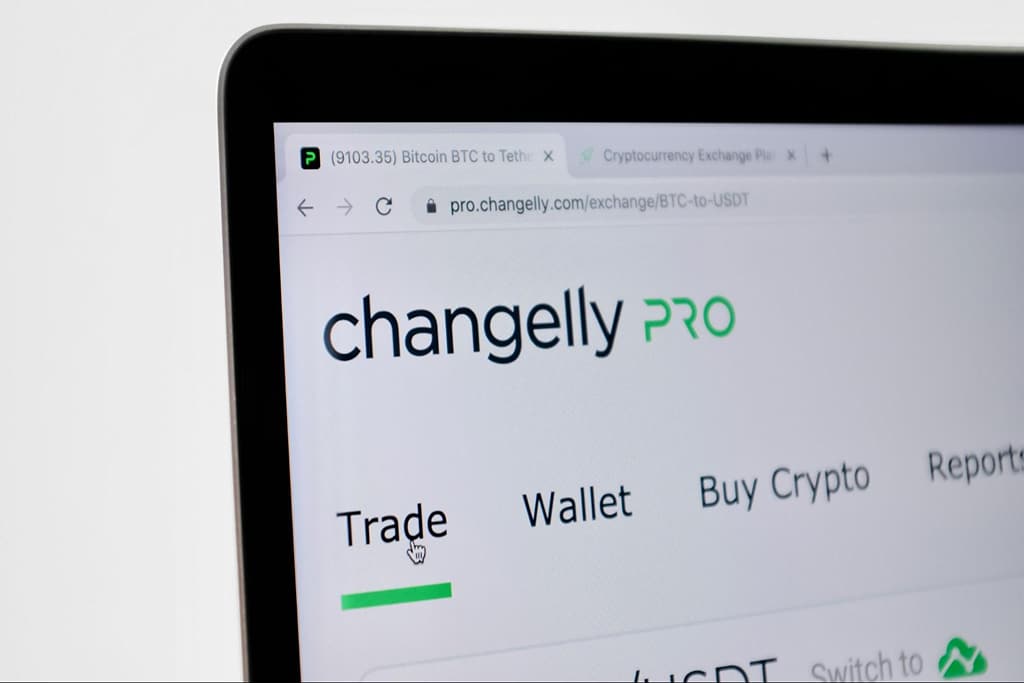
Changelly offers fixed and floating rates, with the fixed quote protecting the user against price movements while the transaction is processed (although it may include a wider buffer). Floating transactions follow the available market rate and can return a different amount if prices change before completion.
The platform requires a careful custody distinction – Changelly’s standard instant-exchange service intermediates trades, while its DeFi Swap product is designed for non-custodial wallet-to-wallet transactions. Supported connections include MetaMask, WalletConnect-compatible wallets, Ledger, and Trezor.
Users can also buy and sell cryptocurrencies with fiat currency through third-party providers. These transactions will generally require identity verification and may include card charges or provider spreads. Crypto swaps do not always require KYC, but Changelly can request verification under its anti-money laundering procedures.
Pros
- Operating since 2015
- Supports over 1,000 cryptocurrencies
- More than 100,000 available trading pairs
- Fixed and floating exchange rates
- Software and hardware-wallet integrations
- Crypto purchases and sales with fiat currency
Cons
- Not every Changelly service is decentralized
- Final charges vary by route and rate type
- KYC may be requested for some transactions
- Offers limited tools for advanced traders
7. Best Wallet: Swap Tokens Across Multiple Chains From a Mobile Wallet
- Platform Type: Self-custodial wallet with DEX aggregation
- Custody: Self-custodial
- Swap Infrastructure: Powered by Rubic
- Liquidity Sources: 300+ DEXs and 30+ bridges
- Supported Assets: 1,000+ tokens across 60+ blockchains
- Availability: iOS and Android
Best Wallet combines cryptocurrency storage and DEX aggregation in one excellent mobile app. Users can buy, sell, send, receive, and swap assets without first transferring them to a centralized exchange.

Its swap feature is powered by Rubic, which searches liquidity from over 300 DEXs and 30 bridges. This infrastructure supports direct swaps within a single network as well as cross-chain trades involving assets across different blockchains. Best Wallet compares available routes rather than relying on a single exchange pool.
The app supports over 1,000 tokens across dozens of blockchains and provides access to coin stats and vetted presale discovery. Biometric and two-factor authentication help protect app access, while users remain responsible for their wallet credentials and transaction approvals.
Best Wallet does not charge users for anything other than swaps, which may include network gas, liquidity-provider charges, and bridge fees, depending on the route. The app is available on Android and iOS.
Pros
- Self-custodial wallet and swaps in one app
- Routes trades across over 300 DEXs
- Aggregates more than 30 bridges
- Supports same-chain and cross-chain swaps
- Biometric authentication and two-factor authentication
- Beginner-friendly mobile interface
Cons
- No full desktop wallet
- Swap costs vary by network and route
- Users remain responsible for protecting their wallet
- Cross-chain transactions carry bridge risk
8. The True Trade: Hybrid Perpetual Trading With Demo and Social Features
- Platform Type: Hybrid centralized and Web3 derivatives platform
- Custody: Varies between centralized and Web3 modes
- Markets: Crypto perpetual futures
- Maximum Leverage: Up to 150x
- Trading Fees: 0.04% when opening and closing positions
- Settlement: USDT in centralized mode and USDC in Web3 mode
The True Trade offers perpetual futures through centralized and Web3 trading modes, making it a hybrid format that gives users several ways to access the platform, including via Gmail, Telegram, and a connected crypto wallet.

The platform currently advertises leverage of up to 150x, with perpetual contracts that have no expiry date, allowing positions to remain open as long as margin requirements are met. Fees are charged against the total notional value, with traders paying 0.04% when entering a position and another 0.04% when exiting.
Settlement depends on the selected product; for example, the centralized side uses USDT, while Web3 trading uses USDC and is promoted as self-custodial. Users should check which environment they are entering rather than assuming that every True Trade product has the same custody arrangement.
Demo trading lets newcomers test the interface without risking funds immediately, and the platform also offers social trading, referrals, and availability on both web and mobile devices. Account verification requirements may depend on the product and region.
Pros
- Centralized and Web3 trading options
- Perpetual leverage of up to 150x
- Demo account for testing the platform
- Social trading features
- Web and mobile access
- Multiple account and wallet login methods
Cons
- The overall platform is not fully decentralized
- Custody and settlement differ between trading modes
- Smaller market selection than leading perpetual exchanges
- Account requirements may vary by product and region
How We Ranked the Best DEX Exchanges
Decentralized trading platforms vary considerably. Some provide token swaps from a connected wallet, while others offer leveraged futures through an on-chain order book. We assessed each platform according to the products it actually provides, rather than treating all forms of on-chain trading as identical.
- Custody and Transparency: We prioritized platforms that allow users to retain control over their assets and clearly explain how orders are executed and settled. Hybrid services were assessed on whether they distinguish their centralized and self-custodial products.
- Markets and Liquidity: Our research considered the number and variety of available markets, as well as whether the platform offers spot swaps, perpetual futures, cross-chain trading, or traditional market exposure.
- Trading Costs: We compared maker and taker commissions where fixed rates were available. For aggregators, we considered network charges, bridge costs, liquidity-provider fees, and price impact.
- Trading Experience: The best platforms provide clear pricing, useful order types, responsive interfaces, and straightforward wallet connections. Advanced features such as APIs, automated bots, and route optimization also contributed to our rankings.
- Accessibility: We assessed wallet support, account requirements, supported networks, regional restrictions, and the amount of technical knowledge required to complete a trade.
No DEX is the best option for every user. TxFlow leads our overall ranking for on-chain order-book trading, while OKX DEX Swap and Best Wallet are better suited to users who primarily want to exchange tokens across multiple networks.
What Is a Decentralized Exchange?
A decentralized exchange is a blockchain-based trading platform that enables users to exchange cryptocurrencies without depositing them with a conventional centralized exchange. Traders typically connect a self-custodial wallet and authorize transactions directly from it.
Some DEXs use liquidity pools to complete token swaps. Others operate order books for spot markets or perpetual futures. Aggregators such as OKX DEX Swap search several DEXs and bridges to find an available route rather than supplying all liquidity themselves.
The term is sometimes applied more loosely to platforms that provide access to on-chain assets. MEXC On-Chain, for example, simplifies on-chain trading through a standard MEXC account but is neither decentralized nor self-custodial.
How to Use a Decentralized Exchange
The precise process depends on whether the user is swapping tokens or trading derivatives. Most DEX transactions involve the following steps:
- Choose a Compatible Wallet: Install a self-custodial wallet that supports the required blockchain. Some platforms, including ApeX Omni, also provide an email-based wallet option.
- Fund the Wallet: Transfer the asset being traded, and retain enough of the network’s native token to cover gas fees. This may not be necessary on platforms that abstract gas fees or charge them at the time of the trade.
- Connect and Check the Market: Open the official DEX interface, connect the wallet, and select the trading pair. Review liquidity, price impact, fees, and the token contract before continuing.
- Approve and Confirm: Approve the required token access, check the final quote, and authorize the transaction. Perpetual traders should also set appropriate leverage and consider adding stop-loss and take-profit orders.
Benefits and Drawbacks of DEX Trading
Benefits of Decentralized Exchanges
- Self-Custody: Users can trade directly from their wallets without transferring assets into a conventional exchange account.
- Broader Token Access: DEXs often list assets before centralized platforms do, while aggregators can search for liquidity across several blockchains.
- Transparent Settlement: On-chain transactions can be checked through public blockchain explorers.
- Permissionless Access: Many DEXs allow users to connect a wallet and trade without completing a standard account application.
- Product Choice: The sector now covers simple swaps, cross-chain trades, spot order books, perpetual futures, prediction markets, and automated strategies.
Drawbacks of Decentralized Exchanges
- Smart-Contract Risk: Coding flaws or compromised protocols can put connected assets at risk.
- No Transaction Reversals: Transfers sent to the wrong address or exchanged through a malicious token contract are usually irreversible.
- Variable Trading Costs: Gas charges, bridge fees, and price impact can make the final cost difficult to predict.
- Uneven Liquidity: Smaller markets may produce greater slippage or make leveraged positions harder to close.
- Greater User Responsibility: Traders must protect private keys, check token contracts, and understand wallet approvals.
What Fees Do DEX Exchanges Charge?
DEX trading costs depend on the platform and transaction type. Perpetual exchanges often publish conventional maker and taker commissions. TxFlow’s base perpetual fees, for example, are 0.015% for makers and 0.045% for takers, while edgeX charges 0.012% and 0.038%, respectively.
Token swaps work differently. Users may incur a liquidity-provider fee, blockchain gas fees, and price impact within the quoted exchange rate. Cross-chain transactions can incur bridge fees and gas costs across multiple networks. Aggregators compare available routes, but the cheapest route can change as liquidity and network activity fluctuate.
Traders should inspect the amount they will receive rather than comparing headline fees alone. A route with a lower stated commission may still cost more if it has shallow liquidity or substantial slippage.
Remember to Check Gas Fees
A wallet needs enough of the network’s native asset to process most on-chain transactions. Ethereum typically requires ETH, while BNB Chain requires BNB and Solana uses SOL. A failed transaction may still consume gas even though the swap does not complete.
How to Trade on a DEX Safely
Self-custody removes the need to leave funds with a centralized exchange, but it also places more responsibility on the user. Always access a DEX through its official website and confirm the domain before connecting a wallet. Fake interfaces often mimic established platforms to steal wallet credentials or solicit malicious approvals.
Check the token’s contract address against an official project source. Names and ticker symbols can be duplicated, particularly for newly launched tokens. Broad aggregators may display millions of assets, but inclusion does not mean that each token has been vetted.
Review the complete transaction before signing it. The wallet should show the assets involved, the requested approval, the expected output, and estimated network charges. Avoid granting unlimited token approvals when a smaller spending limit will suffice, and periodically revoke permissions that are no longer needed.
A separate wallet can reduce exposure when testing an unfamiliar platform. Users should also make a small initial transaction before committing a larger amount. Perpetual traders face additional liquidation risk and should avoid using leverage they do not fully understand.
Conclusion
Decentralized trading now covers several different products, and token holders can swap assets directly from a wallet, search for cross-chain routes, or trade leveraged perpetual contracts on an order book without depositing funds at a conventional centralized exchange. The right platform for you depends heavily on which of those features you need.
We rank TxFlow as the overall best DEX exchange, thanks to its central limit order book that runs fully on-chain and supports spot trading, crypto perpetuals, and futures linked to traditional markets. Base perpetual fees start at 0.015% for makers and 0.045% for takers, with discounts for higher-volume traders.
edgeX is a strong alternative for market selection and low derivatives fees, while ApeX Omni provides a broader mix of perpetuals, prediction products, bots, and vaults. Users seeking token swaps may prefer the multichain routing available through OKX DEX Swap or Best Wallet.
FAQ
What is the best decentralized exchange?
What is the best DEX for crypto swaps?
Can I use a decentralized exchange without KYC?
Are decentralized exchanges safe?
Coinspeaker in Numbers
250K+
Monthly Users
80+
Articles & Guides
5000+
Research Hours
23
Authors
guides
Best Decentralized Exchanges (DEXs) in October 2026
September 8th, 2026
How to Swap Crypto on Godex: A Step-by-Step Guide to No-KYC Crypto Swapping
June 12th, 2026
CoinDepo vs. WhiteBIT Earn Comparison: Yields, Features, Security and More
June 2nd, 2026
Most crypto swap platforms have an identity threshold at some point in the process, such as a KYC trigger buried in the terms, a c...
In the competitive world of crypto yield generation, CoinDepo and WhiteBIT Earn have built notable reputations as centralized plat...
CoinSpeaker Editorial Team
, 1 postsThe CoinSpeaker Editorial Team is a collective of veteran financial journalists, blockchain researchers, and market analysts who have been documenting the evolution of the digital economy since 2014. With a combined experience of over 15 years in traditional finance (TradFi) and decentralized technologies (DeFi), our editors ensure every piece of content meets the highest standards of accuracy, objectivity, and technical depth.