Press Release
This $0.035 New Crypto Surges 250% for the Last 30 Days

This content is provided by a sponsor
Ethereum has taken a sharp hit over the past month, dropping 28% and raising concerns among investors who expected stronger momentum heading into 2026. But while ETH struggles to recover, one new DeFi cryptocurrency priced at $0.035 has surged 250%, catching the attention of traders. With demand rising daily, early buyers believe this fast-moving altcoin may offer stronger upside than large-cap assets weighed down by slow growth.
Ethereum Price Movements
Ethereum is trading around $2,900, with a market cap above $350B, securing its position as the second-largest cryptocurrency. It remains the backbone of decentralized finance, NFTs, and smart contracts. But even with such a strong foundation, ETH has hit significant resistance.
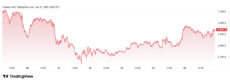
Current technical levels show major resistance zones at $3,200–$3,300 and another barrier around $3,500–$3,700. Attempts to break above these levels have failed due to weak buying volume. On the safety side, ETH has support near $2,650–$2,700, but if pressure continues, the price could fall toward the $2,300 range.
ETH also faces limitations that impact its ability to produce rapid gains:
- Its huge market cap makes sharp upward moves harder.
- Competition from faster chains creates uncertainty for long-term upside.
- Investors who want bigger returns are now searching for lower-cost assets with stronger growth potential.
This shift in sentiment is pushing many traders toward early-stage DeFi projects, especially those that show active development and clear momentum, like Mutuum Finance (MUTM).
Mutuum Finance Price Movements
Mutuum Finance (MUTM) is building a decentralized lending and borrowing protocol centered around utility, yield, and safer credit management.
P2C Lending: mtTokens and APY
In its Peer-to-Contract lending model, users supply assets to the liquidity pool and receive mtTokens. These tokens grow in value as borrowers repay interest.
Example: If a user supplies $1,000 worth of ETH, they receive mtTokens that reflect that deposit. As borrowers pay interest, those mtTokens automatically accrue yield, meaning the user earns APY without needing to manage the position themselves.
P2P Marketplace: Flexible Borrowing
Mutuum Finance also offers Peer-to-Peer borrowing, giving users the ability to take loans secured by collateral. Borrowers can choose variable rates that shift with pool utilization or, in certain situations, stable rates that allow predictable repayment costs. Each loan follows LTV limits that depend on the volatility of the asset being used as collateral. If a borrower’s collateral value drops too far, automated liquidation systems step in to protect the protocol and prevent bad debt.
Stable assets like ETH support LTVs near 75%, while volatile assets stay closer to 35–40%. If collateral drops too far, liquidation protects the system by rewarding liquidators who buy collateral at a discount to repay part of the borrower’s debt.

Security Strength and Community Rewards
Mutuum Finance launched its presale in early 2025 at $0.01. Today, at $0.035, the token has already surged 250%. The project has raised $19M, built a community of 18,300 holders, and sold over 800M tokens.
From the 4B total token supply, 1.82B (45.5%) is allocated for the presale, and Phase 6 is moving quickly toward full allocation. Many traders watching crypto prices today say this rising demand is why MUTM is becoming one of the top cryptocurrencies of early 2026.
Mutuum Finance also completed a CertiK audit with a 90/100 Token Scan score, and Halborn Security is reviewing the protocol’s contracts. The code is already finalized, adding another level of confidence.
To fuel community activity, Mutuum Finance runs a 24-hour leaderboard. The top daily contributor receives $500 in MUTM, which brings steady new participation. The presale also supports direct card payments, making it easy for new users to buy without complicated steps. The combination of funding progress, security checks, and strong user engagement is a major reason interest continues to rise while ETH loses steam.
Stablecoin Roadmap and Phase 6 Urgency
According to Mutuum Finance’s official X account, V1 of the lending and borrowing protocol is set to launch on the Sepolia Testnet in Q4 2025. This first version includes a working liquidity pool, mtTokens, the debt-token system, and the liquidation bot, with ETH and USDT serving as the initial supported assets.
This early product launch increases the chance of top-tier exchange listings once MUTM goes live, which could boost visibility and buying pressure.
Mutuum Finance is also developing an on-demand minted and burned stablecoin, pegged to USD. Interest from this stablecoin will flow into the Mutuum Treasury, creating long-term revenue to support the ecosystem. Market commentators suggest that this combination of lending mechanics, stablecoin utility, and upcoming L2 expansion could push demand higher once the token lists.
Phase 6 of the presale is already over 92% allocated, and supply is shrinking rapidly. With the next price jump approaching and more whale buyers entering, early investor sentiment indicates that the current $0.035 price may not last much longer.
Final Takeaway
As Ethereum struggles with a 28% monthly drop, investors are shifting toward early-stage projects that offer stronger momentum and more attractive entry points. Mutuum Finance has already surged 250%, strengthened its security profile, and moved into the final stages of its presale.
With V1 coming soon, stablecoin development is underway, and Phase 6 is close to selling out. At its current price of $0.035, the window to enter is closing fast. Once demand continues at this rate, the remaining allocation may disappear sooner than expected.
For more information about Mutuum Finance (MUTM), visit Linktree.
Disclaimer: This publication is sponsored. Coinspeaker does not endorse or assume responsibility for the content, accuracy, quality, advertising, products, or other materials on this web page. Readers are advised to conduct their own research before engaging with any company mentioned. Please note that the featured information is not intended as, and shall not be understood or construed as legal, tax, investment, financial, or other advice. Nothing contained on this web page constitutes a solicitation, recommendation, endorsement, or offer by Coinspeaker or any third party service provider to buy or sell any cryptoassets or other financial instruments. Crypto assets are a high-risk investment. You should consider whether you understand the possibility of losing money due to leverage. None of the material should be considered as investment advice. Coinspeaker shall not be held liable, directly or indirectly, for any damages or losses arising from the use or reliance on any content, goods, or services featured on this web page.
Related Articles