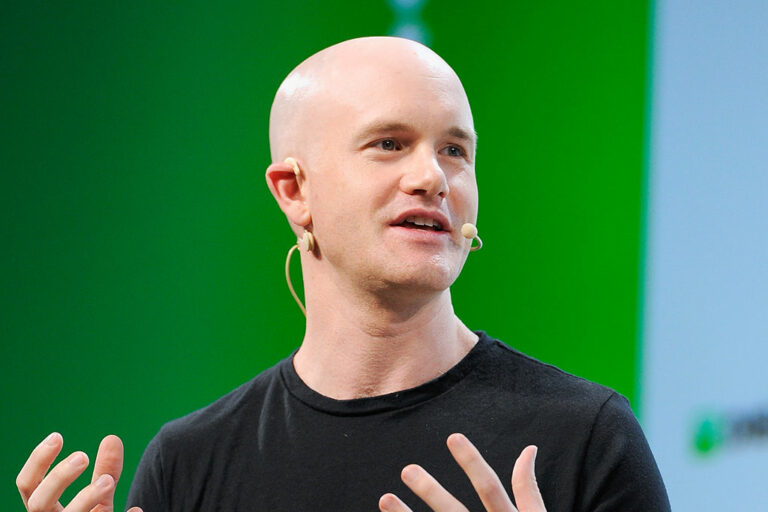
Coinbase CEO believes China might be looking to directly displace the US dollar from its role in global commerce.
Coinbase CEO Brian Armstrong has recently shared his thoughts on cryptocurrencies and the approach of the United States toward the special asset class. He admits that recent happenings around the world of cryptocurrency have made it necessary for policymakers to be more hostile toward crypto. However, he also says that America should not lose sight of the fact that crypto may be the only way for the country to maintain its position as a global financial leader and an innovation hub.
In a recent opinion article, Armstrong once again raised the issue of regulatory clarity. He cited how Coinbase, himself, and many more in the industry have long been at loggerheads with regulators over the issue of more robust rules and regulations. However, rather than provide these, regulators are threatening enforcement actions, Coinbase CEO Armstrong claimed. And according to him, enforcement actions and strict measures such as this will only drive innovation far away from the US.
Coinbase CEO Brian Armstrong: Present Situation Is a Threat to National Security
Brian also shared the view that when innovations are taken offshore, America inadvertently loses its legacy of pioneering technological advancements in the world. This, he claims, will weaken the country’s national security in ways unimaginable.
In his explanation, he says currency has always been at the heart of innovations, while innovations are driven by technology. For example, the US dollar had been keeping the global economic system in order since around 1944. However, its position as a global reserve currency was not fully established until 1958. That was when the network technologies came about during the launch of the Defense Advanced Research Projects Agency. This status of the currency was what gave America so much power.
Today, however, while China is embracing digital systems, the US and other democratic nations appear to be up against them. China continues to push for the adoption of this new digital system both locally, and internationally via its Belt and Road Initiatives.
Furthermore, China has integrated its social credit system with its digital system and also recently launched its digital yuan. With the digital yuan, China might be looking to directly displace the US dollar from its role in global commerce. Especially since all its recent moves point to that fact.
But that’s not to say China is the only nation that has seen the endless possibilities of crypto. Other prominent traditional financial capitals are also in an unspoken competition to become the global crypto hub. Some of them include the UK, United Arab Emirates (UAE), Brazil, Australia, Brazil, Japan, the European Union, and Singapore.
Brian now calls on Congress to quickly make smart decisions as was done in the times before the Internet Age. And, ultimately, provide clear regulations for crypto that will not only protect consumers, but also foster innovation.
next