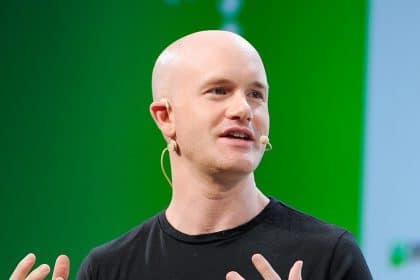
The Coinbase CEO also noted several regulations that can allay investor fears in exchanges and crypto custodians.
Coinbase CEO Brian Armstrong has laid out his ideas for better crypto regulations if the industry is to move forward. Armstrong believes there is a need for regulatory clarity in the wake of the FTX collapse and the aftermath on the industry.
Considering that centralized actors like stablecoin issuers, exchanges, and custodians have caused the most harm to consumers, Armstrong believes regulation should also begin there.
Contrarily, he noted that decentralized actors like DAOs and DeFi already offer, some form of protection because of their transparent systems and pen-source code. Armstrong believes they should be largely left alone.
Regulating Stablecoins
The global market for stablecoins increased by 30-folds from 2020 to mid-2022, reaching $161 billion. According to the Bank of Canada, “These crypto assets could bring efficiencies and greater competition to payment services, especially in a more digitalized economy. “
Like Armstrong, the Bank of Canada officials recently noted a need to regulate stablecoins more. In line with this, US Senator Bill Hagerty introduced the Stablecoin Transparency Act. The bill will soon pass into the Senate in the coming.
Armstrong advised regulators should make stablecoin issuer register as state trusts or OCC national trust charter. He noted there is no need for these issuers to be banks, except if they also want to invest in more volatile assets or fractional banking.
Further, he advised that the issuers conduct annual audits and back up all customer funds with enough reserve. The Coinbase CEO also noted that they should establish reasonable controls and board governance, be SOC-compliant, and have a blacklisting procedure.
Coinbase CEO: Focus on Exchanges and Custodians too
The Coinbase CEO also noted several regulations that can allay investor fears in exchanges and crypto custodians. He noted there was a need to formulate stronger consumer protection policies, implement standard know-your-customer (KYC) and anti-money laundering (AML) rules, and establish a federal licensing and registration regime.
Also importantly, Armstrong noted the need to differentiate assets from commodities, noting the confusion in that regard. One such case is the legal battle between the SEC and Ripple, over whether XRP is a security or not.
Armstrong suggested that Congress classify the first hundred assets as securities or commodities. Where the asset issuer disagrees, they can contend the cases in court and set a precedence for other similar cryptocurrencies that may arise.
next