
Drift Protocol Vault Loses $270M in Potential Exploit
Drift Protocol, the Solana-based perpetuals exchange, suffered the apparent drainage of approximately $270 million in assets from its primary vault address on April 1, 2026, according to on-chain data from Arkham Intelligence.
The vault’s balance collapsed from $309 million to roughly $41 million across a rapid sequence of transactions spanning more than 15 distinct token types. Security researchers have not yet published an independent analysis confirming the precise exploit vector, and Drift has characterized the situation as an active investigation.
A protocol that loses nearly half its total value locked in a single burst of outflows faces an immediate solvency question for depositors – not a theoretical one. With Drift’s TVL standing at approximately $550 million per DefiLlama at the time the transfers were flagged, the scale of the apparent drainage places this event among the most consequential DeFi exploits on Solana to date.
Drift Protocol is experiencing an active attack. Deposits and withdrawals have been suspended. We are coordinating with multiple security firms, bridges, and exchanges to contain the incident. This is not an April Fools joke. We’ll provide additional updates from this account as… https://t.co/03SRPq4fHj
— Drift (@DriftProtocol) April 1, 2026
DISCOVER: Meme coin supercycle: Top performers this week
Drift Protocol Vault Exploit: What the On-Chain Record Shows
The transfers originated from an address Arkham labels as “Drift Protocol: Vault (JCNCM),” which corresponds to the vault address listed in Drift’s own protocol documentation. The first and largest movement – approximately 41 million JLP tokens valued at roughly $155 million – was routed to a single receiving address, HkGz4K, that carries no known-entity label on Arkham.
That address had been funded with just 1 SOL approximately one week prior and received a $2.52 test transfer from Drift’s vault in late March – a reconnaissance pattern we suspect indicates deliberate pre-attack staging rather than an opportunistic breach.
The drained assets spanned stablecoins, wrapped Bitcoin variants, liquid staking tokens including MSOL, BSOL, INF, and JitoSOL, Jupiter’s JLP vault token, USDT across multiple transactions totaling approximately $5.65 million, 23.366 million FARTCOIN valued at $4.11 million, and 2.865 million SYRUP USDC at $3.32 million. A separate transfer of 125,000 WSOL – approximately $10.45 million – was routed to a second unlabeled address. The breadth of asset types is consistent with a comprehensive sweep of all deposited collateral rather than a targeted single-asset withdrawal.

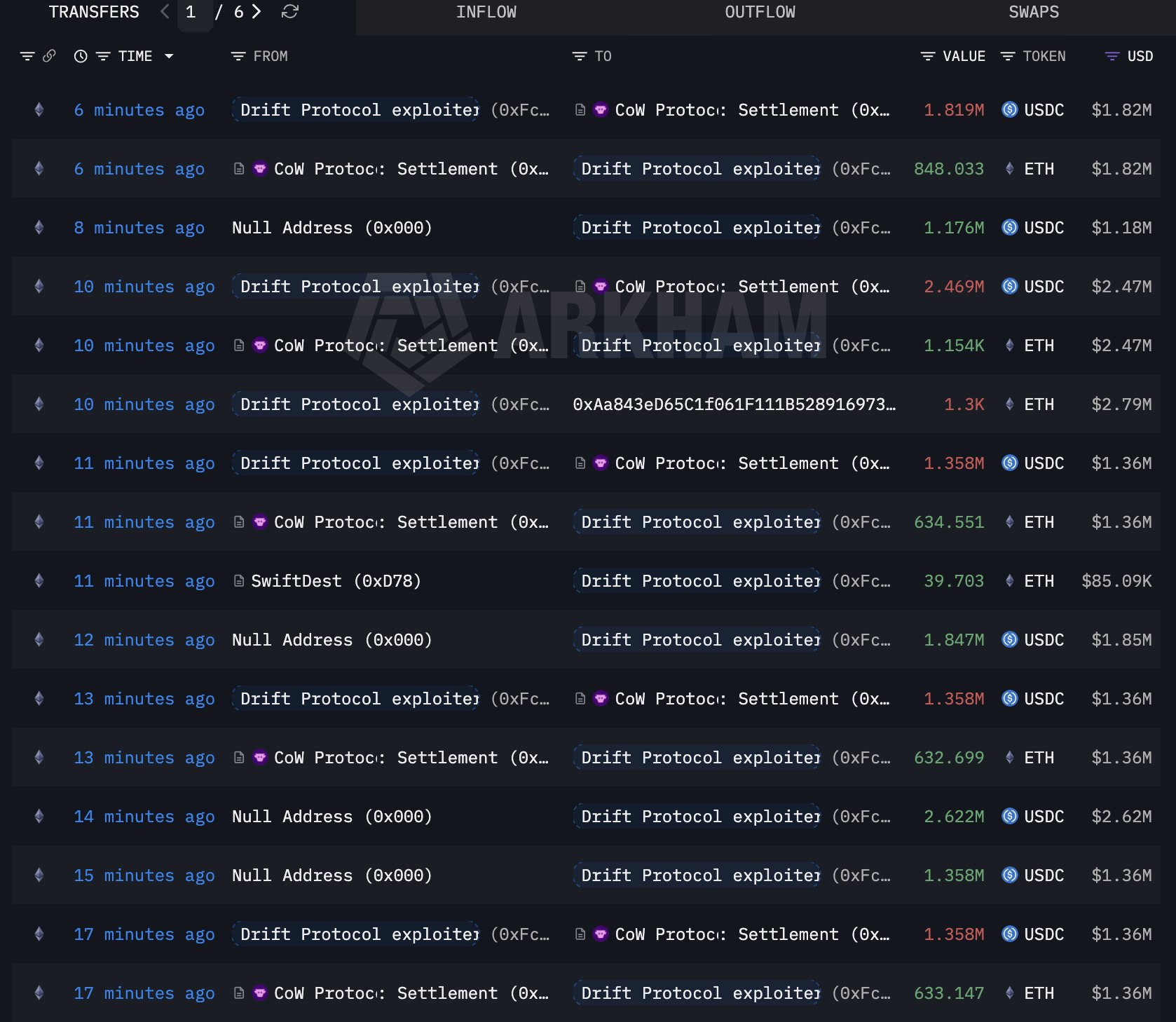
Source: Lookonchain
Blockchain analyst Lookonchain reported that the suspected exploiter began swapping drained assets into ETH, a common laundering vector following large DeFi thefts. PeckShield founder Jiang Xuxian said the attack likely hinged on compromised admin keys – “The admin keys behind Drift were definitely leaked or compromised” – framing the incident as a human-error key management failure rather than a smart contract vulnerability.
EXPLORE: Crypto breakout alerts this week
Protocol Exposure and Ecosystem Contagion Risk
Drift Protocol functions as a non-custodial perpetuals exchange where user collateral is pooled in the vault address that was drained – meaning the $270 million figure represents deposited user funds, not protocol treasury assets. A protocol that loses depositors’ collateral at this scale cannot honor open positions or withdrawal requests until the shortfall is resolved, creating immediate insolvency pressure on active traders with leveraged exposure.
The DRIFT token reflected this immediately, falling 28% to approximately $0.049 on April 1 – a price now 98% below its November 2024 all-time high of $2.60, per market data – while South Korean exchange Upbit suspended all DRIFT trading in response.

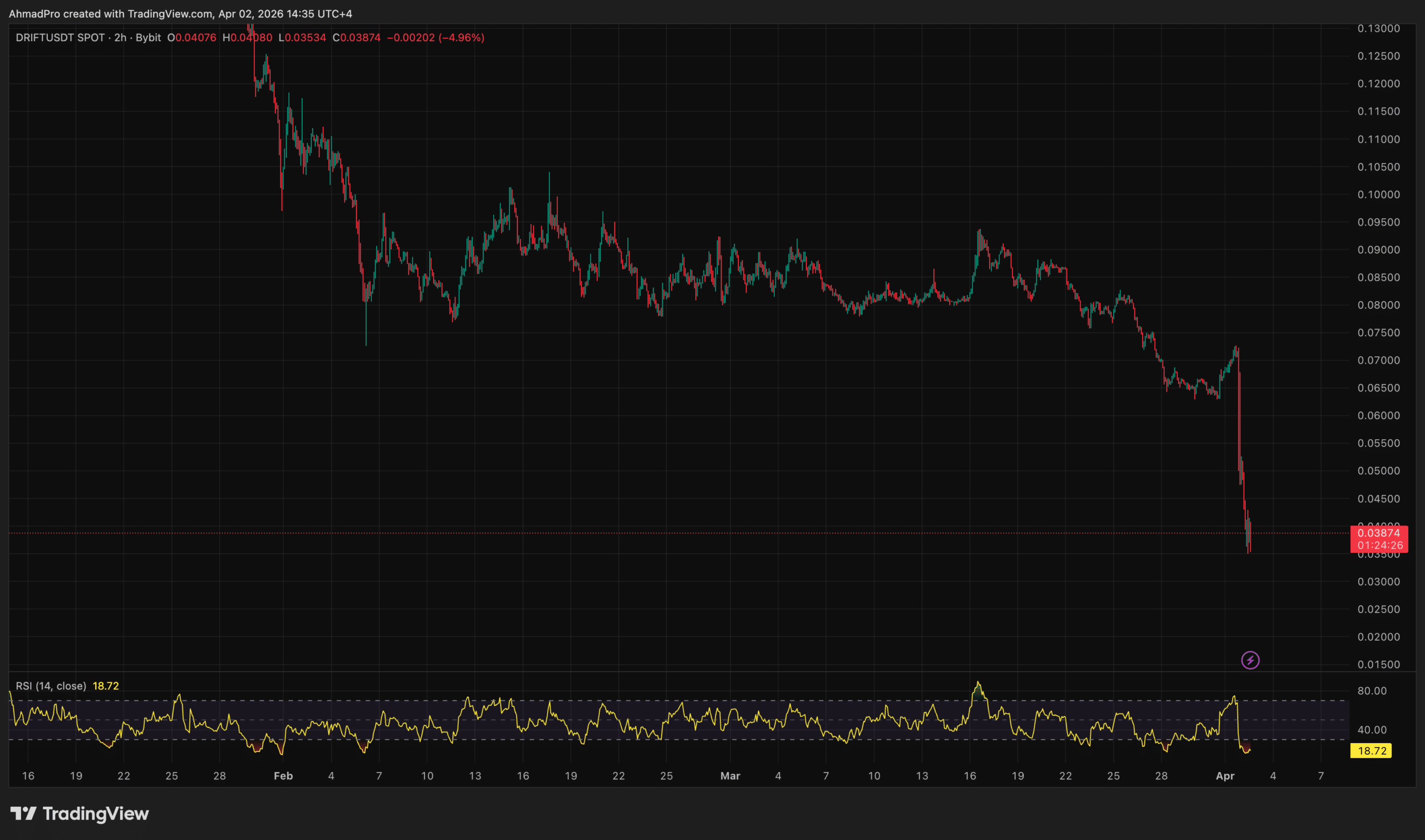
Source: Tradingview
The contagion risk extends beyond Drift’s own user base. Solana’s DeFi ecosystem is tightly interconnected through shared liquidity venues and cross-protocol collateral arrangements; Jupiter’s JLP token was among the largest single asset classes drained, and wallet provider Phantom issued active warnings to users attempting to access Drift during the investigation.
Solana developer and Helius CEO Mert Mumtaz flagged a “high likelihood of a potentially large exploit” on X, a signal that carries infrastructure-level weight given Helius’s role as a primary RPC provider for the network. We suspect the incident will accelerate scrutiny of admin key custody practices across Solana-native protocols – a systemic gap that smart contract audits do not address.
DISCOVER: Best Memecoins To Buy This Month!
next