
Publicly-listed Bitcoin miners have significantly contributed to this hashrate growth, now making up 28.9% of the network’s total hashrate as of September.
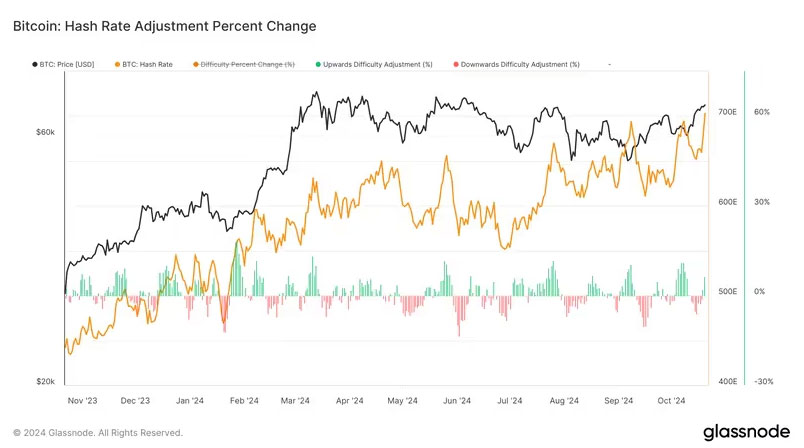
Bitcoin’s BTC $65 261 24h volatility: 2.4% Market cap: $1.30 T Vol. 24h: $48.46 B computational power reached an unprecedented peak, with the seven-day moving average of the network’s hashrate hitting 703 exahashes per second (EH/s). The milestone marks the first time Bitcoin’s hashrate has surpassed the 700 EH/s threshold, according to the latest data from Glassnode.
The hashrate, which measures the total computing force used to mine Bitcoin and process transactions, has grown by almost 13% since the April halving event. That event reduced Bitcoin’s daily production from 900 to 450 BTC, tightening supply and likely influencing price rises.

Publicly-listed Bitcoin miners have significantly contributed to this hashrate growth. According to mining analyst Sebastian Ski, these miners now make up 28.9% of the network’s total hashrate as of September, accounting for over 200 EH/s. Their share of the market has risen by nearly 10% since October of last year.
Public Miners Lead Hashrate Growth Surge
Ski pointed out that these publicly listed entities progressively capture market share from other global miners. Among them, CleanSpark, MARA Holdings, Riot Platforms, and IREN have recorded the most substantial growth in hashrate over the past year. This aligns with data indicating consistent month-over-month production growth for these miners as of September.
Bitcoin mining remains a fiercely competitive and capital-intensive industry. With block rewards halving approximately every four years, the operational stakes intensify. Miners with less economic or energy efficiency are often compelled to cease operations. This natural attrition benefits miners who enjoy lower energy costs or more robust financial backing.
Furthermore, Bitcoin’s hashprice, an indicator of mining profitability, recently climbed to $50 per petahash per second (PH/s). According to Glassnode, this increase coincided with Bitcoin’s price reaching $68,000 and a spike in transaction fees due in part to on-chain activities related to the minting of runes protocol, which accounted for over 50% of all transaction fees on October 17.
Bitcoin Difficulty to Increase by 4%
As Bitcoin’s hashrate touches these historic highs, the network is poised for a difficulty adjustment, expected to increase by over 4% on October 23. Difficulty adjustments, occurring every 2016 blocks, help maintain a consistent block discovery rate of roughly every 10 minutes despite fluctuating network power.


The rising hashrate strengthens both the security and efficiency of Bitcoin transactions. It also highlights the increasing role of publicly-listed miners in the blockchain space. As these miners improve their technology and operations, they will shape the future of Bitcoin mining, potentially impacting market trends and operational methods.
next