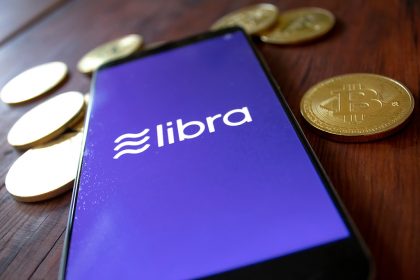
Recently China’s Research Institute on Digital Currencies changed its director to Changchuan Mu, who elaborates on the idea of the upcoming PBoC’s digital currency and regulation of Facebook’s Libra.
Changchuan Mu within the educational lectures touches a range of cryptocurrency questions starting from the recently announced People’s Bank of China (PBoC) digital currency to the vast expansion of Facebook‘s Libra. Also, he compared Libra to the PBoC digital currency, stating that the Chinese new currency is even better than Libra in several aspects.
Mu believes that at this point, Libra already might be unstoppable and that it is “highly unlikely” that someone can stop people from buying the new currency. Even despite its rigorous regulations.
He explained that central banks actually can only ask all their payment institutions and commercial banks not to process transactions that are related to Libra. However, once something is being restricted is almost always creates an underground market for the restricted thing.
Mu cited the China’s underground Bitcoin trading when China banned it some time ago. The underground Bitcoin traders use VPN’s to buy BTC from foreign exchanges and Changchuan Mu believes that it will be the same if Libra gets banned.
However, Mu says that there still is one particular scenario where Libra could be stopped:
“If the U.S. bans Libra legally, then Libra will certainly be stopped.”
Monetary Sovereignty Is at Risk
This is one of the most loudest arguments against Libra completely forgetting the fact that it would be backed by these local monetary tools. Mu also says that monetary sovereignty is at risk because Facebook’s Libra could be the main destructor. Mu’s argument was that every country’s monetary policy which allows central banks to control the supply and demand of its local currency by adjusting interest rates is crucial for the country:
“If we allow Libra come to the market, we would open the underground economic channels.
It will be hard for China to manage foreign currencies and the $50,000 capital outflow cap would be less effective.”
Additionally, he mentioned Thailand and Vietnam which would lose control over their interest rate and monetary policies because of Libra mainly by the fact that their local currencies are very weak.
Moreover, he also compared the PBoC digital currency to Libra saying that it can help governments fight money laundering, tax evasion, and the financing of terrorists. Funny how almost identical digital currencies are being compared and the banks’ one is better than the other. Also, he claimed that the digital yuan’s main idea is to remove cash and that it could be transferred even without mobile internet or internet as such by using NFC (near-fiel communication).
As we reported earlier, People’s Bank of China (PBoC) is launching its own digital currency, even after a recent ban it imposed on all ICOs and cryptocurrency exchanges in China.
next“What the central bank have in mind is a centralised digital currency among all. As money has evolved from the barter system to its metallic and paper forms, it is now going digital,” commented Yao Qian, the central bank’s lead researcher.