ETH’s strongest performance always occurred in the first half of the year. CoinGlass data showed that Q1 and Q2 delivered 83% and 66% returns on average, respectively.
Ethereum ETH $2 333 24h volatility: 0.8% Market cap: $281.50 B Vol. 24h: $22.19 B lagged behind Bitcoin BTC $74 274 24h volatility: 1.3% Market cap: $1.49 T Vol. 24h: $44.66 B in 2024, but this could change in 2025 amid an attractive 17% yield opportunity that could drive institutional demand.
In a recent newsletter, Greg Magadini, director of derivatives at Amberdata, cited a surge in ETH CME Futures OI (open interest) as a sign of renewed institutional interest in the smart contract platform.
“We’re finally seeing an OI buildup in the Ethereum CME futures complex… which might be signaling that US institutions are paying attention to ETH finally,” wrote Magadini.
-
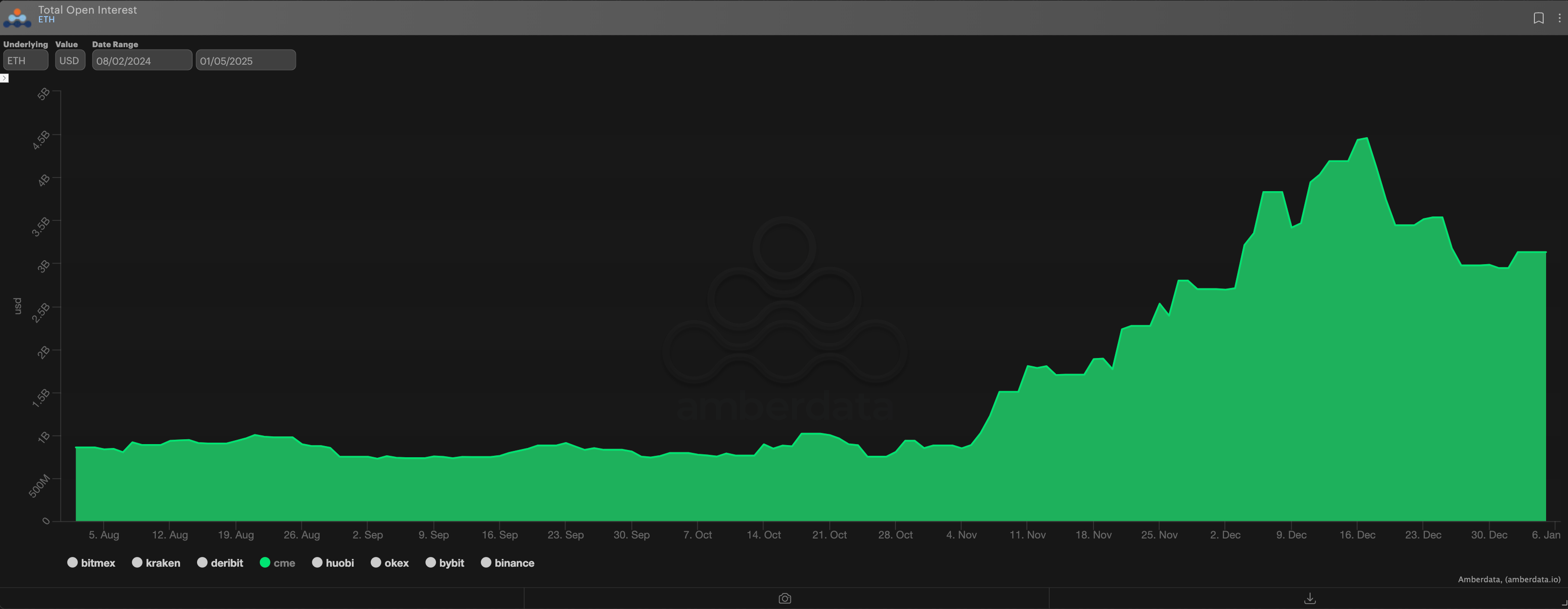
Photo: Amberdata
The ETH CME Futures surge began after the November US election, underlying the bullish expectations for the asset and DeFi sector during the new Trump administration. Over the same period, the total OI rose from $1.5B to over $4.5B.
Ethereum’s 17% Yield Opportunity
However, Magadini noted that a potential ETF staking is the most bullish catalyst for ETH’s institutional demand and price.
“What’s very interesting, however, is the potential for an ETH ETF that distributes staking rewards to ETF holders. This product would set up a fascinating trade opportunity,” added Magadini.
Currently, staking ETH, delegating your token to validators to secure the network, earns about a 3.5% yield per year. Apart from this, investors can earn an extra 14.5% annualized yield through ETH’s basis trade as interest for CME Futures soar.
For the unfamiliar, ETH’s ‘basis trade’ refers to the premium collected when traders buy spot ETH ETF and simultaneously short the CME Futures. This strategy yielded as much as 18% APY (annualized percentage yield) in early December but has eased to 13% as of this writing.
-
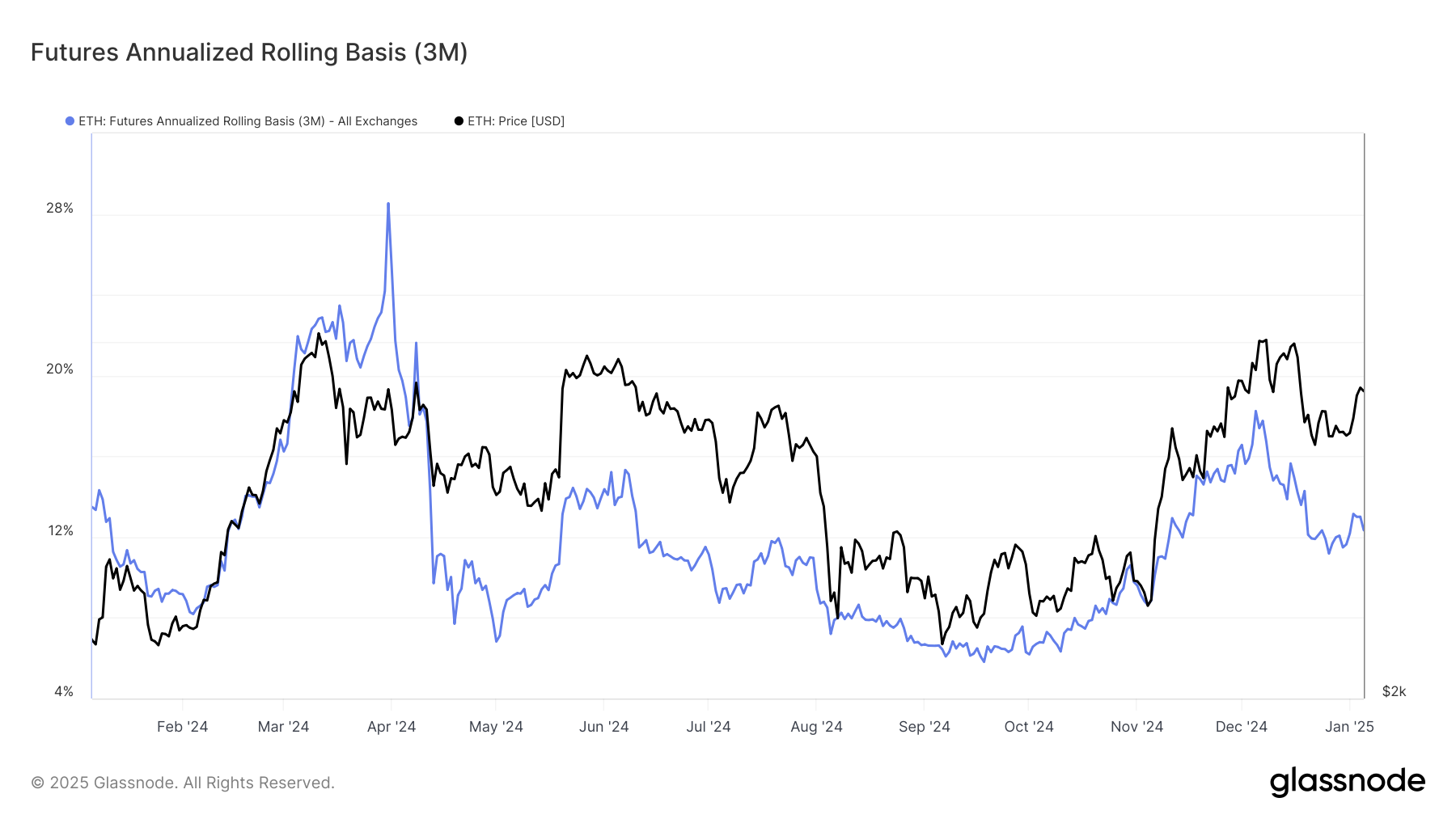
Photo: Glassnode
Collectively, the overall ETH basis yield and staking rewards could be attractive to institutional players, as noted by Magadini.
“Trades could gain the +14% APY basis yield AND the 3.5% PoS yield. Together the total yield is about 17% in regulated tradFi products with delta-neutral exposure…If regulation permits Staking Reward distributions, given a new SEC direction, this could be a great income opportunities in 2025.”
If so, the demand for ETH could soar, driving its value higher. As of this writing, the king altcoin was valued at $3.6K, with Deribit options traders eyeing $5K and $6K targets for the end-March expiry.
-
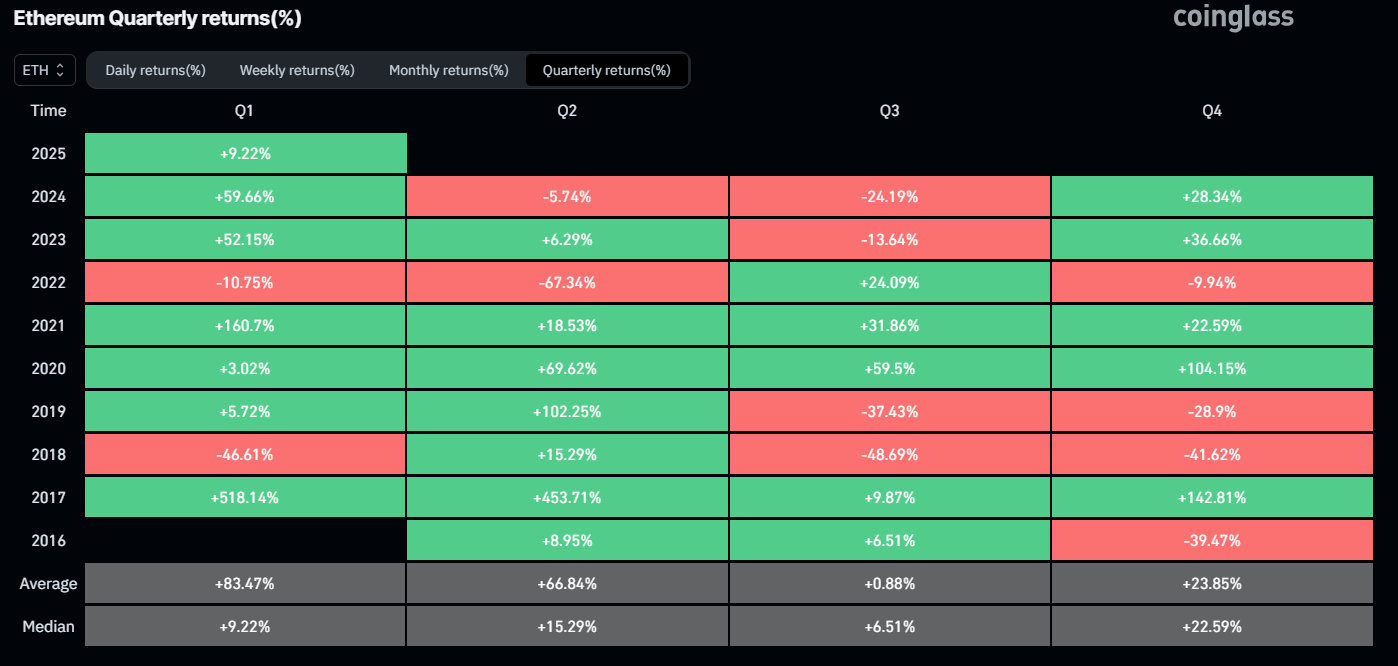
Photo: Coinglass
That said, ETH’s strongest performance always occurred in the first half of the year. CoinGlass data showed that Q1 and Q2 delivered 83% and 66% returns on average, respectively. If the seasonality trends repeat, ETH could record explosive growth in the next few months.
next