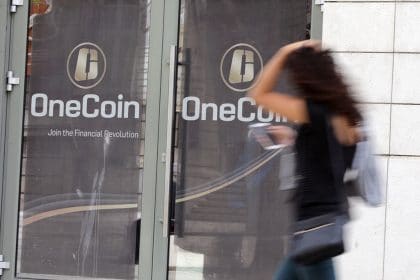
Within the framework of the OneCoin scheme, the transactions moved a total of $137 million to international bank accounts.
Thousands of “suspicious activity reports” commonly referred to as SARs and other U.S, government documents that were leaked by an investigative media outlet, BuzzFeed news, indicate that in February 2017, the Bank of New York Mellon (BNY Mellon) was used by OneCoin organizers to launder millions of customers’ money. According to the files, the bank flagged a number of transactions with the Financial Crimes Enforcement Network (FinCEN) that it deemed suspicious. Within the framework of the OneCoin scheme, the transactions moved a total of $137 million to other international bank accounts.
U.S. prosecutors have alleged the scheme brought in approximately $4 billion worldwide. However, in China, law enforcement managed to recover $267.5 million, whereby it went ahead to prosecute 98 people.
Years past and the founder is nowhere to be seen. Presumably aided by the same laws to maneuver her way out and remain safe.
OneCoin Scheme Uncover Banks Dubious Operations
Banks are using an obsolete system at a time when the market needs a well-structured system to democratize and decentralize services to where they are mostly needed.
According to the report compiled by Buzzfeednews, banks are using the same law created to protect consumers against money laundering to facilitate the same crime.
“Some of these people in those crisp white shirts in their sharp suits are feeding off the tragedy of people dying all over the world,” said Martin Woods, a former suspicious transactions investigator for Wachovia.
For a long, there has been a notion that bitcoin is the primary facilitator of money laundering but the case study is revealing differently.
“These documents, compiled by banks, shared with the government, but kept from public view, expose the hollowness of banking safeguards, and the ease with which criminals have exploited them. Profits from deadly drug wars, fortunes embezzled from developing countries, and hard-earned savings stolen in a Ponzi scheme were all allowed to flow into and out of these financial institutions, despite warnings from the banks’ own employees,” BuzzFeed news noted in the report.
Apparently, the banks only file the suspicious transactions only to fulfill the law but never attempt to block the transactions from being processed.
Notably, Deutsche Bank flagged a total of $1.3 trillion, JPMorgan approximately $500 billion and Bank of America another $384 billion. BNY Mellon underlined a total of $64 billion in 325 separate SARs filed with FinCEN, making it the second-most-frequent filer in the leaked documents.
With such huge transactions taking place in the close watch of the watchdog, it only shows how the cartels have infiltrated the system for their own benefit.
Derailing the wheel of justice by denying services to where it is much needed has made billions for the executive members of most of these banks, according to the report.
next