
Iran’s Crypto Volume Drops 80% but Network Holds: TRM Labs
A new report by blockchain intelligence firm TRM Labs reveals that recent US and Israeli military strikes have crippled Iran’s crypto transaction volumes, causing a dramatic drop of around 80%. Despite this precipitous decline in trading activity analysts believe crypto infrastructure in Iran remains structurally sound.
In a blog post released Monday, the analytics firm described the ecosystem as shifting into a “risk containment mode” rather than suffering a systemic collapse. The strong contraction appears driven primarily by internet restrictions and deliberate protective measures taken by local exchanges, rather than a fundamental failure of the underlying blockchain networks.
EXPLORE: Best New Cryptocurrencies in 2026 – Recently Launched Coins & Investment Watchlist
Iran Crypto Outflows: Anatomy of the Volume Collapse
80% decline in trading volume occurred specifically between February 27 and March 1. This timeframe correlates directly with the onset of severe internet connectivity disruptions following the initiation of military strikes on February 28. The data suggests that mechanical access limitations prevented users from executing trades, resulting in a sudden freeze of market activity.

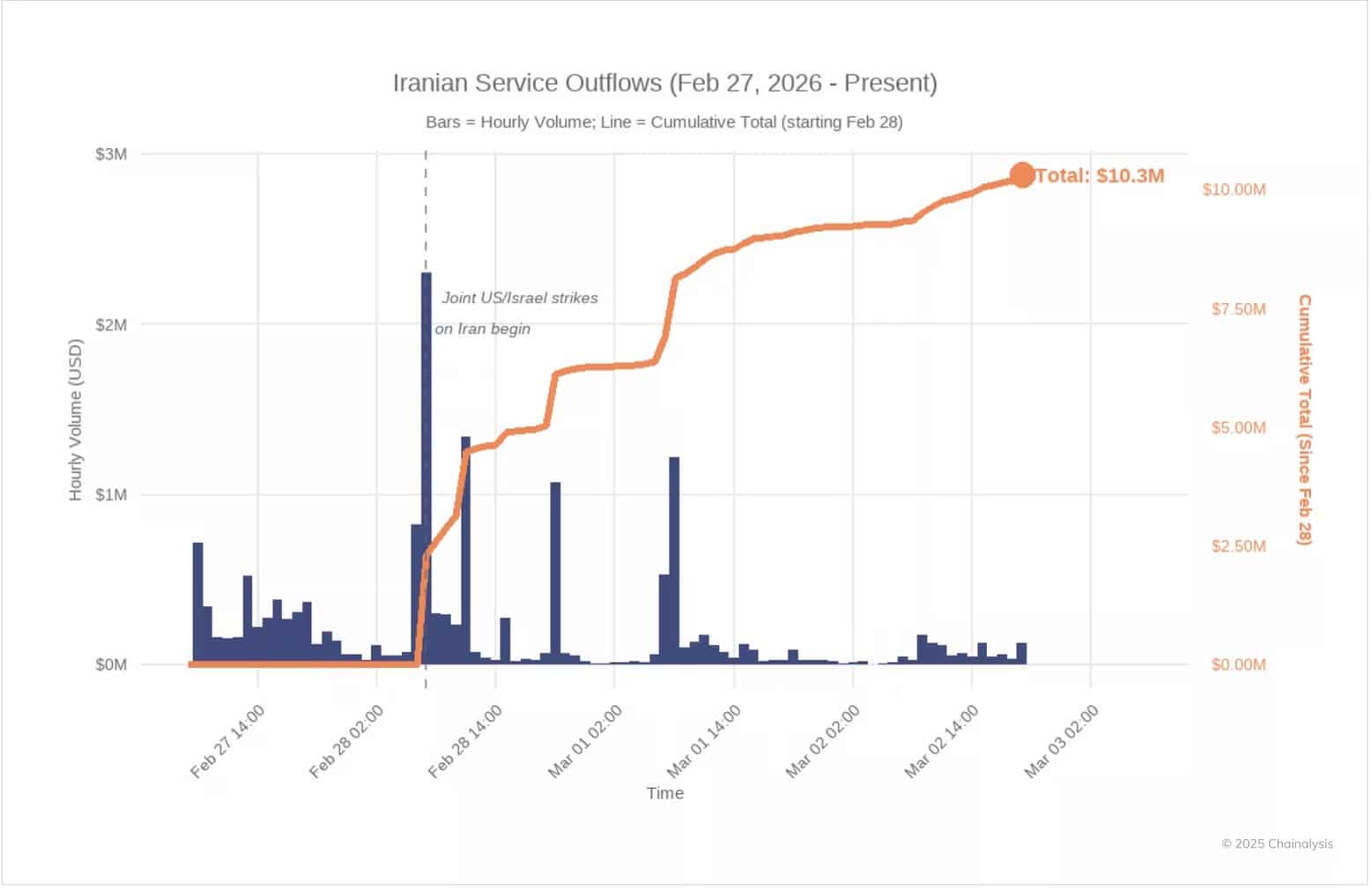
Iranian Service Outflows Source: Chainalysis
The report highlights conflicting interpretations regarding capital flows during this volatile period. While competitor analytics firm Elliptic reported a 700% spike in outflows from Nobitex, Iran’s largest exchange, suggesting potential capital flight, TRM Labs offered a more conservative analysis.

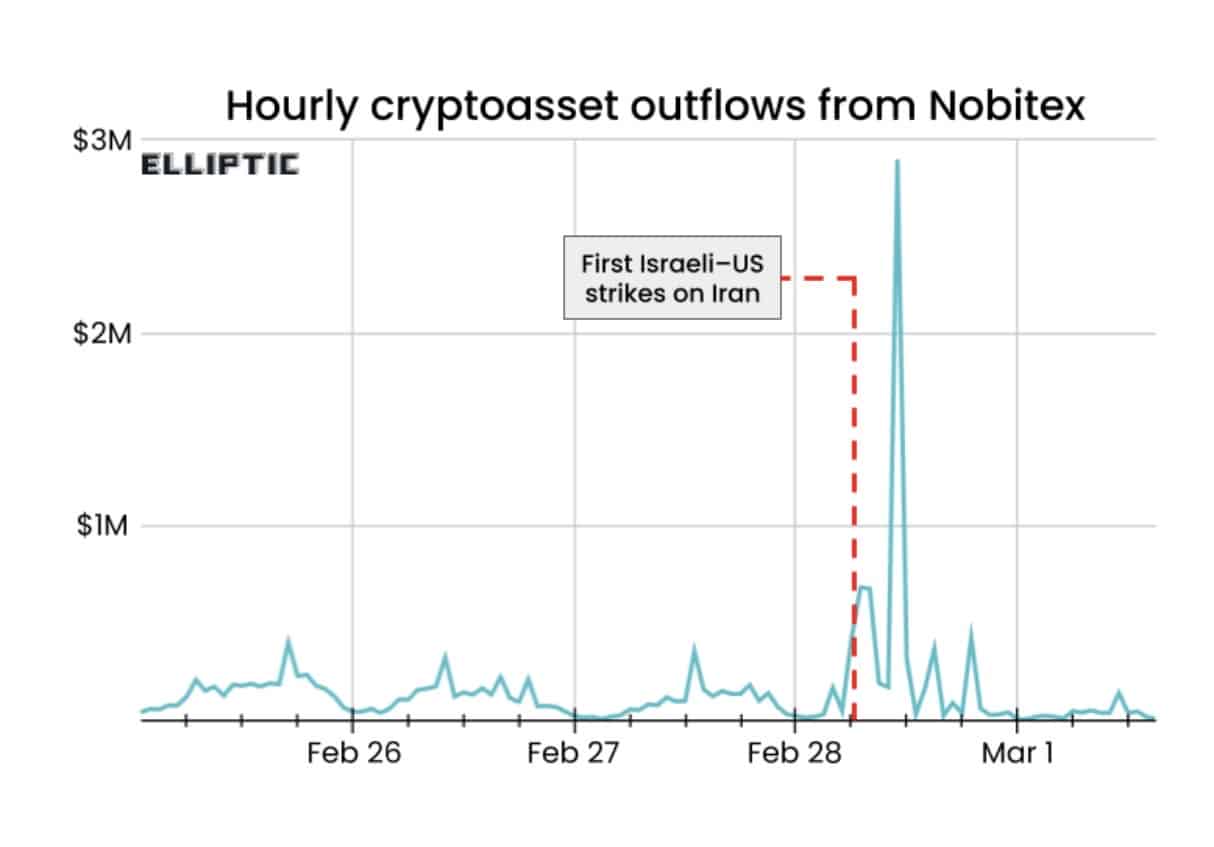
Putflows from Nobitex: Elliptic
TRM noted that Nobitex recorded roughly $3 million in combined inflows and outflows, a figure the firm described as “not necessarily outliers in the context of routine operations.”
TRM cautioned against drawing definitive conclusions about capital flight based on these flows. The firm argues that recent transaction volume data is consistent with users struggling to access platforms due to internet blackouts, rather than a mass exodus of assets from the region.
Geopolitical Pressures and Connectivity Blackouts
The contraction in crypto activity aligns with the broader operational instability caused by the coordinated military strikes. Internet restrictions serve as a mechanical choke point for digital asset transactions, cutting off the primary access route for retail traders. This dynamic is frequent in regions facing geopolitical unrest, where Bitcoin stability is often tested against infrastructure reliability.
Additionally, the regulatory environment for Iranian crypto remains heavily sanctioned. U.S. authorities continue to scrutinize the region for sanctions evasion, often focusing on stablecoin issuers and centralized exchanges. The inability to move funds freely is exacerbated by these external pressures, as global platforms routinely block IP addresses associated with the region to comply with OFAC standards.
DISCOVER: What is the Next Crypto to Explode in 2026?
Structural Integrity: Risk Management vs. Systemic Failure
Despite the severe volume drop, TRM Labs characterizes the ecosystem as being in a “risk-managed state.” Major domestic platforms have reportedly remained operational, implementing defensive measures to preserve solvency. Specifically, Iran’s central bank directed major exchanges, including Nobitex, Wallex, and Tabdeal, to temporarily suspend trading of the USDT-toman pair, the primary bridge between crypto and the domestic fiat currency.
When trading for these pairs resumed, order books showed significantly reduced depth and visible price dislocations, creating a period of impaired liquidity. However, TRM Labs noted that exchanges successfully utilized batched withdrawals and issued risk guidance to users. This distinction is critical for on-chain analysis: the network’s reduced output is a result of access limitations and protective halts, not a liquidity crisis or insolvency event common in failing markets.
EXPLORE: Upcoming Coibase Listings to Watch
Iran Crypto Freeze Clouds Outflow Analysis
Analysts suggest that distinguishing between panic-induced capital flight and routine operational flows will remain difficult until internet connectivity stabilizes. The current data points to a freeze in activity rather than a chaotic liquidation of assets. If the network remains structurally sound as TRM Labs indicates, domestic exchanges may be positioned to resume normal operations once connectivity is restored.
Market observers and compliance firms will be closely watching for the full restoration of exchange services to determine if the liquidity crunch leaves lasting damage on Iran’s crypto economy.
The divergence in analysis between major firms like Elliptic and TRM Labs underscores the complexity of monitoring sanctioned jurisdictions during active conflict.
next