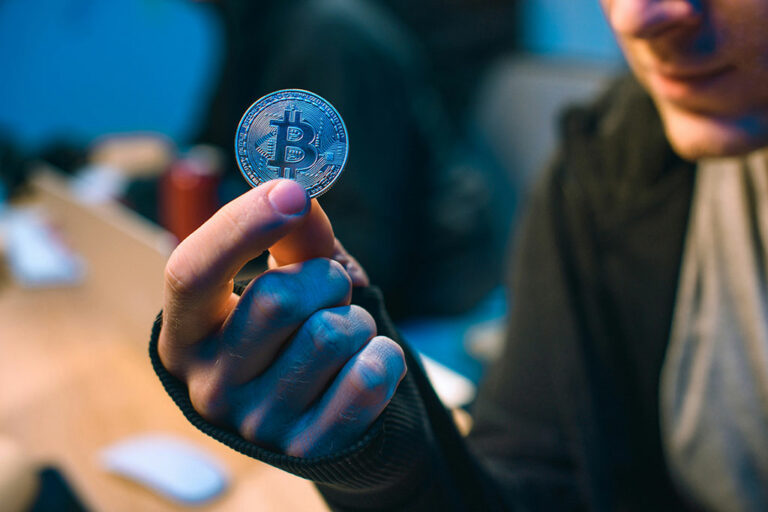
With the imminent launch of Bitcoin spot ETFs, many institutions are also looking to gain increased exposure to BTC.
Exactly 15 years ago, Satoshi Nakamoto, the pseudonymous creator of Bitcoin, sent the Bitcoin whitepaper via email to a select number of cryptographers.
Satoshi is fondly quoted to have opened the email saying:
“I’ve been working on a new electronic cash system that’s fully peer-to-peer, with no trusted third party.”
He then went on to link the Whitepaper which he titled “Bitcoin: A Peer-to-Peer Electronic Cash System.”
The whitepaper proposed a system that allowed individuals to transact with themselves without government influence and third-party providers. This, it claimed, would solve the problem of “double spending” that plagued the financial system at the time.
To achieve this, Satoshi proposed using a network of nodes to validate and record transactions through a proof-of-work consensus mechanism.
Standing on Past Giants
Satoshi’s genius was in his ability to pull together all the impressive developments in the cryptography space into one functional system.
Notable among those inventions is Wei Dai’s b-money, an electronic peer-to-peer cash system. While it never launched, the plans became the precursor for the nodes on the Bitcoin system. Again, Satoshi applied Adam Back’s proof-of-work mechanism, known as Hashcash. This allowed one party to prove to the others that a particular amount of a specific computational effort had been expended.
Further, Satoshi used Ralph Merkle’s work on developing public key cryptosystems. He incorporated Merkle trees into the Bitcoin system to verify transaction data through digital signatures. Meanwhile, Satoshi also noted that the works of Henri Massias, Scott Stornetta, Stuart Haber, and Dave Bayer were instrumental in implementing timestamping into Bitcoin’s protocol.
15 Years Post Bitcoin Whitepaper Launch: Any Progress?
Two months after publishing the Bitcoin whitepaper, Bitcoin launched on January 3, 2009. It took another 16 months for the first real-world transaction involving Bitcoin to happen. At the time, Laszlo Hanyecz bought two pizzas for 10,000 Bitcoin.
Not long after that, Bitcoin became a tool for fraudsters and hackers to launder money and avoid scrutiny. All that has since changed. Bitcoin has now successfully drawn mainstream attention to its potential. Despite its volatility, Bitcoin is the largest asset by market capitalization. It surpassed the $1 trillion mark in 2021 and often draws favorable comparisons to gold as a store of value. Also, Bitcoin is a legal tender in El Salvador and the Central African Republic.
Again, there are also many use cases for the asset, with many companies now accepting payment for their services in Bitcoin. With the imminent launch of Bitcoin spot ETFs, many institutions are also looking to gain increased exposure to Bitcoin.
Bitcoin rose to a peak price of $69000 in November 2021. At the time of writing, it is trading at well over $34000.
next