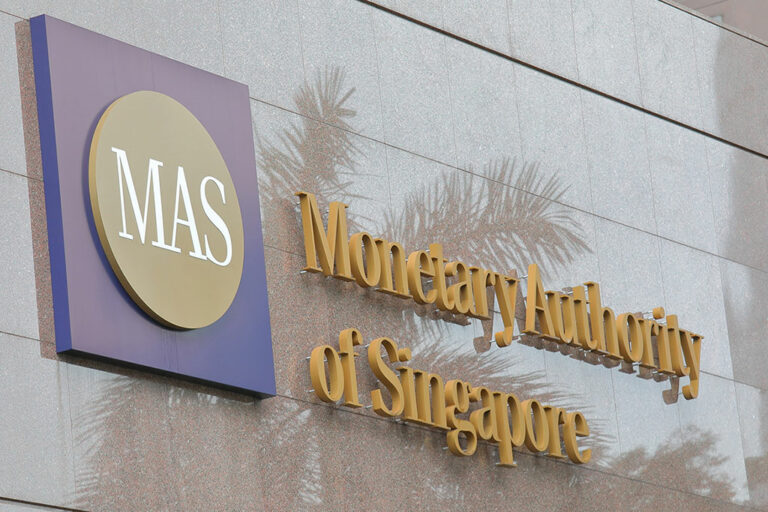
The countries created a policymaking group to further the asset tokenization tests and help with navigating legal and compliance concerns.
Government agencies in multiple countries are collaborating on asset tokenization tests with real-world assets. In a Monday announcement from the Monetary Authority of Singapore (MAS), regulators in Japan, Switzerland, Singapore, and the UK are all working on tokenization pilots in foreign exchange, fixed income, and asset management products.
The MAS’ announcement mentions the Financial Services Agency of Japan (FSA), the United Kingdom’s Financial Conduct Authority (FCA), and the Swiss Financial Market Supervisory Authority (FINMA). Called Project Guardian, the collaboration involves 15 financial institutions working together on industry pilots.
The MAS notes that the pilots have the potential to significantly benefit the market and improve transaction efficiency via tokenization. The announcement adds that as the pilots scale and increase in sophistication, the project requires “closer cross-border collaboration among policymakers and regulators,” – the motivation for creating a policymaker group constituting FCA, FINMA, and FSA.
Speaking on the partnership, MAS Deputy Managing Director for Markets and Development, Mr Leong Sing Chiong, said:
“MAS’ partnership with FSA, FCA and FINMA shows a strong desire among policymakers to deepen our understanding of the opportunities and risks arising from digital asset innovation. Through this partnership, we hope to promote the development of common standards and regulatory frameworks that can better support cross border interoperability, as well as sustainable growth of the digital asset ecosystem.”
The MAS provided further details of the asset tokenization policymaker group. Some of its functions include further discussions on legal and policy effects on digital assets, identifying potential risks, and exploring the development of common standards for digital asset networks. The group is also tasked with promoting interoperability for cross-border asset development, navigating regulatory sandboxes to facilitate pilots, and facilitating knowledge sharing among regulators and the industry.
Asset Tokenization of Real World Assets
Asset tokenization adds flexibility to real-world assets that are otherwise rigid and inflexible. Stablecoins, for example, qualify as tokens representing real-world assets as their values are pegged to the underlying assets. Although some stablecoins are pegged to precious metals like gold, some are powered by algorithms. However, the most popular stablecoins are those pegged to fiat currency, such as USDT. In some cases, major stablecoins attract higher daily transaction volumes than cryptocurrencies like Bitcoin (BTC).
According to the World Economic Forum (WEF), blockchain technology will contribute 10% to the global GDP by 2027. The WEF also projects that the financial assets alone in the tokenization market will be nearly $24 trillion in that time. However, there are several concerns about the increased tokenization of real-world assets. For instance, the registration and uncontrolled transfer of these assets may pose certain risks. If these items mostly or solely exist on a blockchain, especially if the network is not decentralized, access to verification may be limited or at least controllable by a central authority. This exposes the asset or record of the asset to undue risk of tampering. There are also technical challenges that may occur, with ensuring consistency between the real-world asset and the on-chain representation. Finally, regulatory uncertainty, especially with classifying these assets, renders the future of asset tokenization somewhat bleak.
next