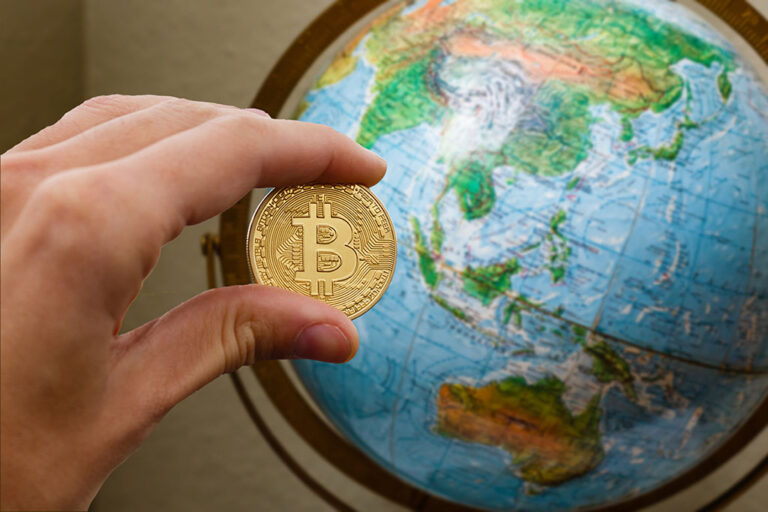
21Shares has predicted that Bitcoin’s growing status as a legitimate financial asset will lead other nations, like Argentina, to adopt it as part of their sovereign reserves.
21Shares, one of the largest issuers of cryptocurrency exchange-traded products (ETPs), has forecasted that another nation-state will likely follow in El Salvador’s footsteps by adopting Bitcoin BTC $73 000 24h volatility: 2.9% Market cap: $1.46 T Vol. 24h: $27.86 B as a reserve asset.
According to their latest 2025 State of Crypto Market Outlook, Bitcoin’s growing recognition as a legitimate financial asset has led to predictions that countries, particularly Argentina, could embrace Bitcoin as part of their sovereign reserves in the near future.
Bitcoin Can Withstand Economic Crisis
In a bold move that shook the global financial system, El Salvador became the first country to officially add Bitcoin to its reserves in 2021. The Central Bank of El Salvador now holds Bitcoin as part of its treasury, signaling a shift toward a new standard for reserve assets.
Since then, Bitcoin has gained increasing attention from both individual investors and institutional players, who see the crypto asset as not just a speculative investment but also a store of value with increasing global utility.
Due to this increasing global acceptance, 21Shares believes BTC will make a good reserve for central banks worldwide. However, the idea of Bitcoin becoming a reserve asset is not new. In fact, Dr. Matthew Ferranti, a former member of the White House Council of Economic Advisers, has highlighted the economic and strategic benefits of central banks adding Bitcoin to their reserves.
In his October report titled “The Case for Bitcoin as a Reserve Asset”, Ferranti laid out several compelling reasons why central banks might consider holding BTC alongside traditional assets like gold.
Bitcoin’s Performance during Economic Crises
Ferranti argued that Bitcoin has demonstrated its value during economic crises. In particular, he noted that the crypto asset has shown resilience and growth during major economic disruptions, including the fallout from US financial sanctions and the collapse of prominent banks in 2023.
According to him, bitcoin’s price surged during the 2023 Silicon Valley Bank crisis and increased significantly after the US imposed sanctions on Russia following its invasion of Ukraine in 2022.
Ferranti explained that a key reason for this performance is that Bitcoin operates outside the traditional banking system, making it immune to the geopolitical risks and financial policies that can affect fiat currencies and traditional assets. He further stated that Bitcoin offers an alternative store of value during times of uncertainty, providing a financial cushion for nations facing external pressures.
Stablecoins to Continue Integration with TradeFi
Based on these factors, 21Shares predicts that countries like Argentina might follow El Salvador’s lead. The company also sees Ethereum ETH $2 198 24h volatility: 5.0% Market cap: $264.47 B Vol. 24h: $14.48 B and stablecoins taking center stage next year in the industry’s growth.
According to the 2025 State of Crypto Market Outlook, “Ethereum will regain its revenue levels, likely surpassing 100% of its target growth due to strategic Layer 22 integrations”. As for stablecoins, the company believes the digital asset will “deepen” integrations with the traditional finance market.
next