
Strategy sold 1,638 BTC for $105M to cover preferred stock dividends and STRC repurchases as its variable-rate shares trade 10% below par value.
In the lastest Bitcoin news today, Strategy (Nasdaq: MSTR), Michael Saylor’s bitcoin treasury company, disclosed the sale of 1,638 BTC for approximately $105 million in an 8-K filing with the SEC.
Proceeds are expected to fund dividend payments on Strategy’s preferred stock classes – including STRC, STRK, STRD, STRF, and STRE – and to pay for repurchases of STRC preferred shares.
This is not simply a Bitcoin sale. It is a capital structure management exercise, with Strategy running a parallel set of levers – BTC monetization and reserve allocation – to service a preferred-stock stack that carries rising cash obligations.
DISCOVER: Best Meme Coins to Buy in 2026
Bitcoin News Today: BTC Sale Mechanics, Price, and the Six-Week Accumulation Pause
Strategy liquidated the 1,638 BTC at an average of roughly $64,000 per coin, a price that sits materially below the firm’s all-in average acquisition cost of $75,419. Despite offloading a portion of its reserves and now sitting on a $10.9 billion paper loss, Strategy remains one of the largest corporate holders of Bitcoin globally, and the $105 million sale represents a small fraction of its total portfolio.
Strategy increased its USD Reserve by $250M and repurchased $81M of $STRC. This increased USD Duration by 57 days to 2.3 years and tightened STRC’s BTC Credit by 5 bps. As of 8/2/26, we hold ₿842,138 in our BTC Reserve and $4.0B in our USD Reserve. $MSTR https://t.co/t7bGZJ8Q3o
— Michael Saylor (@saylor) August 3, 2026
The sale marks the sixth consecutive week without a new Bitcoin purchase, a notable departure from the accumulation posture that defined Strategy’s public identity for years.
The pattern has been escalating: Strategy sold just 32 BTC in May 2026, then 3,588 BTC in early July for approximately $216 million, and now this latest tranche. Proceeds are directed toward preferred-dividend payments and STRC repurchases.
EXPLORE: Best Meme Coins to Buy for August
STRC Preferred Stock: Buyback Logic and the 12% Dividend
Strategy’s repurchases of STRC preferred shares form a key part of its capital management response. STRC – the company’s Variable Rate Series A Perpetual Preferred Stock – carries a 12% annual dividend rate and a stated value of $100 per share, but has been trading below par.
The stock closed at $89.46 on July 31, putting it roughly 10 to 11% below its $100 par value even at the highest dividend rate in its history.
STRC launched in July 2025 at a 9% rate and has climbed through seven consecutive monthly increases, reaching 12% for record dates beginning July 1, 2026. The increases follow a ratchet mechanism: the dividend rises 0.5% whenever STRC trades below $95, and once triggered, an increase cannot be reversed even if the price recovers.

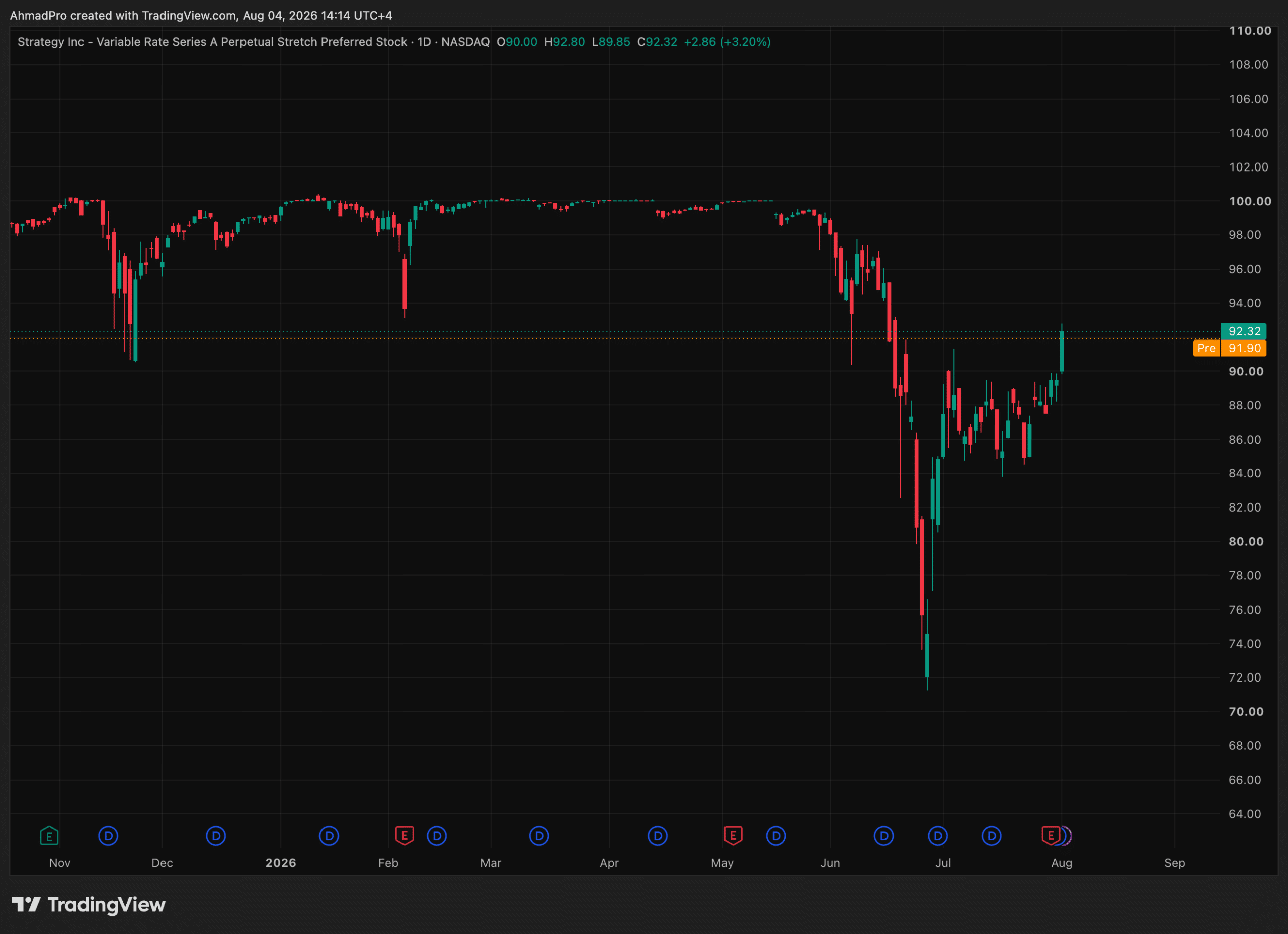
Source: STRCUSD / Tradingview
Strategy resets the rate monthly to push STRC’s price back toward its $100 par value, a mechanism the company depends on to issue new STRC shares and raise fresh capital.
The persistent discount has forced Strategy to pause new STRC issuance through its at-the-market program, limiting the company’s ability to keep adding to its bitcoin holdings using that specific funding channel.
Competition has added pressure, with rival Strive’s SATA preferred security offering a roughly 13% yield with daily dividend payments and no underlying debt, drawing investor demand away from STRC.
next