
Yuga Labs Settles Bored Ape Trademark Dispute With Ryder Ripps
Yuga Labs, the creator of the Bored Ape Yacht Club NFT collection, has reached a settlement with conceptual artist Ryder Ripps and his business partner Jeremy Cahen – resolving a trademark dispute filed in July 2022 that produced two significant federal court rulings on intellectual property protections for non-fungible tokens before the parties agreed to resolve the matter outside of trial.
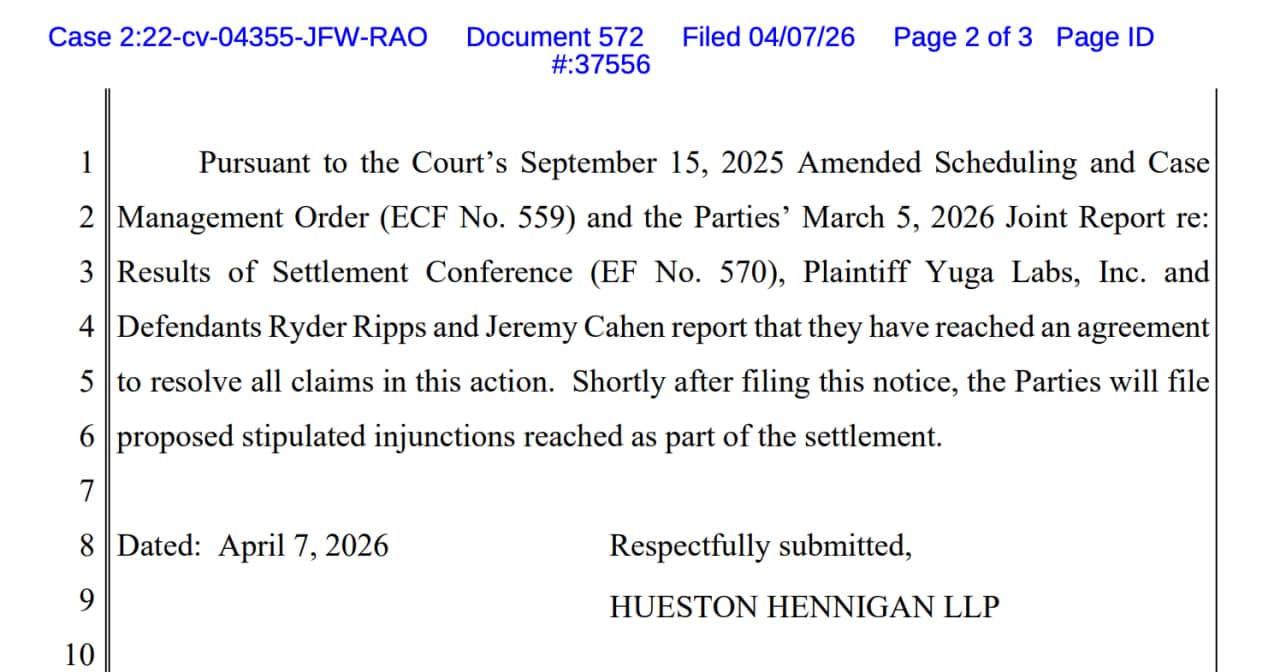
According to a court filing, Ripps has been formally barred from future use of Yuga Labs’ imagery and trademarks, though the financial terms of the settlement have not been publicly disclosed.
🚨 YUGA LABS SETTLES ITS LAWSUIT AGAINST RYDER RIPPS AND JEREMY CAHEN
This deal ends the high-profile case over alleged Bored Ape copycat nfts
The agreement is confidential and permanently bars Ripps and Cahen from using yuga’s imagery and trademarks
Huge W for Yuga 🔥 pic.twitter.com/jQdqe0lXFC
— BlockNews (@blocknewsdotcom) April 8, 2026
The resolution closes one of the most consequential IP enforcement proceedings in the NFT industry’s short legal history – a case that generated, at the appellate level, a controlling Ninth Circuit ruling that NFTs qualify as “goods” under the Lanham Act and are therefore protectable by federal trademark law.
DISCOVER: Meme coin supercycle: Top performers this week
RR/BAYC and the Underlying Yuga Labs Legal Claims: How the Dispute Progressed Through Federal Court
The mechanism functions as follows: Yuga filed suit on July 25, 2022, in the U.S. District Court for the Central District of California (Case No. 2:22-cv-04355), alleging violations of the Lanham Act including false designation of origin and cybersquatting, after Ripps and Cahen launched a project – commonly referred to as RR/BAYC – that reproduced the identical imagery of the original BAYC collection under the stated rationale that the work constituted “expressive appropriation art” protected by the First Amendment.
Ripps had also publicly alleged, beginning in June 2022, that the BAYC artwork contained hidden racist and antisemitic tropes – claims Yuga characterized as a “campaign of harassment” but did not pursue via defamation action.

Source: thomsonreuters
On March 2, 2023, U.S. District Judge John F. Walter granted Yuga partial summary judgment, ruling that the BAYC marks are valid and protectable – finding them conceptually arbitrary and commercially strong – and that the defendants’ use created a likelihood of consumer confusion in the NFT market. Walter rejected multiple affirmative defenses, including nominative fair use, First Amendment protection, naked licensing, and unclean hands.
Following a bench trial on remedies, Walter’s August 4, 2023, final judgment awarded Yuga over $8 million in total – approximately $7 million in attorneys’ fees, plus disgorgement of profits, statutory damages, and costs – and ordered Ripps and Cahen to surrender infringing NFTs and associated intellectual property within two weeks.
The U.S. Court of Appeals for the Ninth Circuit subsequently reversed summary judgment on the issue of consumer confusion, remanding that question for trial, while affirming that NFTs qualify as “goods” under the Lanham Act – a holding that effectively vacated the $9 million penalty and reinstated the need for a merits proceeding.
The Ninth Circuit also rejected Ripps and Cahen’s counterclaims seeking to invalidate Yuga’s copyright in the BAYC artwork. It is that trial-readiness posture – with the confusion question unresolved and a fresh proceeding required – that appears to have prompted both parties to settle.
EXPLORE: Crypto breakout alerts this week
next