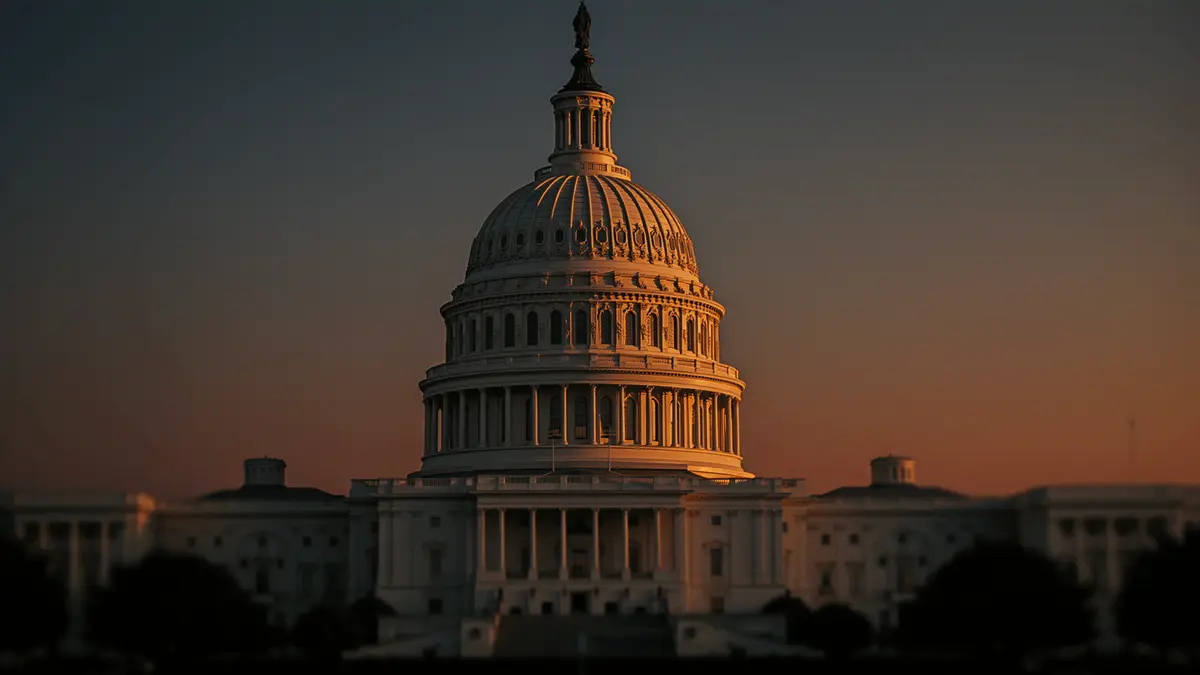
The CLARITY Act faces a narrow window for a Senate floor vote, with ethics provisions and the August recess now the two variables shaping its fate.
Senator Bill Hagerty told FOX Business News on June 18 that he hopes the Digital Asset Market Clarity Act, the CLARITY Act, can clear the Senate before the July 4 congressional recess, even as Senator Cynthia Lummis placed the more probable floor vote window in the period before the August recess, and David Nage, managing director and portfolio manager at Arca, characterized the bill’s base-case trajectory as a post-July 13 Senate floor consideration once ethics provisions are reconciled.
This is not simply a scheduling dispute between optimistic and cautious lawmakers. It is a structural test of whether the 119th Congress can deliver a jurisdictional framework dividing digital asset oversight between the Securities and Exchange Commission and the Commodity Futures Trading Commission before the legislative calendar compresses the opportunity entirely, with Lummis warning that failure in the current window could defer meaningful market structure legislation until 2030.
CLARITY Act News: The Legislative Path From Committee to Floor
The Senate Banking Committee advanced the Senate version of the CLARITY Act on May 14, 2026, by a 15-9 vote, with Democrats Ruben Gallego (AZ) and Angela Alsobrooks (MD) joining all Republicans on the panel. The bill was placed on the Senate Legislative Calendar as No. 423 on June 1, 2026, making it formally eligible for floor consideration.
The House passed its version, H.R. 3633, on July 17, 2025, by a 294-134 margin.
Financial sovereignty means your government cannot inflate away your savings without your consent. That's what Bitcoin and digital assets protect.
— Senator Cynthia Lummis (@SenLummis) June 18, 2026
The procedural stack that remains is considerable. The bill must clear a 60-vote Senate floor threshold, be reconciled with the Senate Agriculture Committee’s version, and then be merged with the House-passed text before reaching the president. Astraea Law has projected enactment around August 2026 while flagging reconciliation risk at each stage.
Ethics Provisions Define the Remaining Gap
Nage, following direct conversations with Senate offices, said lawmakers and industry participants are roughly 80% to 85% aligned on the bill’s substance. Stablecoin yield – previously a live flashpoint, and one that JPMorgan Chief Executive Officer Jamie Dimon has continued to criticize, is no longer the central source of friction.
The remaining disagreement concerns conflict-of-interest and ethics rules that would restrict government officials from participating in crypto-related business activities while holding office.
JUST IN: 🇺🇸 The Federal Reserve proposes a stablecoin issuer identification program 👀
This is the first GENIUS Act rulemaking from the Fed. pic.twitter.com/Obej8CfbZy
— Bitcoin Magazine (@BitcoinMagazine) June 18, 2026
Nage characterized the outstanding debate as a question of enforcement mechanism and political implementation rather than any fundamental dispute over digital asset market structure.
His base-case scenario has Congress resolving those provisions in the weeks following the recess and scheduling a floor vote after lawmakers return on July 13. For a fuller treatment of the specific ethics provisions and their procedural implications, the contours of the remaining conflict involve how restrictions under Section 604 would be enforced rather than whether they belong in the bill at all.
Hagerty’s remarks also invoked the GENIUS Act, the stablecoin legislation the Senate approved earlier, which established a federal framework for payment stablecoins – as evidence that regulatory clarity produces durable policy outcomes. “This will be something more a matter of focus after the 4th of July recess period, but I certainly hope to see it done before,” Hagerty said.
Institutional Participation Contingent on Clarity
Solana Policy Institute President Kristin Smith said many asset allocators are actively exploring digital asset exposure but are withholding capital commitments pending defined regulatory guidelines. She rejected the framing that the CLARITY Act weakens oversight, arguing instead that it adds consumer protections, extends law enforcement tools, and fills jurisdictional gaps left by the existing patchwork regime.
Lummis separately disclosed that the bill carries $150 million in dedicated funding to combat illicit cryptocurrency activity, a provision that reframes the legislation as an enforcement measure as much as a market structure one. Galaxy Research has estimated passage odds at roughly 50-50 for 2026, a figure that treats the August recess deadline as the last realistic legislative gate before the calendar works against enactment. Whether Senate leadership schedules floor consideration before that break or defers to the fall is now the single most consequential near-term variable.
We suspect the ethics provision debate is functioning partly as cover for broader intra-party negotiations on the bill’s scope, the implementation disagreement Nage described is real, but the pace at which it resolves will likely reflect leadership’s read of floor vote math as much as any substantive policy compromise.
next