
Polymarket Sues Massachusetts Over Sports Prediction Ban
Prediction market platform Polymarket filed a federal lawsuit against Massachusetts regulators on Monday, seeking to block state restrictions on its operations. The legal action comes as the state moves to ban rival platform Kalshi from offering sports prediction markets, setting the stage for a jurisdictional battle between state gambling laws and federal oversight.
This battle is crucial for prediction market platforms. During Super Bowl LX, prediction markets (including Kalshi and Robinhood) traded approximately $1.5 billion, nearly matching the $1.76 billion handle of traditional sportsbooks. Kalshi alone registered over $500 million in volume.

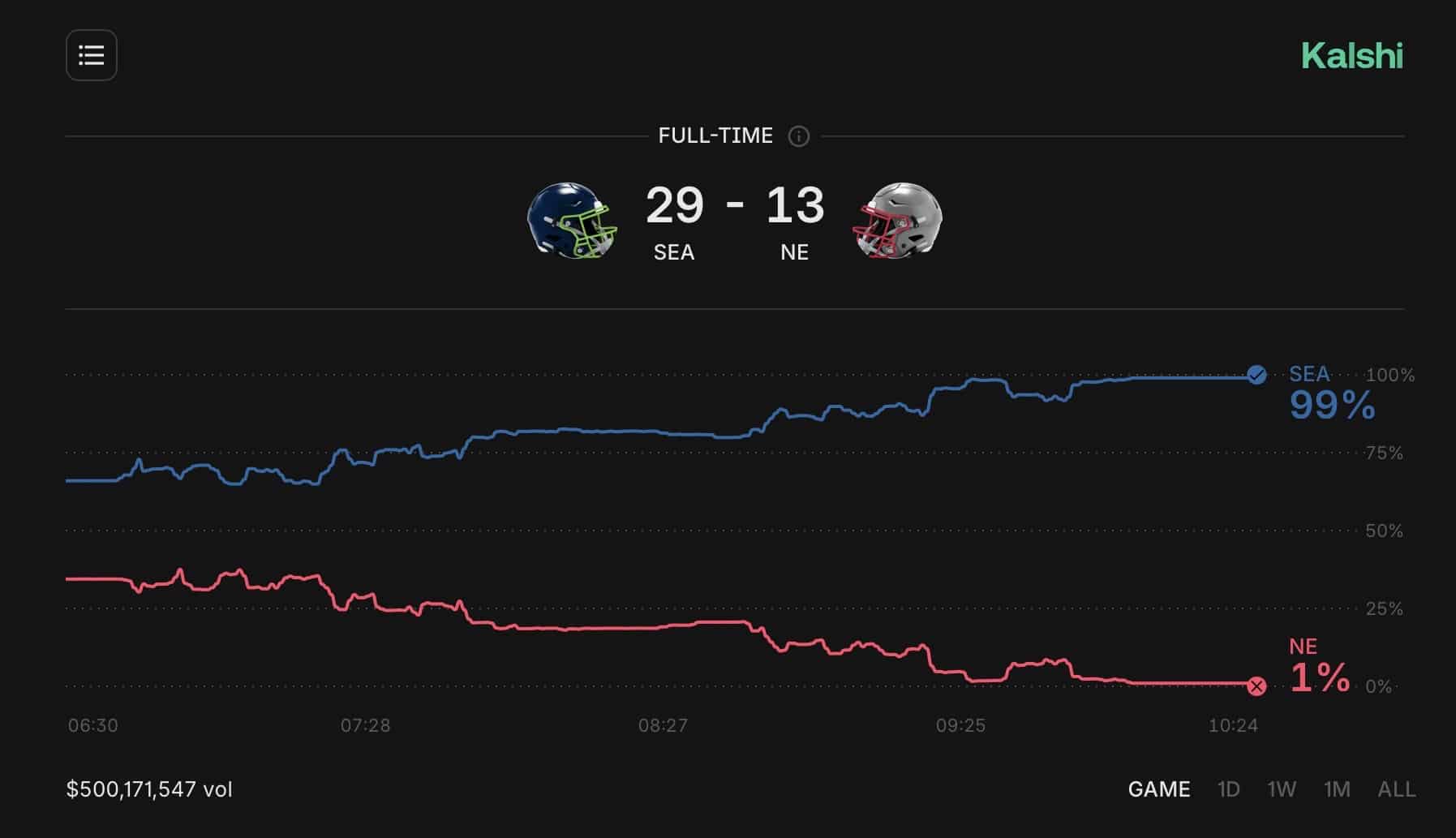
Trading Volume During Super Bowl Source: Kalshi
DISCOVER: Upcoming Coinbase Listings
Massachusetts Moves to Restrict Sports Prediction Markets, But Polymarket Fights Back
The lawsuit follows a Massachusetts court order issued last week requiring Kalshi to geofence state residents from accessing sports-related markets within 30 days. State regulators view these platforms as unlicensed sports betting operations falling under local jurisdiction rather than financial derivatives markets. Polymarket, which has strengthened its infrastructure through a native USDC integration with Circle, argues that state intervention usurps federal authority.
Today, we filed a lawsuit in federal court against Massachusetts. Congress gave the CFTC, not states, exclusive authority over event contracts.
These are national markets with critical questions that must be resolved in federal court 🧵
— Neal Kumar (@HereComesKumar) February 9, 2026
For months, platforms have contended that their offerings are event contracts subject to the Commodity Futures Trading Commission (CFTC), not state gaming commissions. This legal clash has intensified as major entities enter the space, with Crypto.com launching its own prediction market platform just as regulatory scrutiny peaks. Massachusetts Attorney General Andrea Campbell and state gaming regulators are named as defendants in the suit, which seeks to preempt enforcement actions that would force the platform to block local users.
EXPLORE: Best Solana Meme Coins in 2026
Federal Authority vs State Regulation
In the complaint filed in federal court, Polymarket claims Massachusetts lacks the constitutional authority to regulate its platform. The company asserts that Congress granted the CFTC exclusive leverage over event contracts, preempting state-level gambling classifications. This distinction is central to the platform’s model, where users trade shares on outcomes ranging from political elections to Bitcoin price probabilities.
Polymarket Chief Legal Officer Neil Kumar criticized the state’s approach in a public statement, emphasizing that the markets act as information tools rather than casinos.
“Racing to state court to try to shut down Polymarket U.S. and other prediction markets doesn’t change federal law. States like MA and NV that have done so will miss an amazing opportunity to help build markets for tomorrow. Ngress gave the CFTC, not states, exclusive authority over event contracts.”
The filing argues that the state’s definition of gambling is overly broad when applied to derivatives markets that provide economic utility, causing price discovery.
Possible Effect on Decentralised Markets
Sports prediction is a core sector for Polymarket, and the outcome of this case could set a crucial precedent for prediction markets nationwide. If Massachusetts succeeds, other states like Nevada, which recently paved the way for similar bans, may follow suit, potentially fragmenting the domestic market through mandatory geofencing. Conversely, a federal victory for Polymarket could solidify the CFTC’s role as the primary regulator for the burgeoning sector.
The stakes are high as the industry expands beyond simple binary options, with decentralized exchanges like Hyperliquid supporting outcome contracts. Market analysts are closely watching for a potential framework announcement from the CFTC, following signaled support from Chairman Michael Selig regarding the utility of event contracts.
DISCOVER: Next Crypto to Explode
next