The new crypto-office will be within the Division of Corporation Finance that takes care of disclosures for publicly traded firms. It will have legal and accounting branches for crypto firms willing to file public disclosures. Who will run it is not yet clear.
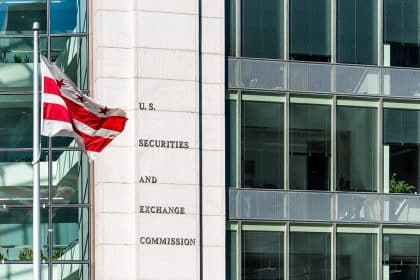
The US Securities and Exchange Commission (SEC) is planning to open a new office that will handle public filings related to the crypto activity. According to those familiar with the matter, the crypto office will be within the SEC Division of Corporation Finance that takes care of disclosures for publicly traded firms. It is expected to open this fall.
According to Cicely LaMothe, the division’s associate director for disclosure operations, there has been an increasing number of “unique and evolving” filings that involve digital assets. Therefore, there is a need for a separate unit that will address the issues related to crypto filings. Notably, the majority of crypto assets are referred to as securities by the SEC, while Bitcoin (BTC) is the only crypto considered as a commodity.
LaMothe has also said that the new office would have legal and accounting branches for crypto firms willing to file public disclosures.
It is not yet clear who will run the office.
SEC’s Approach to Regulating Crypto Industry
When it comes to regulating crypto, the US is doing great progress in developing federal cryptocurrency legislation. Some states are more crypto-friendly, like Florida, Wyoming, or Texas, while others are still incredulous about digital assets.
Speaking of the US approach to regulating crypto-related activity, SEC considers most of digital assets as securities. The Financial Crimes Enforcement Network (FinCEN) does not consider cryptocurrencies to be legal tender, but it believes that crypto exchanges are money transmitters on the basis that cryptocurrency tokens are “other value that substitutes for currency.”
Speaking at a legal conference in Washington on Thursday, SEC Chairman Gary Gensler stated that SEC could waive some of its rules to better suit digital assets, while also ensuring investors are protected if exchanges work with the agency to register. For now, the agency is pretty “clear” on its crypto guidance.
Gensler said:
“Without prejudging any one token, most crypto tokens are investment contracts under the Howey test. Some in the crypto industry have called for clearer guidance. Through the past 5 years, the SEC has spoken with a pretty clear voice. Some tokens may not meet the definition of securities, what I’ll call non-security tokens, small in number, but maybe significant in value.”
Bitcoin (BTC) and Ethereum (ETH) are the only coins that are non-securities.
As for stablecoins, Gensler assumed they might fall under the category of unregistered securities. Hence, stablecoins would need to “register and provide important investor protections.”
While some were wondering whether the US would ever place a ban on cryptos, the head of the House Subcommittee on Investor Protection, Brad Sherman, does not think so. As the Congressman has explained, cryptos have power and too much money behind them. Back in 2018, Sherman supposedly suggested a blanket ban on cryptocurrency. However, now he has admitted that doing so would be extremely difficult.
next