
Aviva Investors and Ripple go live with a CBI-approved tokenized fund on XRPL, giving EU asset managers a public-chain compliance template to follow.
Ripple and Aviva Investors went live on July 29, 2026, with a tokenized share class of the Aviva Investors USD Liquidity Fund on the XRP Ledger, the first tokenized fund structure approved by the Central Bank of Ireland on a public blockchain.
BNY Mellon is charged with holding the underlying assets, Komainu providing regulated digital asset custody, and Licuido supplying the tokenization infrastructure.
Ripple powers the new tokenised share class for @AvivaInvestors' USD Liquidity Fund:
🔹 Issued on the #XRP Ledger 📒
🔹 Custody by @KomainuAUM & tech by Licuido
🔹 Approved by the Central Bank of Ireland
🔹 Assets held by BNY (@BNYMellon)https://t.co/AQACarG2aQ pic.twitter.com/VOqW79fidJ— 𝗕𝗮𝗻𝗸XRP (@BankXRP) July 29, 2026
This is not simply another institutional crypto pilot. It is the first time a major EU financial regulator has signed off on a public-chain tokenized fund structure, giving other Irish- and EU-domiciled asset managers a live compliance template rather than a theoretical framework to evaluate.
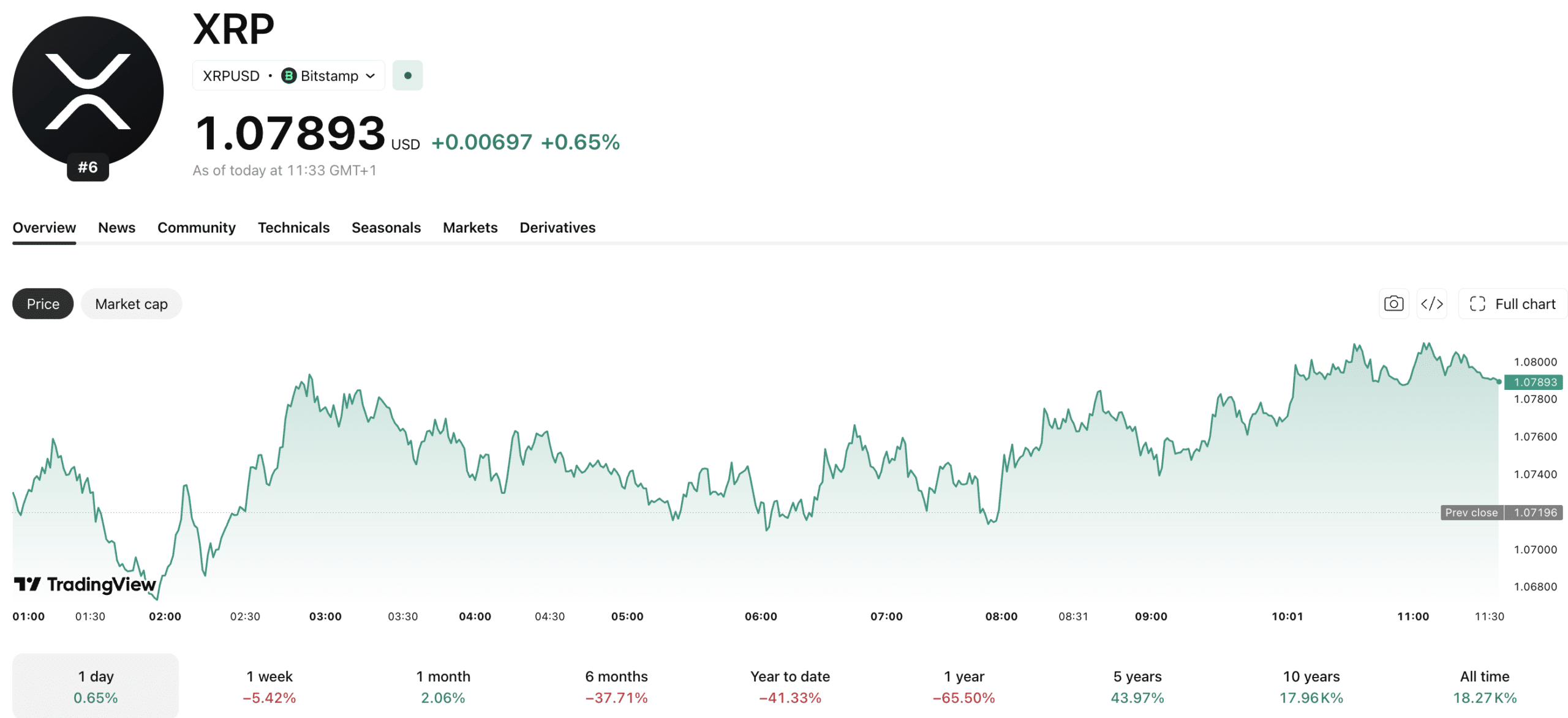
This news dropped as XRP USD dropped -0.7% overnight, with the asset trading for around $1.08 after losing support at $1.10. Daily trading volume for Ripple sits at $1.14Bn, up from $1.05Bn yesterday.

Ripple Partnership Background: From February Announcement to Live Product
The two firms announced their partnership intent on February 11, 2026, committing to tokenize fund products on XRPL and targeting multiple asset classes across a multi-year collaboration. The USD Liquidity Fund tokenized share class is the first live output of that roadmap – a production deployment, not a sandbox experiment.
The fund targets daily liquidity through exposure to high-grade USD-denominated short-term debt instruments, carrying the same investment objective, risk profile, and regulatory protections as its conventional share class. Eligible investors with digital wallets access the product under identical terms to the traditional fund units, with the XRP Ledger functioning as the record-keeping and transfer layer.
EXPLORE: Best Meme Coins to Buy for August
Institutional Stack and XRPL Ripple Infrastructure: How the Mechanism Functions
The mechanism functions as follows: Licuido’s tokenization platform issues the digital share class on XRPL; Komainu holds the digital asset custody layer under its regulated institutional framework; and BNY Mellon maintains custody of the underlying fund assets in the traditional structure. The combination integrates legacy custodial infrastructure with crypto-native settlement in a single regulated product.
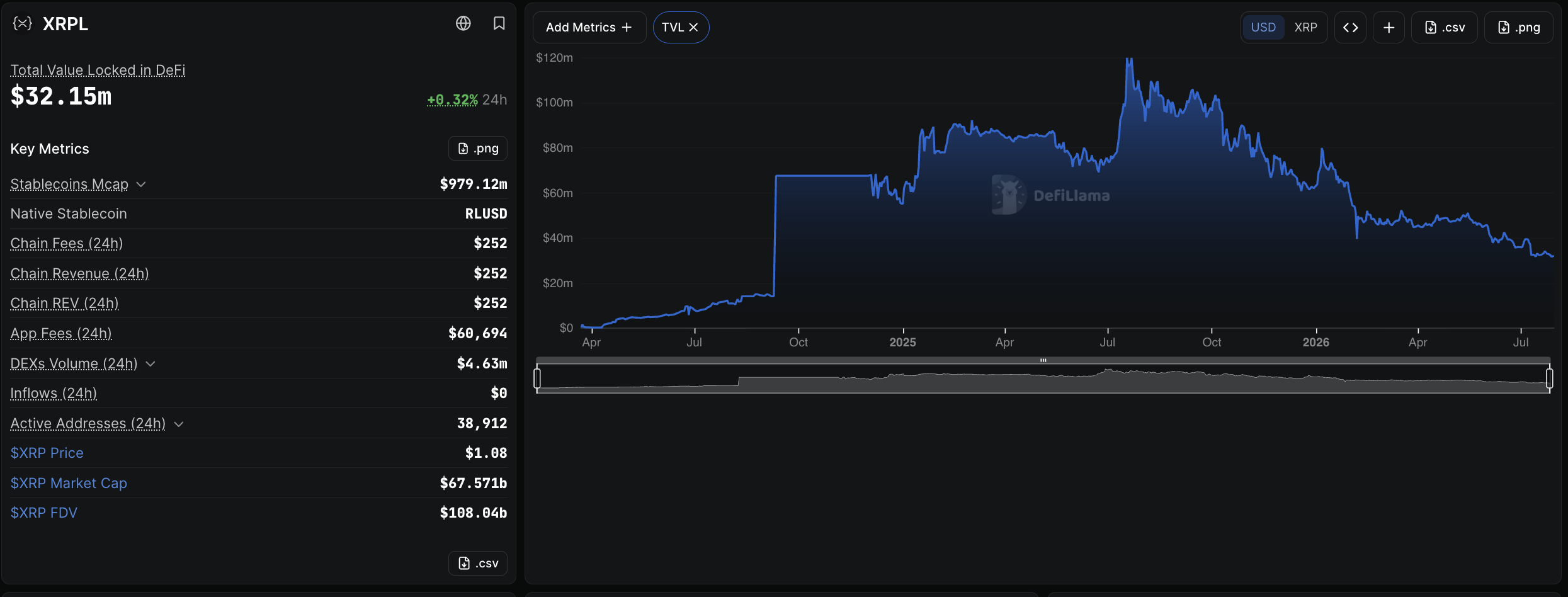
XRPL has processed more than 4 billion transactions since its 2012 launch, supports approximately 8 million active wallets, and runs on more than 130 independent validators.
Its near-instant, low-cost settlement and native tokenization features were cited as key factors in the ledger selection, particularly for an institutional client requiring predictable transaction finality and built-in compliance tooling.
Nigel Khakoo, Senior Vice President of Trading and Markets at Ripple, described the launch as demonstrating that a regulated, institutional-grade tokenized product can be brought to market on live infrastructure with real investor protections in place.
Mark Versey, Chief Executive Officer of Aviva Investors, characterized tokenization as a significant development for the investment industry and described the Ripple partnership as crucial to executing the product launch.

RWA Tokenization: What the CBI Approval Signals for Institutional Crypto
The analytical question is no longer whether real-world assets can be tokenized on a public ledger. It is whether regulators will provide the jurisdictional clarity that allows institutional-grade products to scale.
The CBI’s approval resolves that question, at least within the Irish regulatory perimeter, and positions the fund as a replicable model for other fund tokenization efforts across EU-domiciled managers.
We suspect the more consequential near-term effect will be on competing asset managers currently evaluating public versus private DLT networks for their own RWA programs; the existence of a CBI-approved precedent on a public chain materially reduces the perceived regulatory risk of that architecture choice.
Aviva Investors managed approximately $310Bn in assets under management as of 2025, and both firms have framed this launch as the first step in a broader pipeline of tokenized fund products on XRPL.
The scope of that pipeline, and how quickly additional Aviva funds move through the CBI approval process, will determine whether this remains an isolated institutional crypto milestone or the opening of a sustained fund tokenization program on the XRP Ledger.
DISCOVER: Best Meme Coins to Buy in 2026
next