
 Fact-Checked by:
 16 mins
 Wondering how to buy crypto but not sure where to start? Our beginner's guide explains how and where to invest in digital assets l...
How to Buy Crypto in 2025: Beginner’s Guide
Wondering how to buy crypto but not sure where to start? Our beginner’s guide explains how and where to invest in digital assets like Bitcoin (BTC) and Ethereum (ETH).
Cryptocurrencies are a fast-growing investment sector, and some projects can deliver large gains over short timeframes as well as provide utility to the finance sector. When exploring how to buy crypto as a first-time investor, online exchanges and wallets are the most common options.
Our guide explains how to enter the crypto market while following best practices in safety. You will learn how to set up a trading account, discover which providers offer the lowest fees, and explore strategies to build a profitable crypto portfolio.
How to Buy Cryptocurrency in 5 Easy Steps
Here is a quick walkthrough of how to buy crypto in 2025:
- Decide your preferred method for buying crypto; methods include centralized exchanges, decentralized exchanges, P2P, or directly within a wallet.
- Set up an exchange or wallet account, make sure you complete all security steps, and complete KYC if required.
- Decide how much you want to spend on crypto, and consider dollar-cost averaging (where you buy a small amount periodically).
- Decide which crypto you wish to buy, select a fiat or swap currency, and choose a payment method to complete your purchase.
- Keep your crypto in a non-custodial wallet, such as MetaMask or Best Wallet, to safeguard it from security threats.
| Platform | Type | Min Purchase | Fees |
| Binance | CEX, P2P | $15 | 0.1% |
| MEXC | CEX, P2P | $10 | 0% (maker) / 0.05% (taker) |
| Margex | CEX | $5 | 0.019% (maker) / 0.06% (taker) |
| Trezor | Hardware wallet | Varies by fiat on-ramp | Variable provider fees |
| CoinEx | CEX, P2P | $10 | 0.16% (maker) / 0.2% (taker) |
| Bybit | CEX, P2P | $10 | 0.1% |
| OKX | CEX, P2P | $1 | 0.08% (maker) / 0.1% (taker) |
| PancakeSwap | DEX | No minimum | 0.01%–1% |
| Uniswap | DEX | No minimum | Dynamic fees |
| MetaMask | Software wallet | $2 | Variable provider fees |
All the Ways You Can Buy Crypto, Explained Step by Step
Crypto investors can buy and trade digital assets through various methods, including direct transactions via self-custodial wallets, using third-party exchanges, or (for more advanced traders) employing methods such as futures and options.
Read on to choose the right purchase type for you.
Wallets (Non-Custodial)
- Choose a trusted non-custodial wallet. Some popular examples are Best Wallet, MetaMask, Ledger, and Trezor.
- Complete the initial setup and store your keys/recovery phrase offline if asked. Remember, only you have access to your wallet with these keys. Don’t lose them, and don’t let anyone else access them.
- Head to the wallet’s built-in “Buy” or “Purchase Crypto” gateway.
- Choose your asset – purchase Ethereum if you are testing, as you may find it useful to pay gas fees later on. Enter the purchase amount and select a supported payment method, such as debit/credit card or PayPal.
- Complete the payment, and the purchased crypto will appear in your wallet, usually within a few minutes.
While a wallet’s primary focus is to send, receive, and store assets safely, many wallet providers also let investors buy and sell cryptocurrencies using most forms of traditional payment types. This hybrid structure enables users to avoid centralized exchanges (CEXs) while maintaining full control over their investments.
Non-custodial wallets, such as Best Wallet or MetaMask, automatically generate encrypted private keys when users download the iOS or Android app. Only the user can access those keys, and then they can buy and store assets in a decentralized ecosystem.
MetaMask is a popular wallet that supports fiat payments, although it lacks support for BTC, XRP, and DOGE, so Best Wallet remains a better option if you are seeking to diversify across the market.
Pros
- Wallets let you buy and store crypto in a non-custodial environment
- Direct on-ramp features support debit/credit cards and e-wallets
- Fiat gateways transfer purchased assets straight into the wallet balance
Cons
- On-ramp fees are often higher than CEXs
- Some gateways may request KYC documents
Centralized Exchanges (CEXs)
- Open an account with a trusted centralized exchange, for example, Binance or MEXC, and complete KYC checks if needed. If you wish to buy a specific cryptocurrency, ensure it is listed on the exchange first.
- Enable two-factor authentication (such as Authenticator or Passkey) and biometrics if offered (such as fingerprint or Face ID).
- You will generally be asked to add a payment method at this point, such as debit or credit cards, or Google Pay and Apple Pay.
- Search for cryptos you wish to buy on the exchange, and complete the purchase using the Buy Crypto interface options.
- Withdraw the crypto to a non-custodial wallet for self-custodial storage.
CEXs command the market share for crypto trading volume, and top platforms offer hundreds of trading pairs, extensive charting tools, deep liquidity, and advanced order types.
We place MEXC high on our best beginner crypto exchanges for 2025, as it lists over 4,000 coins and tokens and has a strong safety record. It charges commissions of just 0% or 0.05% on market and limit orders.
Binance, meanwhile, appeals to active traders who seek institutional-grade liquidity, fast execution, and customizable trading screens.
Our best no-KYC crypto exchanges will help users who place a premium on privacy.
Pros
- Access a huge selection of crypto trading pairs
- Some CEXs allow direct fiat on-ramp and off-ramp transfers
- Tier 1 platforms provide deep liquidity and tight spreads
Cons
- CEXs operate custodial infrastructures, which creates counterparty risks
- KYC verification is often mandatory
- Traders in some regions may face product restrictions
Decentralized Exchanges (DEXs)
- Choose and set up a crypto wallet (as explained above).
- Buy and deposit ETH into the wallet if you wish to buy an ERC-20 token.
- Visit a DEX such as PancakeSwap and connect your wallet to the DEX.
- Click “Trade”, choose a cryptocurrency you wish to buy.
- Input the trade size and swap ETH for your preferred cryptocurrency.
DEXs are generally used by more advanced traders seeking to avoid centralized risks, as they function entirely on decentralized blockchains without third-party intervention. These platforms rely on smart contracts and liquidity pools to facilitate token swaps. In effect, there is no one in the middle of your trades, although you need to trust that the contracts and pools are safe from vulnerabilities.
Uniswap is the biggest DEX on the Ethereum blockchain, and it supports millions of ERC-20 tokens like USDT, UNI, LINK, SHIB, and PEPE. On the BNB Chain, PancakeSwap specializes in BEP-20 tokens, such as BNB, Wrapped Bitcoin (WBTC), and Aster (ASTER).
Pros
- Traders swap tokens directly on the blockchain
- No requirement to open accounts or complete KYC
- Users retain custody of their assets and private keys
Cons
- On-chain swaps incur network gas fees
- Expect unfavorable slippage when trading non-major pairs
- Many DEX tokens are outright scams
Additional Methods
Consider these additional purchase methods when exploring how to buy crypto:
- Derivatives: Short-term traders speculate on derivative products to increase market exposure. One example is CoinFutures, which offers crypto futures with leverage of up to 1000x. Derivatives are high-risk instruments that offer no asset ownership.
- ETFs: Regulated spot ETFs trade on the U.S. stock market, and approved assets include BTC, ETH, and SOL. ETFs appeal to investors who want exposure to crypto but in a traditional brokerage environment. ETF holders lack direct ownership of the underlying coins, and maintenance fees can be high. Expect to see DTFs (Decentralized Token Folios) rise in the future, which are equivalent to ETFs, but fully on-chain and focused on digital and real-world assets (RWAs).
- ATMs: Thousands of crypto ATMs enable users to purchase digital assets using physical cash. Kiosks often support several cryptocurrencies, and they deliver purchased assets to the buyer’s virtual wallet. Because ATM fees often exceed 20%, we do not recommend this purchase option.
- P2P: Top CEXs like Binance and Bybit also offer peer-to-peer services, where buyers purchase cryptocurrencies directly from sellers. Investors transfer funds with local currency and payment methods, and the escrow system ensures safety. Some P2P sellers charge subpar exchange rates, and they may require KYC.
What Is Cryptocurrency & How Does It Work?
Cryptocurrencies are digital assets that operate on decentralized ledgers called “blockchains”. Bitcoin is the world’s first crypto, launched in 2009, and it remains the largest by market capitalization.
There are now millions of other cryptocurrencies, known as “altcoins”, existing across the blockchain sector. Some have uses, some claim to have uses, and others are purely speculative plays.
Layer 1 projects, such as Ethereum, Solana, and BNB Chain, are referred to as such because they provide infrastructure for secondary tokens. These blockchains are faster, cheaper, and more scalable than Bitcoin, and since they enable smart contracts, ecosystems support use cases beyond peer-to-peer transfers.
The altcoin space covers a wide range of additional cryptocurrency categories. Meme coins like DOGE, PEPE, and Shiba Inu (SHIB) are community-driven projects that rely on speculation and hype rather than serving an intrinsic purpose. DeFi initiatives unlock traditional financial services in a decentralized environment, while Layer 2s help primary blockchains improve efficiency levels. If you are a fundamentals-driven person, those last two categories may be more appealing.
We recommend learning about the various crypto niches before entering the market. Historical data suggest that certain narratives have consistently outperformed the broader market for extended periods, enabling those who invest early to reap the largest returns.
Why Do People Buy Crypto?
Despite the sector’s innovative use cases, many people buy cryptocurrencies solely for financial gain. Digital assets trade across hundreds of online exchanges 24/7, and similar to traditional securities, demand and supply drive asset prices.
ETH, the second-largest crypto by valuation, was worth just $0.31 in 2014. In August 2025, ETH reached an all-time high of almost $5,000. This price growth reflects investment returns of over 1.6 million percent.
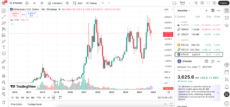
According to exchange data, the ETH price has increased by over 1.6 million percent since its inception. Source: TradingView
Similarly, exchange data shows that SOL launched in 2020 at $0.08. As the SOL price rallied to $294 in January 2025, early investors could have made gains of over 36,000%.
While the majority of people treat cryptocurrencies as investment products, the sector also attracts ecosystem users. One example is Aave, the leading DeFi platform for total value locked (TVL). Investors lend digital assets to platform users, who pay interest on the borrowed funds. Aave’s peer-to-peer infrastructure eliminates centralized intermediaries.
We found that people also buy Bitcoin and stablecoins like Tether (USDT) to hedge against high inflation rates. This trend is evident in countries such as Turkey, Nigeria, and Argentina, which continue to see substantial currency devaluations.
How to Decide Which Crypto to Buy
Learning how to invest in cryptocurrency is one aspect to consider. You must also decide which digital assets to buy.
The first step is to assess trading goals, risk tolerance, and exit strategy.
Long-term investors who target growth over many years often invest in BTC and ETH. These projects are the largest by market capitalization and are typically less volatile than other cryptocurrencies. Web3 experts suggest dollar-cost averaging the market leaders, which helps mitigate short-term volatility risk.
Those with a higher risk appetite may prefer major altcoins such as SOL, BNB, Cardano (ADA), and XRP. Some analysts say that these assets have a higher upside potential than BTC and ETH. As they hold lower valuations, major altcoins have more room for growth.
The price potential increases exponentially as the asset’s market capitalization becomes smaller. Investing in nano-cap cryptocurrencies, which usually hold sub-$50 million valuations, offers a significant risk-reward spectrum.
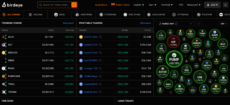
Data aggregation websites like Birdeye help investors discover trending cryptocurrencies early. Source: Birdeye
Although history suggests that the safest strategy is to hold established cryptocurrencies for the long-term, some market participants actively trade them in short timeframes. Finding trends and narratives early is crucial to avoid buying at the peak or the “top” of the market.
For example, exchange data shows that when Donald Trump announced his meme coin launch in January 2025, the OFFICIAL TRUMP (TRUMP) price was $1.20. While the token then rose by over 6,000% in 48 hours, it has since declined by 90%. So while there were massive gains for some people on the way up, there were huge losses for people on the way down. Unless you are prepared to commit to the crypto market full-time and stomach losses along the way, capitalizing on short-term trends is a massive challenge.
A more risk-averse strategy involves building a diversified portfolio across large and mid-cap cryptocurrencies from multiple sub-sectors, which may entail exploring top projects across DeFi, meme coins, Layer 1, real-world asset (RWA) tokenization, and other trending categories.
Key Factors to Consider Before Buying Crypto
Beginners should consider these metrics when learning how to trade crypto:
- Choose regulated crypto platforms: Hundreds of online platforms let users buy and sell digital assets, yet most providers operate without a licensing framework. We recommend that investors use regulated platforms to ensure safety. Learn more about the best crypto exchanges for security in our comprehensive guide.
- Consider your investment budget: Evaluate carefully how much capital you want to invest in cryptocurrencies, and never risk amounts you can’t afford to lose. Seasoned investors usually spread investment funds across multiple projects and dollar-cost average purchases over many years.
- Understand real ownership vs derivative exposure: To truly own cryptocurrencies, buy digital assets from the spot markets. Derivative instruments such as futures and options provide leverage, yet contract holders lack real ownership of the underlying assets.
- Store assets in a non-custodial wallet: If you hold assets on a centralized exchange account like Coinbase or Binance, the platform controls your investments. Real ownership occurs when you hold those cryptocurrencies in a non-custodial wallet, since you manage private keys and seed phrases exclusively.
- Understand crypto volatility: Crypto prices often fluctuate at a much more volatile rate compared with stocks and other traditional markets. As the digital asset sector is cyclical, investor sentiment and wider economic trends drive price action. Many projects trade significantly lower than their all-time highs, so ensure you understand volatility risks before you invest.
- Learn about investment fees: Trading platforms charge various fees, which impact the investment cost basis. When evaluating where to buy crypto, consider commissions, spreads, and payment fees.
- Stay safe and avoid scams: Conduct your own research before you invest in digital assets, particularly new cryptocurrencies with limited price history. The sector’s anonymous nature increases the risks of scams like rug pulls and pump-and-dump schemes.
Is Crypto Taxed?
Although specific rules vary by jurisdiction, we found that most countries tax cryptocurrencies. Authorities typically treat digital asset investments similarly to stocks and index funds, so they only tax realized capital gains. This structure means investors avoid crypto taxes when they hold assets in a wallet.
Tax authorities increasingly pressure online exchanges to share client transactions, so ensure you report asset disposals on time.
Note that jurisdictions treat crypto income differently from capital gains. In general, investors include earnings from DeFi staking, airdrops, and mining in their annual income, based on the asset’s value on the date of receipt.
The best practice is to consult a tax specialist from your home country. They can help you navigate local laws and potential tax reduction strategies.
How to Sell Crypto
Many online platforms enable users to sell cryptocurrencies for fiat currency and withdraw the proceeds via bank or e-wallet transfers.
Here is an overview of how to cash out your crypto profits:
- Open an account with a crypto exchange or broker that supports a fiat off-ramp tool. Due to anti-money laundering regulations, you must complete a Know Your Customer (KYC) process, which includes uploading a government-issued ID and proof of address.
- If you hold digital assets in a non-custodial wallet, such as Best Wallet, transfer crypto to the exchange account. The platform generates a unique wallet address for each coin or token.
- Once the cryptocurrencies arrive, place a trade to convert them to your local currency. The cheapest option is to trade fiat pairs on the spot exchange, such as BTC/USD or XRP/GBP.
- Request a withdrawal to a bank account or e-wallet, depending on the payment types supported by the platform. You’ll receive the funds a few hours or days later.
Evaluate fees when choosing a platform to sell cryptocurrencies for real money. Potential charges include crypto deposits, trading commissions, and fiat withdrawals.
FAQ
How do I buy crypto?
How do I decide which crypto to buy?
When is the best time to buy crypto?
How much crypto should I buy as a beginner?
What is the best platform to buy crypto?
Should I buy crypto?
What are the risks of buying crypto?
References
- Strengthening American Leadership in Digital Financial Technology (The White House)
- Crypto Assets Guidance (Financial Industry Regulatory Authority)
- Institutional DeFi: The Next Generation of Finance? (J.P. Morgan)
- Crypto Pricing Data (CoinMarketCap)
Coinspeaker in Numbers
250K+
Monthly Users
80+
Articles & Guides
5000+
Research Hours
23
Authors
guides
How to Buy Crypto in 2025: Beginner’s Guide
December 19th, 2025
LivLive Price Prediction – LIVE Price Potential in 2026-2030
December 19th, 2025
Is Super Pepe a Scam or Legit?
December 18th, 2025
We’ve spent weeks analyzing LivLive’s whitepaper, presale data, and community sentiment to come up with our honest take on where L...
In this article, we examine whether Super Pepe is a legitimate opportunity or a potential scam, highlighting its charity-focused m...
Otar Topuria
Crypto Editor, 28 postsI’m a crypto writer and analyst at Coinspeaker with over three years of experience covering fintech and the rapidly evolving cryptocurrency landscape. My work focuses on market movements, investment trends, and the narratives driving them, helping readers what is happening in the markets and why. In addition to Coinspeaker, my insights and analyses have been featured in other leading crypto and fintech publications, where I’ve built a reputation as a thoughtful and reliable voice in the industry.
My mission is to demystify the crypto markets and help readers navigate the noise, highlighting the stories and trends that truly matter. Before specializing in crypto, I worked in the IT sector, writing technical content on software development, digital innovation, and emerging technologies. That made me something of an expert in breaking down complex systems and explaining them in a clear, accessible way, skills I now find very useful when it comes to unpacking the intricate world of blockchain and digital assets.
I hold a Master’s degree in Comparative Literature, which sharpened my ability to analyze patterns, draw connections across disciplines, and communicate nuanced ideas. I’m particularly passionate about early-stage project discovery and crypto trading, areas where innovation meets opportunity. I enjoy exploring how new protocols, tokens, and DeFi projects aim to disrupt traditional systems, while also evaluating their potential risks and rewards. By combining market analysis with forward-looking research, I strive to provide readers with content that is both informative and actionable.