
Dipl. Ing. Hermann Sanktjohanser
Co-Founder and CEO


Alcedo is building an infrastructure for helping cryptocurrencies to get mainstream acceptance.
ALCEDO creates an ecosystem that implements blockchain technologies into everyday life. It makes cryptocurrencies accessible and usable for everybody around the world.
We are aiming at a widespread acceptance of ALCEDOs and other cryptocurrencies.
ALCEDO-Cards are equipped for the first time with a built-in NFC chip and can be used at our ALCEDO-ATMs and our POS-Terminals. This allows customers to quickly and easily buy or sell cryptocurrencies. In addition, it promotes the dissemination and acceptance of ALCEDO-Coins and other cryptocurrencies. No long and cumbersome registration procedures on foreign stock exchanges are necessary. We operate exclusively and completely from Germany.
The ALCEDO-Coin is one of the most important components in the entire ALCEDO project and is designed as an ERC-20 Ethereum-based token at the beginning of the ICO. Of course, ALCEDO-Coins can also be used as currency in addition to their use in the ALCEDO-Ecosystem. We will launch the ALCEDO-Coin in Q-4 2019.
This token will be moved in the course of development to a separate blockchain, with the same number of coins and existing ALCE ERC20 tokens are exchanged at a rate of 1:1.
To be announced (UTC)
To be announced (UTC)
Sat, Dec 1st, 2018 12:00 AM (UTC)
Fri, May 31st, 2019 12:00 AM (UTC)
ALCE
Ethereum
ERC677
ETH, BTC, Fiat
40 000 000
1 ALCE = 0.4 USD
100 000EUR
16 000 000EUR
50
Germany
Required
Not Required
USA, Afghanistan, China
Co-Founder and CEO
CFO
Co-Founder and Director
CTO / Head of our Development-Team

Bitcoin trades at $67,738 as its realized price gap compresses to 21% — historically close to cycle bottom territory, but on-chain capitulation signals haven’t fired yet. Here’s what the data actually shows.

XRP trades near $1.34 as record exchange outflows signal accumulation — but price hasn’t confirmed. Analyst targets sit at $2.80. Here’s what the setup requires.
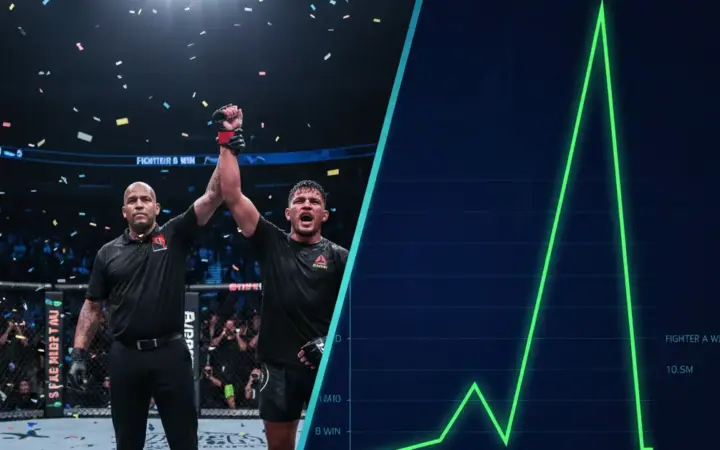
A Polymarket trader turned $676 into $67,608 after a UFC announcer declared the wrong winner. The incident exposes real-time latency risks — and lands as regulators circle sports prediction markets.