
 Fact-Checked By:
 29 mins
 For most holders, crypto sits in a wallet, doing nothing. But there are smart and relatively safe methods to generate between 5–25...
Best Anonymous Crypto Wallets 2026: Crypto Wallets without KYC
Discover the best anonymous crypto wallets for 2026. No KYC, no tracking, just secure crypto storage.
MetaMask and Bitamp also rank highly for users focused on EVM (Ethereum Virtual Machine) compatibility and minimalist design for Bitcoin maximalists, respectively.
In 2025, 59% of crypto wallet users globally prefer non-custodial (self-custody) wallets, according to CoinLaw research, suggesting that a majority of users do not trust centralized platforms that require KYC.
To build this list, we analyzed wallets using a clear methodology that scores security models, privacy tools, fiat options, multi-chain support, and UX. Below is our updated comparison for May 2026, most suitable for crypto users seeking full anonymity.
Key Takeaways on Anonymous Crypto Wallets
- Most top wallets are non-custodial and KYC-free, including Best Wallet, MetaMask, and Phantom.
- 65% of new regulations focus on CEX, leaving anonymous crypto wallets outside regulatory oversight, according to CoinLaw research.
- Privacy tools vary — Wasabi and Electrum offer CoinJoin and Tor, while Best Wallet focuses on mobile privacy with DEX access.
- Only a few wallets support KYC-free fiat purchases — Best Wallet stands out here.
- Wallets were ranked using weighted criteria, including code transparency, security history, and multi-chain support.
- Anonymity alone isn’t enough — usability, security, and community trust matter just as much.
11 Most Anonymous Bitcoin Wallets to Use in 2026
Let’s start by ranking the best anonymous crypto wallets for 2026:
- Best Wallet – The Overall Best Anonymous Wallet for Crypto Investors
- Bitamp.com – Best Bitcoin-Only Wallet with a Minimalist Interface
- MetaMask – Best Option for Active Traders Using Ethereum-Based dApps
- Base app (Coinbase Wallet) – Decentralized Wallet App Aimed at First-Time Crypto Investors
- Phantom – Top Choice for Storing and Trading Solana Ecosystem Meme Coins
- Trust Wallet – Anonymously Store Millions of Cryptocurrencies From 100+ Networks
- Exodus – Multi-Device Crypto Wallets for Desktops, Browsers, and Mobiles
- Electrum – Trusted and Secure Bitcoin Wallet Software for Windows and macOS Users
- Atomic Wallet – Securely Store and Swap Tokens Anonymously and Earn Cashback
- Wasabi Wallet – Best for Bitcoin Users Focused on On-Chain Privacy
- Keystone Wallet – Best Air-Gapped Hardware Wallet for Offline Privacy
Reviewing the Best Crypto Wallets without KYC
Anonymous crypto wallets guarantee privacy, but this is only one factor to consider. Security, supported cryptocurrencies, trading features, and device types are also important.
Let’s take a closer look at reputable crypto wallets that don’t require ID.
1. Best Wallet – Top Crypto Wallet Pick for Privacy and Anonymity
Best Wallet is a non-custodial wallet app that offers anonymity from the outset. No personal information, IP addresses, or ID documents are collected. Users can also purchase crypto with fiat without KYC. The wallet includes a native DEX, enabling token swaps across 60+ blockchains.
Security is handled locally, with private keys encrypted and stored on the user’s device, alongside biometric protection and 2FA. Best Wallet is optimized for everyday mobile use, though desktop support is still in development.
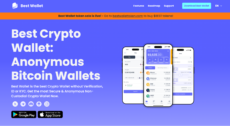
The Best Wallet website. Source: Best Wallet
Best for: active Web3 users, presale buyers, beginners
| Type | Non-custodial mobile wallet |
| Privacy Level | High – no KYC, no tracking, fiat on-ramps without ID |
| Supported Chains | 60+ networks including Bitcoin, Ethereum, Solana, BNB Chain, XRP, and Litecoin |
| KYC-Free Features | Token swaps, staking, fiat purchases, and wallet creation |
| Best For | Privacy-first users, mobile-native traders, and beginners who want to avoid KYC |
| Fees | No wallet fees; swaps and transfers reflect network and DEX aggregator rates |
2. Bitamp.com – Best Anonymous Bitcoin-Only Wallet with a Minimalist Interface
Bitamp.com is a browser-based, anonymous Bitcoin wallet. The platform does not request any personal information, email, or ID verification and does not support altcoins, DeFi, or Web3 features. It provides over 450 receiving addresses across Legacy, SegWit-compatible, and SegWit-native formats.
Users can create a new seed phrase or private key directly within the Bitamp.com interface or import an existing seed phrase from supported wallets such as Trezor, Ledger, Electrum, Blockchain, and others. This allows native Bitcoin users to manage their BTC without switching to another device or platform.
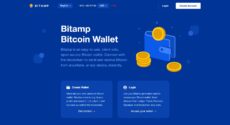
The Bitamp.com website. Source: Bitamp.com
You can access Bitamp.com on Tor through its official onion address:
“bitampgt5htkfk5ek6bnzzwgr2iuvoeqgy2fofqib2yx7yegnqzgmsid.onion”
Best for: Bitcoin maximalists, Tor users, privacy-focused BTC holders
| Type | Non-custodial browser wallet (Bitcoin-only) |
| Privacy Level | High – No KYC requirements, Tor-compatible, open-source, multiple addresses |
| Supported Chains | Bitcoin (BTC only) |
| KYC-Free Features | Seed phrase and private key generation, account setup, client-side encryption |
| Best For | Privacy-first Bitcoin enthusiasts, Tor browser users managing BTC, and no-download wallet users |
| Fees | No wallet fees; Only Bitcoin network fees for sending BTC |
3. MetaMask – Seamlessly Connect with Ethereum and EVM-Compatible dApps
MetaMask is a widely used non-custodial wallet for Ethereum and EVM-compatible networks. It does not require KYC and generates wallet addresses locally, giving users access to DeFi, NFTs, token swaps, and bridges across networks like Ethereum, Arbitrum, Optimism, and Polygon. MetaMask is not a privacy-maximalist wallet. It relies on third-party RPC providers, which can expose metadata unless additional privacy tools are used.

The MetaMask website. Source: MetaMask
Best for: DeFi and Web3 users, NFT collectors, active EVM traders
| Type | Non-custodial browser/mobile wallet |
| Privacy Level | Moderate – no KYC, but metadata may leak |
| Supported Chains | Ethereum, Arbitrum, Optimism, BNB Chain, Polygon, Avalanche, and other EVMs |
| KYC-Free Features | Token swaps, staking, NFTs, DeFi integration |
| Best For | DeFi users, NFT collectors, and Ethereum traders |
| Fees | No fees for holding; swap fees include MetaMask aggregator markup (~0.875%) |
4. Base app (Coinbase Wallet) – Beginner-Friendly Wallet App for iOS and Android Devices
Base App is a mobile non-custodial wallet separate from the Coinbase exchange and does not require KYC for basic wallet use. It supports Ethereum, Base, and other EVM networks, along with NFTs and built-in dApp access. Its interface mirrors Coinbase’s familiar UX, making it accessible for newcomers, though the Coinbase branding may deter users seeking maximum separation from centralized entities.
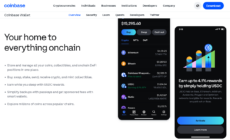
The Base App (Coinbase Wallet) Website. Source: Coinbase
Best for: beginners, NFT users, Coinbase ecosystem users seeking self-custody
| Type | Non-custodial browser/mobile wallet |
| Privacy Level | Moderate – no KYC required, but brand-linked |
| Supported Chains | Ethereum, BNB Chain, Avalanche, Polygon, and EVM-compatible networks |
| KYC-Free Features | Token swaps, dApp access, NFT storage |
| Best For | Beginners and Coinbase users seeking a more private option |
| Fees | No wallet fees; swap fees depend on the DEX used |
5. Phantom – Buy, Sell, and Trade Solana Meme Coins Directly from the Wallet Balance
Phantom is a popular non-custodial wallet designed around the Solana ecosystem, with native integrations for major Solana DEXs and NFT platforms. It does not require KYC and includes real-time warnings for suspicious tokens and dApps. While Phantom has expanded to support additional networks, it remains primarily Solana-focused and offers limited advanced privacy tooling.

The Phantom website. Source: Phantom Wallet
Best for: Solana traders, meme-coin degens, NFT collectors
| Type | Non-custodial browser + mobile wallet |
| Privacy Level | Moderate – no KYC, but limited privacy tooling |
| Supported Chains | Solana, Ethereum, Polygon |
| KYC-Free Features | Token swaps, NFT gallery, dApp access, wallet creation |
| Best For | Solana users, NFT collectors, degens, and traders |
| Fees | No wallet fees; swap and transaction fees reflect network and DEX charges |
6. Trust Wallet – Safely and Privately Store Crypto Tokens from 100+ Networks
Trust Wallet is a non-custodial mobile wallet supporting 100+ blockchains and millions of tokens. It does not require KYC for holding or on-chain transactions and supports DeFi, NFTs, staking, and token swaps. Fiat on-ramps inside the app may require identity verification, but users can remain anonymous by acquiring tokens through decentralized exchanges.
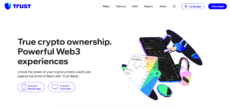
The Trust Wallet website. Source: Trust Wallet
Best for: multi-chain users, mobile-first investors, NFT holders
| Type | Non-custodial mobile wallet |
| Privacy Level | Moderate – no built-in KYC, but third-party services may require it |
| Supported Chains | 100+ networks including BTC, ETH, SOL, BNB Chain, AVAX, TRON, and more |
| KYC-Free Features | Wallet creation, token swaps, staking, and NFT storage |
| Best For | Multi-chain users, mobile-first investors, and NFT holders |
| Fees | No wallet fees; standard network and DEX swap fees apply |
7. Exodus – No KYC Crypto Wallet Software for Desktop and Mobile Users
Exodus is a non-custodial software wallet available on desktop, mobile, and browser platforms. It supports over 50 blockchains without requiring KYC for standard wallet functions. Exodus emphasizes a polished interface rather than advanced privacy or Bitcoin-specific anonymity tools.
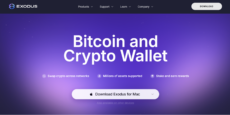
The Exodus website. Source: Exodus
Best for: multi-asset holders, beginners who value UX and UI
| Type | Non-custodial desktop, mobile, and browser wallet |
| Privacy Level | Moderate – no KYC for wallet use, but third-party services may require it |
| Supported Chains | 290+ assets including BTC, ETH, SOL, AVAX, ADA, MATIC, and more |
| KYC-Free Features | Wallet setup, crypto swaps, staking, Trezor support |
| Best For | Users who want a professional UX across multiple devices, beginners, and multi-asset holders |
| Fees | No wallet fees; swaps and transfers reflect network and service provider fees |
8. Electrum – Highly Rated Bitcoin Desktop Software Launching in 2011
Electrum is a long-standing (launched in 2011), open-source Bitcoin wallet offering control over unspent transaction outputs (UTXO), fees, multisig setups, and network connections. It does not require KYC and can be configured to run through Tor for enhanced privacy. Designed primarily for desktop users, Electrum prioritizes security and control over simplicity or multi-chain support.

The Electrum website. Source: Electrum
Best for: Bitcoin maximalists, privacy-focused BTC holders, developers
| Type | Non-custodial desktop and Android wallet (Bitcoin-only) |
| Privacy Level | High – KYC-free, open-source, Tor-compatible, full node optional |
| Supported Chains | Bitcoin (BTC only) |
| KYC-Free Features | Wallet setup, coin control, fee selection, multi-sig, privacy routing |
| Best For | Privacy-focused Bitcoiners, developers, and power users |
| Fees | No wallet fees; outbound fees are customizable and network-based |
9. Atomic Wallet – Established Wallet App and Software with over 10 Million Users
Atomic Wallet is a non-custodial wallet available on desktop and mobile, supporting over 1,000 cryptocurrencies and built-in staking features. Crypto-to-crypto swaps can be performed without KYC, while fiat purchases require verification. The wallet offers broad functionality but is not fully open-source and has experienced past security incidents, which may concern risk-aware users.
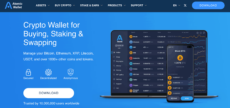
The Atomic Wallet website. Source: Atomic Wallet
Best for: altcoin investors, staking users, active crypto traders
| Type | Non-custodial desktop + mobile wallet |
| Privacy Level | Moderate – KYC-free for crypto; fiat purchases require ID |
| Supported Chains | 50+ blockchains and 1,000+ tokens including BTC, ETH, ADA, XRP, AVAX, SOL |
| KYC-Free Features | Wallet setup, token swaps, staking, cashback rewards |
| Best For | Crypto traders, altcoin collectors, and staking users |
| Fees | No wallet fees; swap fees vary by partner (some cashback via AWC token) |
10. Wasabi Wallet – Best for Bitcoin Users Focused on On-Chain Privacy
Wasabi Wallet is a desktop open-source Bitcoin-only wallet designed for users seeking strong on-chain privacy. It features native CoinJoin transactions and routes all traffic through Tor by default to reduce metadata exposure. The wallet is geared toward experienced users comfortable with advanced privacy and UTXO management.
The Wasabi wallet website. Source: Wasabi Wallet
Best for: Bitcoin privacy advocates, cypherpunks, advanced users
| Type | Non-custodial desktop wallet (Bitcoin-only) |
| Privacy Level | Very high – CoinJoin mixing, Tor integration, no KYC |
| Supported Chains | Bitcoin (BTC only) |
| KYC-Free Features | Wallet creation, coin mixing (CoinJoin), coin control |
| Best For | Bitcoin privacy advocates, cypherpunks, and users avoiding surveillance |
| Fees | No wallet fees; CoinJoin incurs a 0.3% coordinator fee (waived for liquidity providers) |
11. Keystone Wallet – Best Air-Gapped Hardware Wallet for Offline Privacy
Keystone is an air-gapped hardware wallet that signs transactions offline using QR codes, with no internet, USB, or Bluetooth connectivity. It is fully non-custodial, open-source, and supports thousands of assets across major blockchains. Designed for long-term self-custody, Keystone pairs with software wallets to extend functionality but is not intended for quick mobile trading.
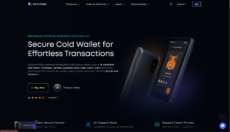
The Keystone Wallet. Source: Keystone Wallet
Best for: long-term holders, security-first users
| Type | Air-gapped hardware wallet |
| Privacy Level | Very high – no internet connection, no tracking, open-source |
| Supported Chains | 5,500+ assets including BTC, ETH, SOL, BNB Chain, ADA |
| KYC-Free Features | Wallet setup, offline signing, compatibility with privacy wallets |
| Best For | Long-term holders, security-first users, and privacy advocates |
| Fees | One-time hardware cost; no ongoing fees |
Top Anonymous Crypto Wallets Compared
Below is a side-by-side comparison of the top anonymous crypto wallets in 2026, highlighting key features such as KYC requirements, DEX access, and supported chains to help you select the best option for your privacy needs.
| Wallet | Non-
Custodial |
KYC-Free Fiat | Built-in DEX | Supported Chains | Best For |
| Best Wallet | Yes | Yes | Yes | 60+ (BTC, ETH, SOL, XRP, BNB, LTC) | Mobile-first privacy and swaps |
| Bitamp.com | Yes | No | No | BTC only | Privacy-first BTC holders |
| MetaMask | Yes | No | Yes | Ethereum + EVM chains (Arbitrum, Polygon, BNB) | DeFi users and NFT collectors |
| Base app (Coinbase Wallet) | Yes | No | Yes | Ethereum + EVM chains | Beginners in the ETH ecosystem |
| Phantom | Yes | No | Yes | Solana, Ethereum, Polygon | Solana users and meme coin traders |
| Trust Wallet | Yes | No | Yes | 100+ chains (BTC, ETH, BNB, SOL, etc.) | Mobile multi-chain access |
| Exodus | Yes | No | Yes | 290+ assets (BTC, ETH, SOL, ADA, etc.) | Desktop users and Trezor pairing |
| Electrum | Yes | No | No | Bitcoin only | Privacy-focused BTC holders |
| Atomic Wallet | Yes | No | Yes | 1,000+ tokens across 50+ chains | Staking and cashback seekers |
| Wasabi Wallet | Yes | No | No | Bitcoin only | On-chain Bitcoin privacy via CoinJoin |
| Keystone Wallet | Yes | No | No | 5,500+ assets via software wallet pairing | Offline cold storage privacy |
How We Ranked the Best Anonymous Crypto Wallets
This list was created through hands-on research, code reviews, and input from real users. We looked at what matters most when using crypto anonymously: privacy, control, and ease of use.
Core Criteria We Used
We started with more than 30 non-custodial wallets. From there, we filtered based on key factors:
No Custody
Only wallets that let users hold their own private keys made the cut. If a wallet had a custodial setup or shared control with a third party, we excluded it.
No KYC
We selected wallets that don’t require ID or personal information during setup or regular use. Wallets that required KYC for swaps or fiat deposits were marked down unless those features were optional.
Privacy Tools
Extra points went to wallets with built-in privacy features. These include coin mixing (like CoinJoin), Tor support, offline signing, or advanced coin control. Even if these tools weren’t native, we considered compatibility with privacy tools.
Fiat Options without ID
We highlighted any wallet that lets you buy crypto with fiat without going through KYC. This is still rare, but a major plus for privacy.
Multi-Chain Support and UX
We also looked at how many assets and blockchains each wallet supports, and how easy it is to use across mobile, desktop, or browser.
How We Researched
Our team tested the wallets directly on mobile and desktop. We read through official documentation and GitHub repos, especially for open-source wallets. We also reviewed feedback from Reddit, X (formerly Twitter), Trustpilot, and forums like BitcoinTalk.
Security history was considered too. If a wallet had a past exploit or breach, we noted how the team responded and whether users were affected.
Ranking Approach
No single feature defined the rankings. We weighed privacy and KYC-free usage more heavily than looks or branding. The top wallets offered strong privacy without making things too complicated.
We’ll continue to update this list as wallets evolve and the privacy landscape changes.
What Is an Anonymous Crypto Wallet?
An anonymous crypto wallet is a wallet that allows you to store, send, and receive cryptocurrency without disclosing personal information. There’s no account to sign up for, no email to enter, and no ID check required.
These wallets are non-custodial, meaning you hold the private keys yourself. That gives you full control over your funds and removes the need to trust an exchange or third party. Most anonymous wallets generate keys on your device and don’t collect any user data. Some also offer extra privacy features like Tor support, CoinJoin transactions, or offline signing to limit exposure even further.
People use anonymous wallets to protect their privacy, avoid surveillance, or keep their finances separate from their real-world identity. They’re also useful in countries where crypto is restricted or where ID checks might block access. Tools like Wasabi Wallet, Electrum, and Keystone are often used for these reasons.
That said, using an anonymous wallet doesn’t mean you’re invisible. Public blockchains like Bitcoin and Ethereum still record all transactions. To stay private, users often rely on privacy techniques like using new addresses for each transaction, mixing services, or privacy-focused coins.
The best anonymous wallets keep things simple and secure. They don’t ask questions, they don’t track you, and they give you the tools to move crypto without leaving a trail.
How Do Anonymous Crypto Wallets Protect Your ID?
The best anonymous crypto wallets offer complete privacy. Read on to learn how they protect your identity and what steps to take to make sure anonymity isn’t lost.
No Personal Information or IP Addresses are Collected
Anonymous wallets don’t collect personal information when downloading their software, whether that’s on a mobile or desktop device. This is because you’re using a non-custodial wallet, ensuring complete private key control.
Custodial wallets, such as those offered by online exchanges, usually have KYC processes, so anonymity isn’t an option.
IP addresses aren’t collected either when using an anonymous wallet. That said, some users activate a VPN before downloading, adding an extra layer of privacy.
Transactions are Linked to Wallet Addresses
Anonymous crypto wallets allow users to send and receive funds without revealing their identities. Transactions are linked to wallet addresses, a unique combination of numbers and letters that do not reference the user’s name.
An example is sending ETH to an Ethereum wallet address, which could look like this:
- 0x1D1479C185d32EB90533a08b36B3CFa5F84A0E6B
Receiving cryptocurrencies into an anonymous wallet works similarly but in reverse. When the wallet is set up, unique addresses are generated covering all compatible networks.
When Anonymity Is Lost
Anonymity is never guaranteed, as certain wallet functions could leave a trace. One example is transferring cryptocurrencies from an exchange account that has undergone KYC procedures.
The exchange knows the anonymous wallet belongs to you, considering you’ve already provided a name and government-issued ID. Future transfers can then be tracked, as the blockchain records all transactions on the public ledger.
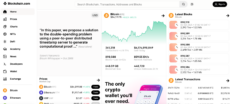
Block explorers allow anyone to view and trace user transactions. Source: Blockchain.com
Anonymity can also be lost when using fiat services, such as buying Bitcoin with a credit card directly in the wallet. These transactions are processed by third-party gateways, which may request ID documents. One solution is to use Best Wallet, which offers no KYC purchases up to a certain limit (varies depending on the gateway).
Why Do Some People Prefer Crypto Wallets with No KYC?
Crypto wallets that don’t require ID are preferred for several reasons, including privacy, avoiding surveillance, and faster transactions.
Let’s explore the key reasons in more detail.
Enhanced Privacy
Bitcoin was created as an anonymous digital asset, ensuring anyone can transact without government and institutional interference. The markets have evolved significantly since Bitcoin launched in 2009, with third parties like exchanges and wallets implementing KYC procedures.
For instance, an exchange like Coinbase requires personal information and a government-issued ID. No trading services are provided until Coinbase verifies the documents.
The best anonymous crypto wallets stay true to Bitcoin’s philosophy – private transactions on a peer-to-peer basis. Users can send, receive, and store cryptocurrencies without meeting KYC requests, with transactions only tied to a public address.
Avoid Surveillance
Crypto transactions are posted on the blockchain, allowing anyone to view them on the public ledger. Personal identities aren’t tied to transactions, but wallet addresses are visible.
Bitcoin transactions, for instance, show wallet addresses for senders and receivers. Wallet addresses also display balances, including stored cryptocurrencies and their corresponding amounts. The key risk is that wallets can be tracked, potentially leading to surveillance if the identity is revealed.
Anonymous crypto wallets eliminate these privacy concerns, as personal information isn’t requested.
Some wallets give users multiple receiving addresses to make it harder for third parties to track transactions and link them to an individual. For example, Bitamp.com provides over 450 receiving BTC addresses, enabling holders to mask their on-chain activity.
Truly Own Your Cryptocurrencies
A key feature of anonymous crypto wallets is non-custodial storage. Only the user can access their private keys, which determine ownership and control. The wallet encrypts and stores private keys on the user’s device, so third parties can’t place restrictions on balances.
This is unlike custodial wallets, which are managed by intermediaries, allowing them to reject transaction requests and even freeze accounts. No such issues are present when using anonymous wallets.
Access to Cryptocurrencies Globally
Not all countries are blockchain-friendly, with several outright banning crypto ownership. Users in these countries need an anonymous crypto wallet to make sure they can invest and build wealth without persecution.
Anonymous wallets are also beneficial for users in the developing world. Many people in remote areas don’t have access to government-issued ID or proof of residency documents, preventing them from having accounts with KYC-driven platforms.
Fast and Seamless Transactions
Custodial crypto wallets can be cumbersome when transacting. Consider an investor using Gemini to store their cryptocurrency. They need to wait for approval before transactions are posted to the blockchain. The required time frame could take hours or even days if additional checks are needed.
The transaction process is considerably more seamless when using anonymous crypto wallets. Their non-custodial framework means no approval is needed, so incoming and outgoing transactions are automatically posted. The wallet provider couldn’t intervene even if it wanted to, considering only the user controls their private keys.
Are Anonymous Crypto Wallets Safe?
Anonymous crypto wallets can be safe, but some considerations should be given.
Users should conduct due diligence when selecting a wallet provider, such as researching its launch date, whether the code is open-source, and how it’s rated in the public domain. Any red flags identified should be taken seriously, as your crypto funds could be at risk. Reputable anonymous wallets have millions of users, which is a testimony to their legitimacy.
However, picking a credible provider alone doesn’t guarantee safety, as users should make sure best practices are followed. Users are provided with backup passphrases when using anonymous wallets – misplacing them or being hacked means the funds are stolen.
A common mistake beginners make is handing backup passphrases to scammers, believing they’re speaking with a customer support representative. Under no circumstances should you ever share backup passphrases, even with those you trust.
Safety risks extend to privacy, as anonymity can be lost when best practices aren’t followed. You can be tracked if you’ve uploaded your ID to an exchange and withdrawn the cryptocurrencies to a wallet. Providing KYC documents to a third-party gateway, even when using an anonymous wallet, also means your identity has been revealed.
The key takeaway is that the best anonymous crypto wallets offer a safe and private experience, but personal accountability is also important.
How to Pick an Anonymous Bitcoin Wallet
No two anonymous wallets are the same – some prioritize security and privacy, while others focus on user experience and features.
We‘ll discuss the most important factors when choosing the best anonymous crypto wallet.
Non-Custodianship and Software-Based
Some metrics are non-negotiable when completely anonymous transactions are required.
The chosen wallet should offer non-custodial storage, meaning you control the private keys and aren’t reliant on third-party intermediaries (like exchanges). Regulators pressure intermediaries for KYC compliance, so they frequently block accounts until a government-issued ID is provided.
Using a software-based wallet is often the preferred choice, as hardware wallets require real payment details to purchase. Anonymous crypto payments are helpful here, but the device still needs to be shipped to a physical address, so true privacy is impossible. Software wallets, such as mobile apps and browser extensions, are the solution, as no personal details are required.
Available Networks and Custom Token Support
You should assess which networks are supported when choosing an anonymous wallet. The provider should ideally support all of the cryptocurrencies you currently own, allowing you to store them in one place. The more compatible networks, the better, as you might want to explore new crypto coins and markets.
The best anonymous crypto wallets also allow custom tokens, which is crucial when investing in small-cap projects that aren’t initially supported. The process should be simple, requiring only the token’s unique contract address.
Device Types and Operating Systems
Wallets are often created for multiple devices and operating systems, but availability depends on the provider.
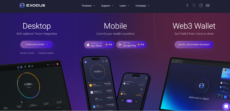
Exodus is available on multiple devices. Source: Exodus
Exodus offers desktop software for Windows, macOS, and Linux, mobile apps for iOS and Android, and browser extensions for Chrome and Brave. Most requirements are covered, but those preferring Firefox or Edge extensions must consider other options.
However, not all providers are as expansive as Exodus, so checking is crucial.
Anonymous Wallet Features
Some crypto wallets offer additional features like token swaps, but you’ll want to make sure anonymity is protected.
A good example is Best Wallet, which offers a built-in DEX with cross-chain functionality. Millions of tokens can be swapped instantly without KYC procedures. Users can also buy cryptocurrencies with fiat money, again, without revealing their identities. This enables users to enter the crypto ecosystem for the first time with no links to centralized exchanges.
Staking is also worthwhile if you’re a long-term investor holding suitable coins. You’ll earn passive rewards while the coins are locked, but checking the terms is necessary. Look for the minimum lock-up period and staking APY; some wallets are more competitive.
Users interested in DeFi should focus on no-KYC crypto wallets supporting dApps. Some wallets come pre-integrated with the popular dApps like Uniswap, PancakeSwap, OpenSea, and Curve. Others require WalletConnect, which adds an extra step.
User Experience
When researching anonymous wallets, the user experience should also be evaluated. Novice investors prefer Best Wallet, MetaMask, and Base App (Coinbase Wallet) for their beginner-friendly design. All features are accessible without prior experience, including sending and receiving funds, connecting with dApps, and earning staking rewards.
Some wallets are built for more experienced investors who are comfortable with advanced features. Electrum, for instance, offers multi-sig verification, a robust security feature requiring split permissions. The drawback is that non-technical investors might not feel comfortable with the multi-sig process, considering the steep learning curve.
Types of Anonymous Crypto Wallets
Anonymous crypto wallets offer cold or hot storage, depending on the user’s requirements and experience. Non-custodianship is also important to retain privacy.
Read on to learn more about each wallet type and how choices can impact anonymity.
Cold Wallets
Cold wallets store private keys offline, so there are no internet vulnerabilities like hacks and malware. Remote crypto thefts are common, so experts recommend cold wallets when storing high-value amounts. The key issue is that most cold wallets are hardware wallets, so they need to be purchased online from the manufacturer. Personal details like the delivery addresses are collected, leaving a traceable link to your identity.
The solution is paper wallets, allowing you to store cryptocurrencies offline in complete anonymity. You’ll first need to download a crypto wallet with no KYC and write down the backup passphrase. You can transfer cryptocurrencies to the wallet address before deleting the software, eliminating online threats. To recover the funds, simply redownload the wallet and import the backup passphrase.
The drawback with paper wallets is the inconvenience, considering the required recovery process. That’s why they’re only suitable for long-term holders who don’t plan to trade actively.
Hot Wallet
The best anonymous crypto wallets offer hot storage. Usually, they come in the form of software wallets, which are always connected to the internet, making frequent transactions seamless. Users can send, receive, and trade cryptocurrencies anytime, assuming the device is accessible.
Safety isn’t as robust as it is with cold wallets (usually hardware wallets), as internet threats will always be present. Users should make sure their chosen hot wallet comes with strong security features like mandatory PINs and biometrics – adding two-factor authentication adds an extra safety net.
Users might consider managing hot and cold wallets simultaneously. A small percentage of cryptocurrencies can be held in a hot Bitcoin wallet without KYC, providing frictionless market access. The balance is held in cold storage, ensuring institutional-grade protection.
Custodial Wallets
Avoid custodial providers if you’re looking for a Bitcoin wallet with no ID. Third parties (e.g., Coinbase or Kraken) offer these wallets, so KYC processes are a legal requirement. Any crypto transactions made after uploading your ID will be tied to your identity, allowing tracking and surveillance.
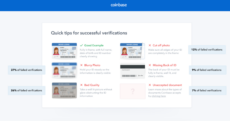
KYC verification tips on Coinbase. Source: Coinbase
Some custodial wallets promise privacy, such as specialist no-KYC exchanges. One risk is that KYC documents can still be demanded, with accounts locked until provided. No-KYC exchanges are unregulated, too, so you’re inviting counterparty risks. The exchange could be hacked, with client-owned cryptocurrencies directly impacted.
Non-Custodial Wallets
Select non-custodial wallets to provide anonymity. Wallet providers are merely interfaces, connecting private keys and user funds with the blockchain. Nobody but the user can access those private keys, so there’s no risk of KYC requests, locked accounts, or rejected transactions.
The drawback is that non-custodial wallets aren’t responsible for security – you are. Misplacing backup passphrases or connecting to a shady dApp puts wallet funds at risk. Stolen cryptocurrencies are rarely recoverable, as cybercriminals leverage the blockchain’s pseudonymous framework.
How to Get a Crypto Wallet with No ID Verification
Setting up a crypto wallet without KYC takes minutes, but certain steps should be taken to ensure anonymity and privacy.
Here’s an overview of the required process:
- Step 1: Turn on a VPN Connection. An optional but important step for complete anonymity is activating a VPN. The wallet provider won’t see your true IP address when completing the download.
- Step 2: Download a Crypto Wallet. Now download the most anonymous crypto wallet for your preferred device. Checking the URL is crucial to make sure you’re not using a phishing site.
- Step 3: Set up the Wallet. Most anonymous wallets have a similar setup process, which includes choosing a PIN, writing down the backup passphrase, and activating security features like biometrics.
- Step 4: Deposit Cryptocurrencies. Unique wallet addresses will be generated automatically once the wallet is set up. You can transfer cryptocurrencies to your wallet address, but make sure the correct network is used.
The top crypto wallets without ID verification ensure privacy and safety. Key factors include security controls, compatible networks, and access to features like dApps and staking. In our view, Best Wallet is the market leader for users seeking anonymity.
Its mobile app for iOS and Android offers anonymous storage, swaps, fiat purchases, and staking. Encrypted private keys secure Best Wallet, ensuring users have complete control over their cryptocurrencies.
FAQ
Can crypto wallets be tracked?
Are there any anonymous crypto wallets?
What is the best anonymous crypto wallet?
Are anonymous Bitcoin wallets risky?
How do I get a crypto wallet without an ID?
How do I cash out crypto anonymously?
Can crypto be traced without KYC?
References
- The KYC process explained (SWIFT)
- Customer identification: Know your customer (KYC) (AUSTRAC)
- Hidden Road stops offering clients access to crypto venue Bybit (Bloomberg)
- Cryptocurrency investigations (UN Toolkit on Synthetic Drugs)
- Cryptoverse: Remember when Bitcoin was ‘anonymous’? (Reuters)
- Is Your Wallet Snitching On You? An Analysis on the Privacy Implications of Web3 (Cornell University)
- Custodial vs Non-Custodial Wallets (Crypto.com)
- FinCEN Officially Withdraws Know-Your-Customer Rule for Non-Custodial Crypto Wallets (Consumer Financial Services)
Coinspeaker in Numbers
250K+
Monthly Users
80+
Articles & Guides
5000+
Research Hours
23
Authors
guides
How to Make Your Crypto Work For You: 4 Different Methods to Explore
May 7th, 2026
Best Forex Signals Telegram Groups & Channels in 2026
April 1st, 2026
Best Crypto Whitelabel Solutions in 2026
March 31st, 2026
Telegram has become the default platform for forex signal delivery, and the number of channels claiming to offer profitable trade ...
Building a crypto exchange from scratch used to take months of development, six-figure infrastructure budgets, and a dedicated com...
Tony Frank
Crypto Editor, 33 postsTony Frank is an accomplished cryptocurrency analyst, author, and educator whose work bridges the gap between complex blockchain technology and accessible, actionable insights for global audiences. Over the past decade, he has emerged as a respected voice in the rapidly evolving world of digital assets, combining technical expertise with a talent for storytelling to help readers navigate everything from Bitcoin’s monetary philosophy to the intricacies of decentralized finance (DeFi). Tony earned his Bachelor’s degree in Economics and Finance from the University of Melbourne, where he developed a deep interest in monetary systems and market structures. He later pursued a Master’s degree in Blockchain and Digital Currency from the University of Nicosia, one of the first academic institutions to offer accredited programs in cryptocurrency studies. Before focusing full-time on blockchain, Tony worked as a financial analyst for a multinational investment firm, covering emerging technologies and alternative asset classes. His early exposure to macroeconomic policy, global market behavior, and fintech innovation laid the foundation for his later work in crypto research and writing. Tony’s expertise spans multiple sectors of the blockchain industry, including cryptocurrency fundamentals, altcoin market cycles, DeFi and web3 trends and regulatory landscapes. Tony combines on-chain data analysis with macroeconomic research, providing readers with both the technical “how” and the market “why” of cryptocurrency movements.