Aave price today
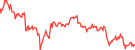
Today's live Aave price is $89.45 USD, with a 24-hour trading volume of $354 186 626 USD. We provide real-time updates for the AAVE to USD price. Aave has decreased by 6% in the last 24 hours. Currently ranked 54 in the cryptocurrency market, Aave has a live market cap of $1 355 384 892 USD, with a circulating supply of
15 164 190AAVE coins and 16000000.00 maximum supply.
Aave is a decentralized finance protocol that allows people to lend and borrow crypto.
Lenders earn interest by depositing digital assets into specially created liquidity pools. Borrowers can then use their crypto as collateral to take out a flash loan using this liquidity.
Aave (which means “ghost” in Finnish) was originally known as ETHLend when it launched in November 2017, but the rebranding to Aave happened in September 2018. (This helps explain why this token’s ticker is so different from its name!)
AAVE provides holders with discounted fees on the platform, and it also serves as a governance token – giving owners a say in the future development of the protocol.
Click to see more
How much is 1 AAVE?
Conversion Table
AAVE/USD
(US Dollar)
89.45 USD
AAVE/EUR
(Euro)
78.94 EUR
AAVE/JPY
(Japanese Yen)
12 762 JPY
AAVE/CHF
(Swiss Franc)
73.15 CHF
AAVE/CNY
(Chinese Yuan)
657.3 CNY
AAVE/GBP
(British Pound Sterling)
67.50 GBP
AAVE/INR
(Indian Rupee)
7 662 INR
AAVE/KRW
(South Korean Won)
127 786 KRW
AAVE/CAD
(Canadian Dollar)
124.7 CAD
AAVE/NGN
(Nigerian Naira)
143 579 NGN
AAVE/BRL
(Brazilian Real)
526.6 BRL
AAVE/SGD
(Singapore Dollar)
117.7 SGD
















![How to Buy Crypto in [cur_year]: Beginner’s Guide](https://www.coinspeaker.com/wp-content/uploads/2025/12/how-to-buy-crypto-230x129.jpg)