
 Fact-Checked by:
 27 mins
 Most crypto swap platforms have an identity threshold at some point in the process, such as a KYC trigger buried in the terms, a c...
Best Crypto Exchanges for Beginners 2026
After extensive research, we rank MEXC as the top cryptocurrency exchange in this guide for 2026. It combines wide altcoin support, low-cost trading, and a feature-rich platform that works well for both beginners and more active users.
MEXC comes in first for altcoin access and low-cost trading, Kraken takes second with its strong reputation and beginner-friendly tools, and KCEX earns third place with spot and futures trading plus no-KYC access.
We deposited real money, executed hundreds of trades, actioned withdrawals, and stress-tested every major feature in over 100 exchanges over the years to find the best crypto exchanges for beginners in 2026, ranking the top 12 providers by core metrics. Discover which Bitcoin and altcoin exchanges offer the best service and learn how to get started in under five minutes.
Key Takeaways for Top Crypto Exchanges
- MEXC is our top recommended crypto exchange in this guide, thanks to its broad altcoin support, low spot fees, and extensive trading features.
- Kraken is fantastic for trust, security, and ease of use, making it one of the strongest all-around choices for beginners and more advanced users alike.
- No single exchange is perfect, and different platforms excel in different dimensions, such as low fees, regulatory compliance, advanced tools, and self-custody.
- Many exchanges embed fees in spreads or via commissions. Fiat deposit and withdrawal fees can be especially expensive, so users should check those carefully.
- Exchanges offering high leverage or derivatives come with elevated risk and are suitable only for experienced users.
- Some features are region-restricted. US clients in particular may face limitations or need to use specialized regulated versions of exchanges.
The 12 Best Crypto Exchanges for Beginners in 2026
According to our extensive research, these are the best crypto exchanges for 2026:
- Best for Altcoin Access – MEXC
- Best Regulated Exchange – Kraken
- Best for Spot Trading – KCEX
- Best for Margin Trading – PrimeXBT
- Best for Liquidity and Global Reach – Binance
- Best for Local Payment Access – Crypto.com
- Best for Security and Self-Custody – OKX
- Best for Beginners Who Want Self-Custody – Best Wallet
- Best for Simple Futures Trading – Margex
- Best for Small Account Minimums – BloFin
- Best for High-Leverage Trading – WEEX
- Best for Advanced Derivatives Tools – Bybit
Best Bitcoin Exchanges Reviewed
Read on to explore the top 12 crypto exchanges in more detail. Learn which exchanges offer the lowest fees, the widest range of markets, and the overall best user experience.
1. MEXC – Best for Altcoin Access
MEXC is a good choice for crypto investors who prioritize altcoins, including Ethereum, Dogecoin, Avalanche, and Solana. You can buy cryptocurrencies instantly with local currencies and payment methods, including Visa, MasterCard, and Google/Apple Pay. Another option is MEXC’s peer-to-peer (P2P) exchange, which supports over 100 deposit types and allows buyers to trade directly with sellers from their home country.
The exchange also provides high leverage, offers competitive interest rates on crypto deposits, and a native app for iOS and Android. Spot trading users get 0% commissions when they place limit orders, and 0.05% for market orders. The platform also supports perpetual futures, with commissions set at 0.01% and 0.04% for limit and market orders, respectively.
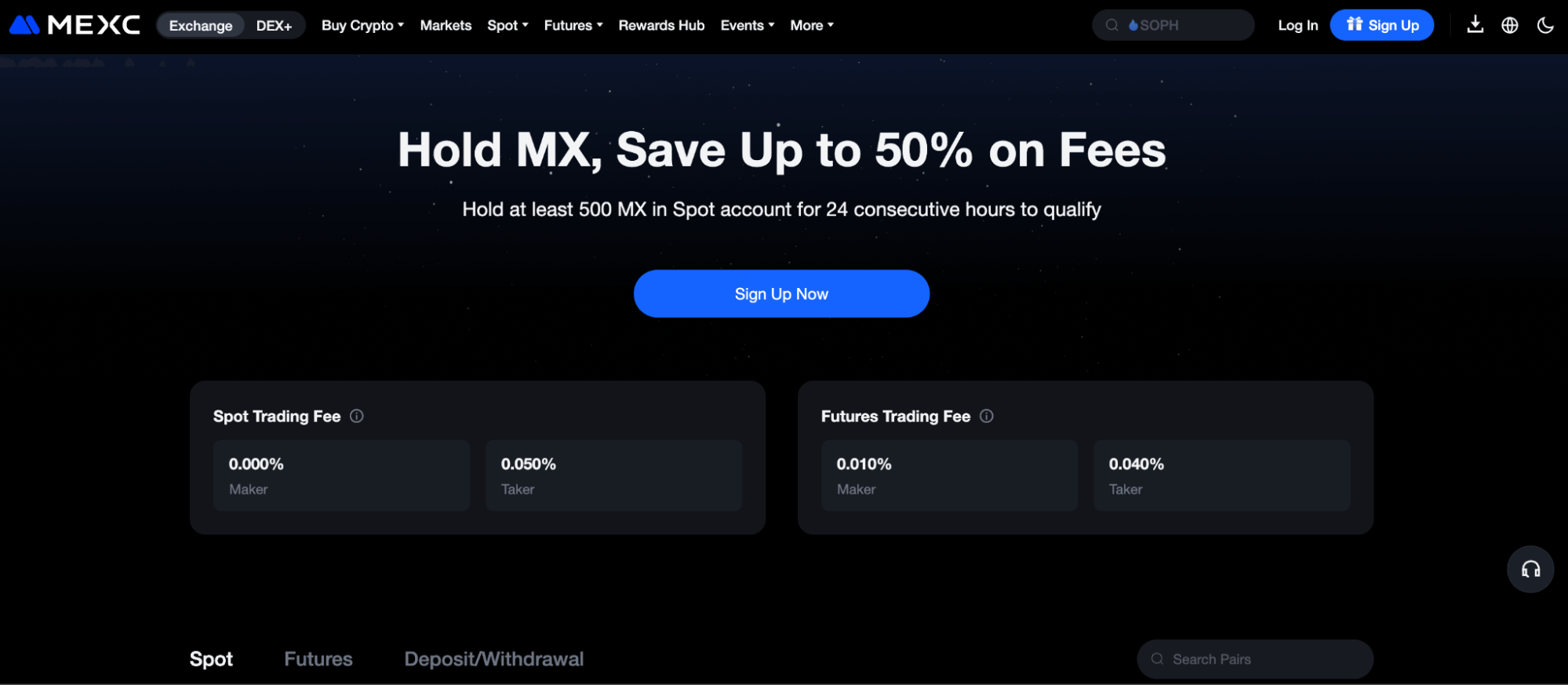
Markets cover the best altcoins to buy, including Ethereum, Dogecoin, Avalanche, and Solana. The exchange also provides high leverage, offers competitive interest rates on crypto deposits, and a native app for iOS and Android.
Editor’s Take:
“MEXC is hard to beat if altcoins are your focus. The selection is massive and those zero-fee limit orders are a nice bonus. That said, it’s a custodial platform, so you’re trusting them with your keys. Great for variety and cost-conscious trading, but I’d recommend moving larger holdings to a personal wallet.”
2. Kraken – Best Regulated Exchange
Kraken is one of the longest-running cryptocurrency exchanges in the industry, founded in 2011 and widely regarded as one of the most trusted platforms for buying and trading digital assets. The exchange supports hundreds of cryptocurrencies and offers both beginner-friendly purchase tools and advanced trading features through its Kraken Pro interface.
New users can buy Bitcoin and other major cryptocurrencies instantly with debit cards, bank transfers, and multiple regional payment methods. For more experienced traders, Kraken provides margin trading, futures markets, and a professional-grade order interface with deep liquidity and competitive spreads.
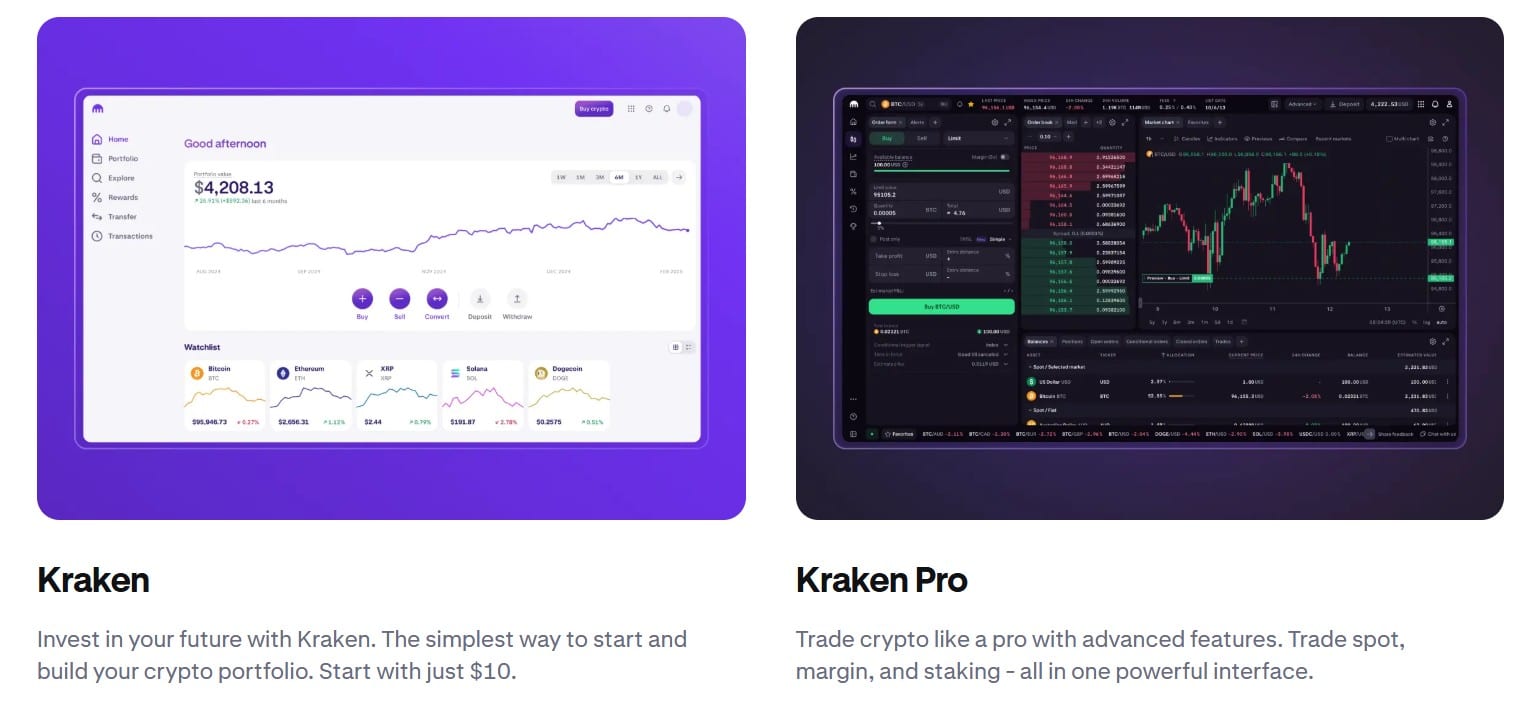
Kraken places a strong emphasis on security and transparency. The exchange publishes regular proof-of-reserves reports and maintains a long track record of safeguarding user assets. It also offers staking services in supported regions, allowing users to earn passive rewards on select cryptocurrencies while holding them on the platform.
Editor’s Take:
“Kraken has always felt like one of the most dependable names in crypto. The interface is straightforward for beginners, but Kraken Pro gives you the kind of tools serious traders expect. Add in proof-of-reserves transparency and a reputation that goes back more than a decade, and it’s easy to see why many investors trust Kraken with their first crypto purchases.”
3. KCEX – Best for Spot Trading
KCEX is popular with crypto investors who want access to a broad range of speculative tokens and low-cost trading. The exchange supports many meme coins across multiple narratives, including market leaders like Dogecoin, dogwifhat, Pepe, and Bonk. It also lists more established assets such as Bitcoin, Cardano, Sui, Tron, and BNB, as well as leading artificial intelligence (AI) coins like Render and Virtuals Protocol.
You can also trade more serious blockchain projects like Cardano, Bitcoin, Sui, Tron, and BNB, as well as top artificial intelligence (AI) coins like Render and Virtuals Protocol.
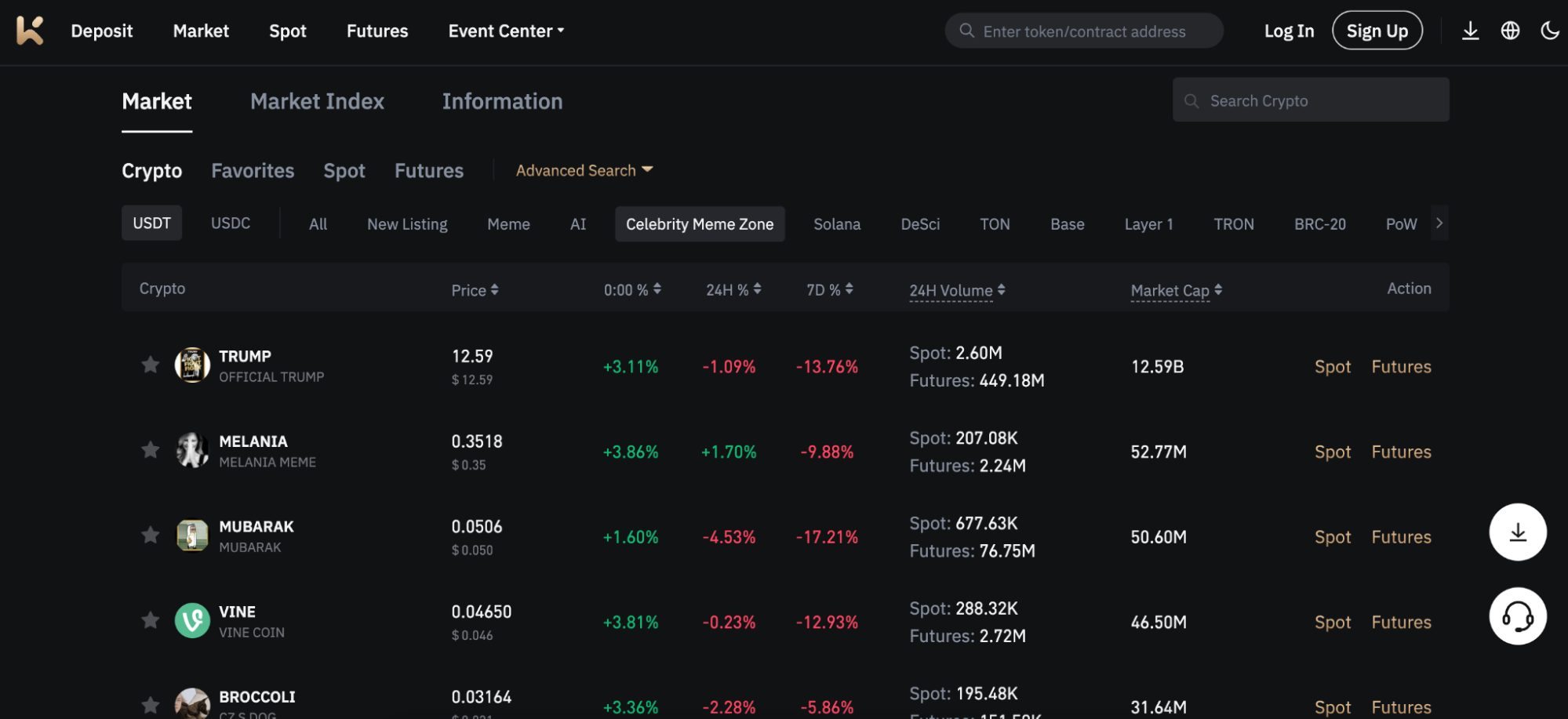
KCEX also stands out in the fee department, with no commissions charged on spot trades or futures limit orders. Traders only pay fees when placing market orders on perpetual futures, and even then, the fee remains very low.
Editor’s Take:
“KCEX is attractive if your priority is low-cost trading and broad access to smaller-cap coins. The spot fees are especially competitive, and the interface is simple enough for newer users to navigate. It’s a higher-risk platform than more established exchanges, but for active traders who want access and speed, it has a lot going for it.”
4. PrimeXBT – Best for Margin Trading
PrimeXBT operates differently from a standard exchange, in that it is a CFD platform built for traders who want exposure to price movements without owning the underlying asset. This allows for very aggressive leverage on cryptocurrencies and even higher leverage on forex pairs.

The platform also integrates traditional markets, where users can fund accounts with crypto such as BTC, ETH, and USDT and then trade foreign exchange, commodities like gold and oil, or stock indices alongside their digital assets. The Covesting module also lets users automatically copy the strategies of top-performing traders on the platform, sharing a percentage of the profits.
Trading fees are competitive, generally 0.05% for cryptocurrency pairs, though because this is margin trading, users need to monitor overnight financing rates if positions are held past the daily cutoff. The interface is customizable, offering advanced charting tools and multiple order types for executing complex strategies.
Editor’s Take:
“PrimeXBT is a powerhouse, but not necessarily the first stop for complete beginners. The ability to trade gold or the S&P 500 using your Bitcoin balance is a fantastic feature that you won’t find on standard exchanges. Just respect the leverage, because margin can wipe out your account as fast as it grows. This is better suited to short-term speculation than long-term holding.”
5. Binance – Best for Liquidity and Global Reach
Binance is one of the most popular exchanges in the market with hundreds of millions of registered users worldwide. It supports hundreds of cryptocurrencies and a wide range of markets covering spot trading, perpetual and delivery futures, options, and leveraged tokens.
The exchange is commonly used by active day traders who seek tight spreads, deep liquidity, and access to high-level trading tools. Analysis features include technical indicators, drawing tools, and custom charting areas.
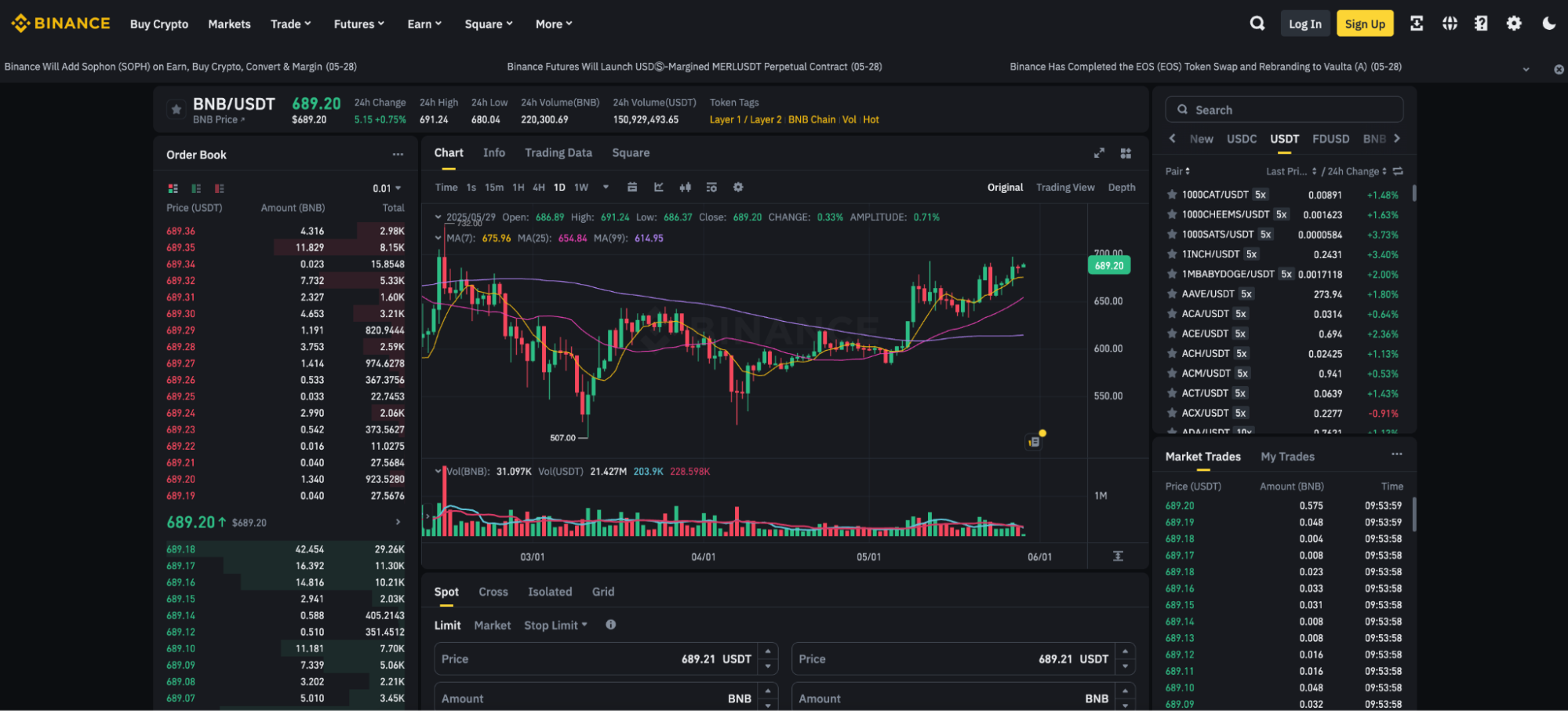
Binance is highly accessible, with desktop software for Mac, Windows, and Linux, as well as a mobile app for iOS and Android. It also offers standard browser-based trading, and all platform options connect to the same Binance account.
Editor’s Take:
“Love it or hate it, Binance still sets the standard for liquidity and market depth. You get access to a huge range of coins, tight spreads, and a trading interface that does it all. If you’re just starting out, though, the platform can feel busy, and some features depend heavily on where you live.”
6. Crypto.com – Best for Local Payment Access
Crypto.com is a mainstream exchange that combines a broad crypto offering with strong payment support and a consumer-friendly app. Users can buy Bitcoin and many other digital assets with cards, bank transfers, and region-specific payment methods, making it one of the more accessible platforms for first-time investors.
The exchange supports a large range of cryptocurrencies and also provides access to additional services such as staking, rewards, and spending tools through the wider Crypto.com ecosystem.
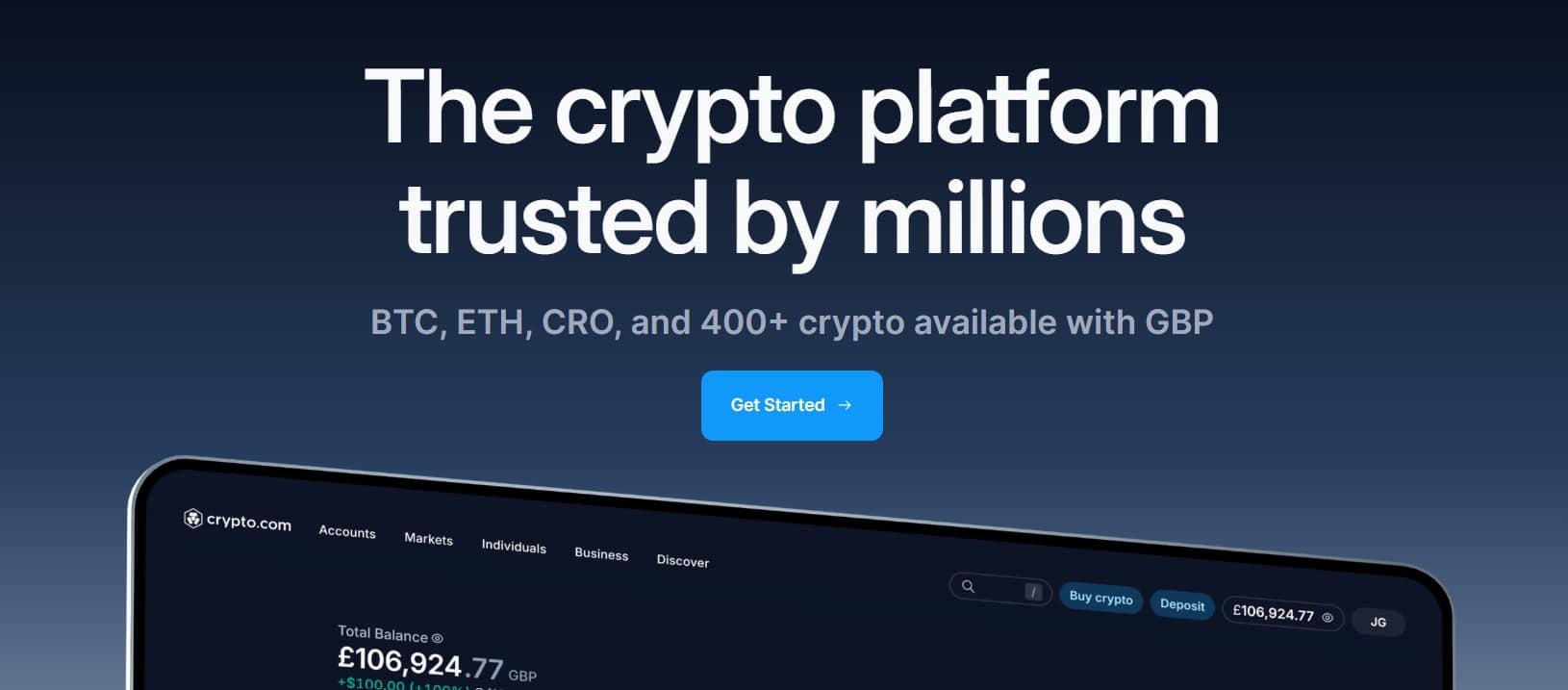
Crypto.com also has a strong mobile-first design, which makes it particularly appealing to users who want to buy and manage crypto from their phones without needing a more advanced trading interface right away.
Editor’s Take:
“Crypto.com makes a lot of sense for beginners who care about convenience. The app is polished, payment methods are broad, and the overall ecosystem is bigger than just spot trading. Fees can vary depending on how you use it, but as an easy on-ramp into crypto, it does a lot well.”
7. OKX – Best for Security and Self-Custody
OKX is a major global exchange that offers a secure and feature-rich way to invest in cryptocurrencies. The platform supports hundreds of leading assets, including Bitcoin, Ethereum, Cardano, Arbitrum, and Dogecoin, and makes purchasing digital assets simple through bank transfers, cards, and peer-to-peer services in supported regions.
Security is a central focus for OKX. The exchange maintains robust compliance practices, uses cold storage for most user funds, and offers self-custody through the OKX Wallet, allowing users to manage their own private keys and interact directly with Web3 dApps if they choose.
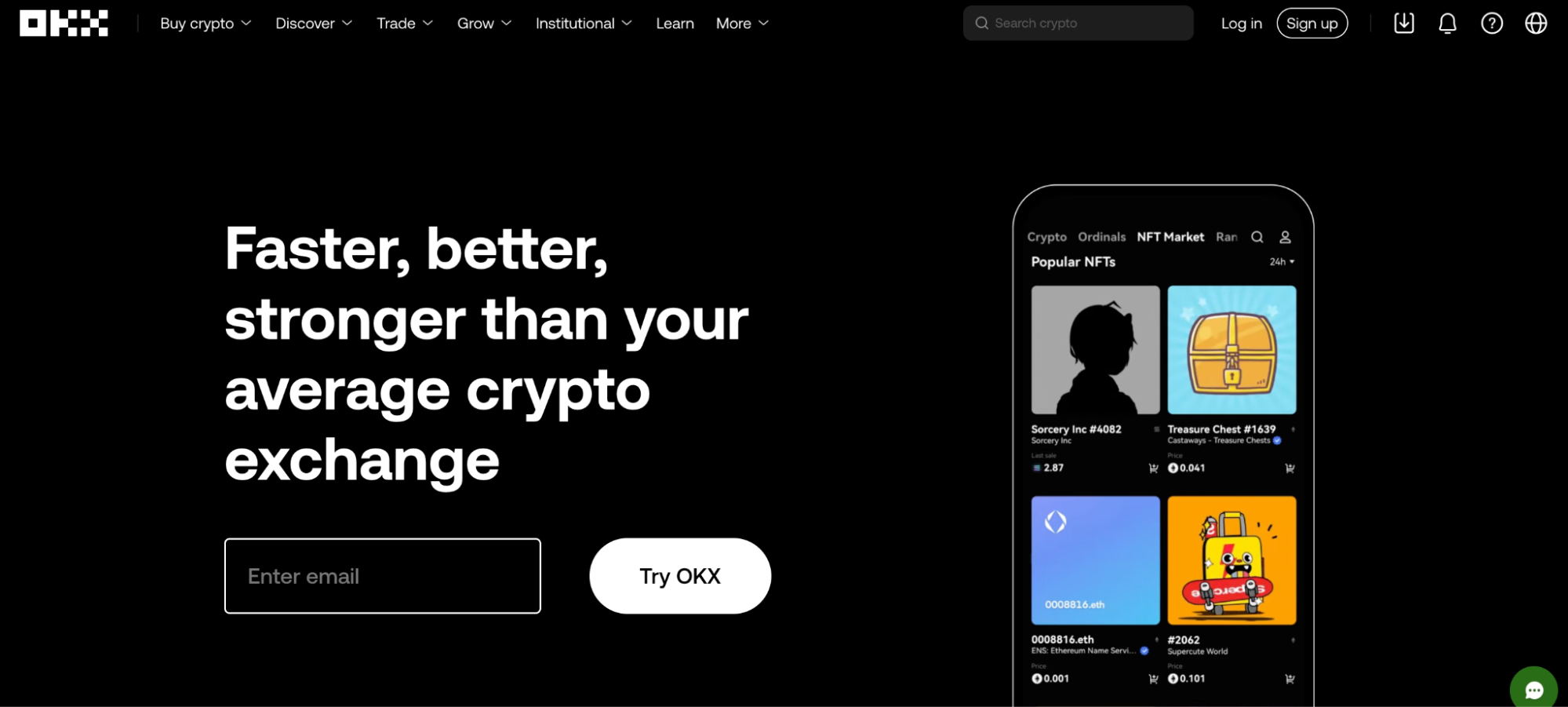
Trading fees are competitive, with volume-based discounts for active traders. Users in supported jurisdictions can also access advanced features such as copy trading, automated trading bots, and leverage products.
Editor’s Take:
“I like that OKX doesn’t cut corners on security. Most funds are held in cold storage, there’s a self-custody wallet if you want full control, and the trading tools are more advanced than what many beginners will need at first. You’ll usually need to complete KYC for the full platform experience, but that’s part of the tradeoff for a more established exchange.”
8. Best Wallet – Best for Beginners Who Want Self-Custody
Best Wallet offers a mobile app where users can buy Bitcoin and over 1,000 other cryptocurrencies with debit and credit cards, e-wallets, and local bank transfers. The platform does not require KYC for many core wallet and swapping functions, so users can get started quickly without dealing with a lengthy signup process.
Users can swap cryptocurrencies within the mobile app, giving them access to a broad range of markets from ecosystems like Ethereum, Solana, and Base. Platform fees are built into quoted exchange rates, which Best Wallet sources from a large network of liquidity partners.
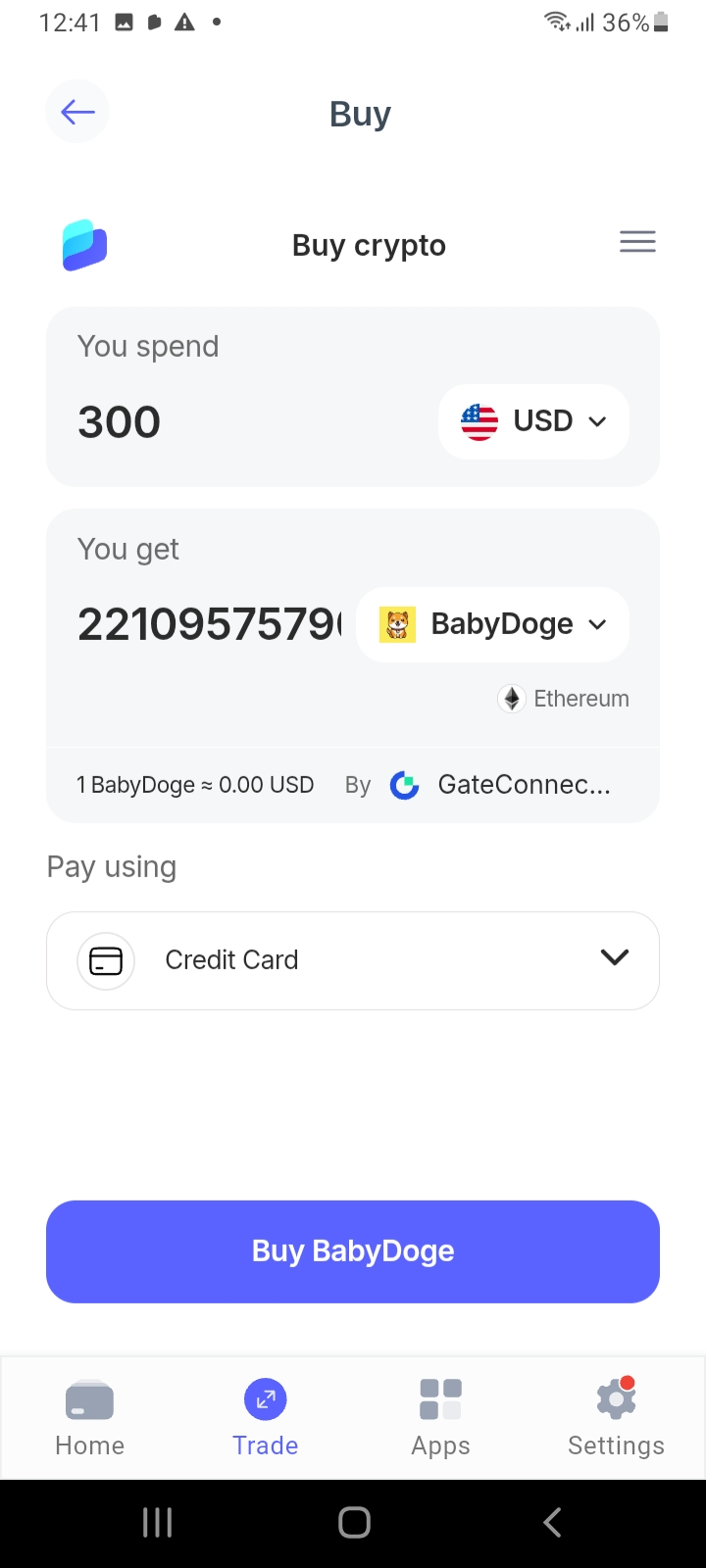
Best Wallet also doubles as a self-custody wallet. This ensures cryptocurrencies are stored under the user’s control rather than with a centralized third party. The wallet and exchange features include multiple security tools, including custom PINs, biometrics, and two-factor authentication (2FA).
Editor’s Take:
“Best Wallet genuinely impressed me as an all-in-one solution. You get an exchange and self-custody wallet in one app, so your crypto stays in your control from day one. No KYC hassle for core use, over 1,000 coins available, and the security tools are solid. If you’re new to crypto and want a simple and useful platform, it’s a very compelling place to start.”
9. Margex – Best for Simple Futures Trading
Margex is a derivatives-focused crypto exchange built for traders who want a straightforward way to access leveraged markets. The platform offers perpetual futures on dozens of major cryptocurrencies, including Bitcoin, Ethereum, and Solana, with leverage options reaching up to 100x.
Unlike many advanced derivatives exchanges, Margex keeps the interface relatively simple. Users can quickly deposit crypto, open positions, and manage trades without navigating overly complex dashboards or professional trading layouts.
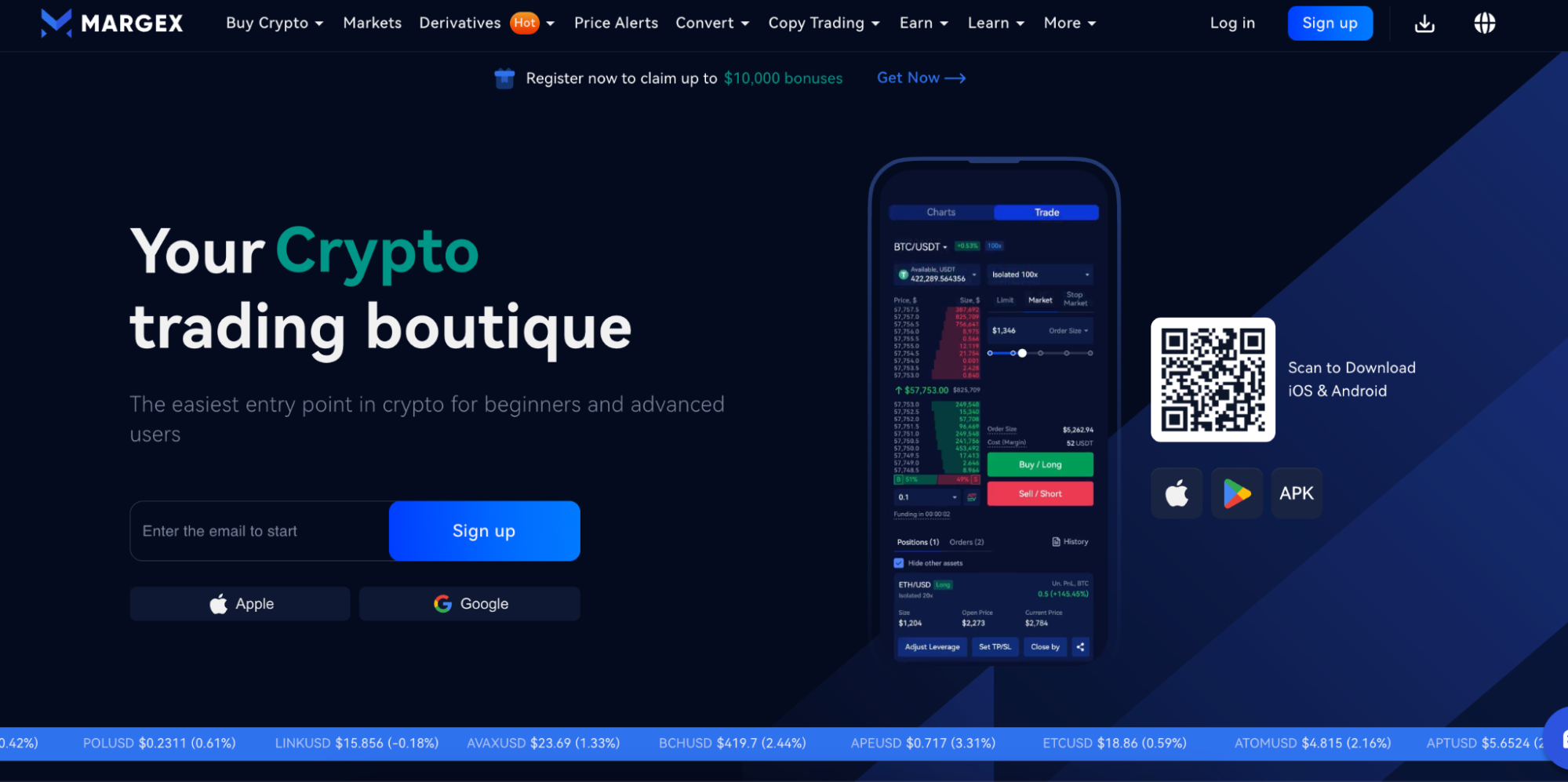
Trading fees remain competitive, typically around 0.019% for makers and 0.06% for takers on futures markets. The platform also aggregates liquidity from multiple exchanges to improve pricing and reduce manipulation risks.
In addition to derivatives trading, Margex includes extra features such as copy trading, staking rewards, and simple crypto purchasing through integrated payment providers.
Editor’s Take:
“Margex feels designed for traders who want leverage without the clutter. The platform is clean, fees are reasonable, and the copy trading feature makes it easier for beginners to follow experienced strategies. Just remember that leveraged trading carries real risk. It’s powerful, but it should always be used carefully.”
10. BloFin – Best for Small Account Minimums
BloFin was designed with beginners in mind. The retail-friendly platform offers a free demo trading account with unlimited virtual funds and real-time market movements. Novice traders can learn how to read pricing charts, use technical indicators, and place orders without risking their own funds.
The exchange also has a comprehensive education section that includes a free trading academy. Once users get comfortable with the BloFin platform, they can deposit real money with a debit or credit card, and the minimum funding requirement is low.
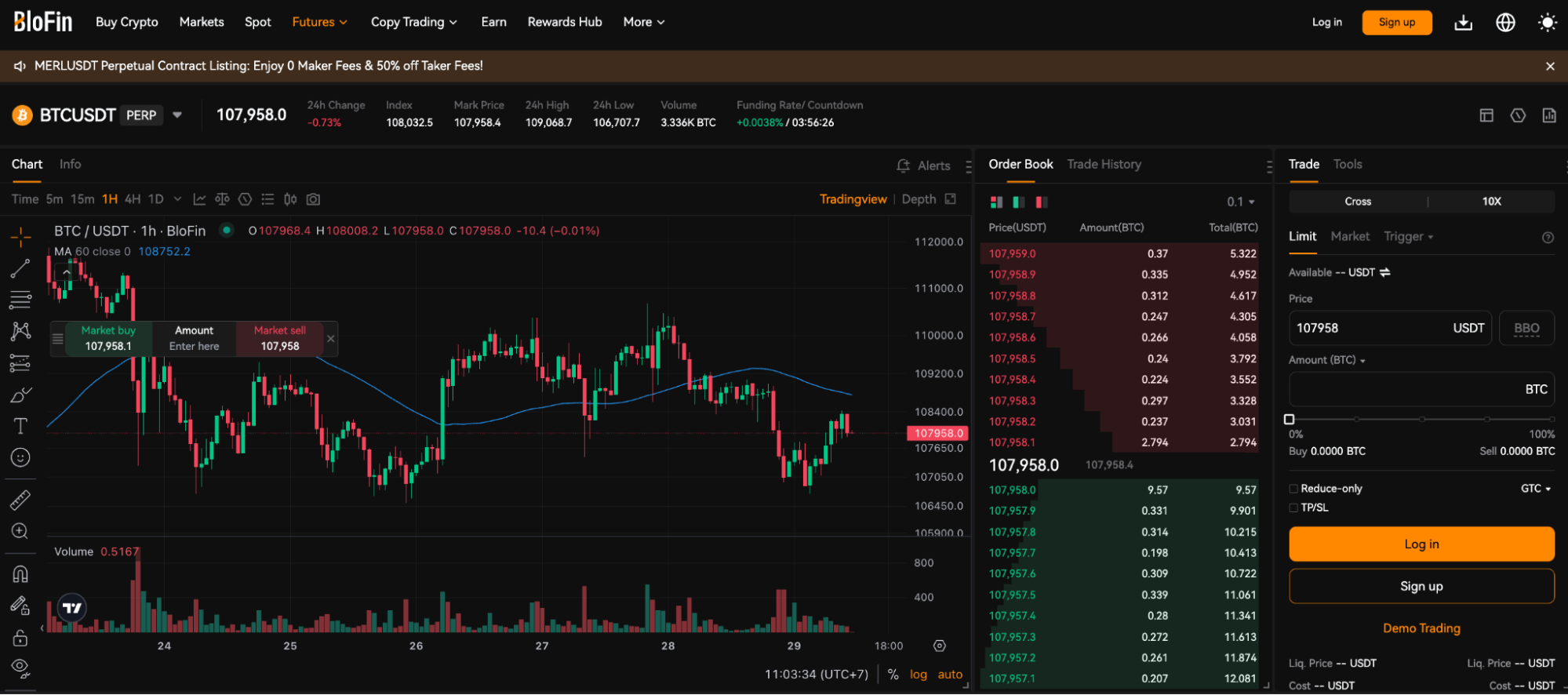
It supports hundreds of coins, and investing categories include meme coins, DeFi, RWA, infrastructure, and GameFi.
Editor’s Take:
“BloFin does some things well. The demo trading is helpful, the education section is solid, and the low barrier to entry makes it approachable. It’s not the most established name in the market, but for beginners who want to practice before committing larger sums, it offers a useful starting point.”
11. WEEX – Best for High-Leverage Trading
WEEX is a fast-growing cryptocurrency exchange known for its aggressive leverage options and generous trading rewards. The platform supports hundreds of cryptocurrencies across both spot and futures markets, with leverage reaching as high as 400x on certain derivatives products.
The exchange has built a reputation around its competitive promotions and bonus programs. New users can earn trading rewards through sign-up incentives, deposit bonuses, and volume-based campaigns that can significantly increase available capital for active traders.

Beyond promotions, WEEX provides a fully featured trading environment with advanced charting tools, copy trading capabilities, and both mobile and desktop interfaces. The platform also maintains a large protection fund to help safeguard users against extreme market volatility and liquidation risks.
Editor’s Take:
“WEEX clearly targets active traders who want leverage and trading incentives. The platform is smooth, the promotions are generous, and the futures markets are deep enough for serious speculation. It’s not necessarily the first place I’d send a complete beginner, but for traders who understand leverage, it can be a powerful platform.”
12. Bybit – Best for Advanced Derivatives Tools
Bybit is one of the largest crypto exchanges for daily trading volume. It supports a broad range of fiat payment options across many currencies, and deposit types include Visa, MasterCard, local transfers, SEPA, and Google and Apple Pay. The P2P exchange adds even more payment choices.
The platform offers a huge range of products, including hundreds of listed cryptocurrencies, while derivative instruments include options, pre-market trading, and delivery futures.
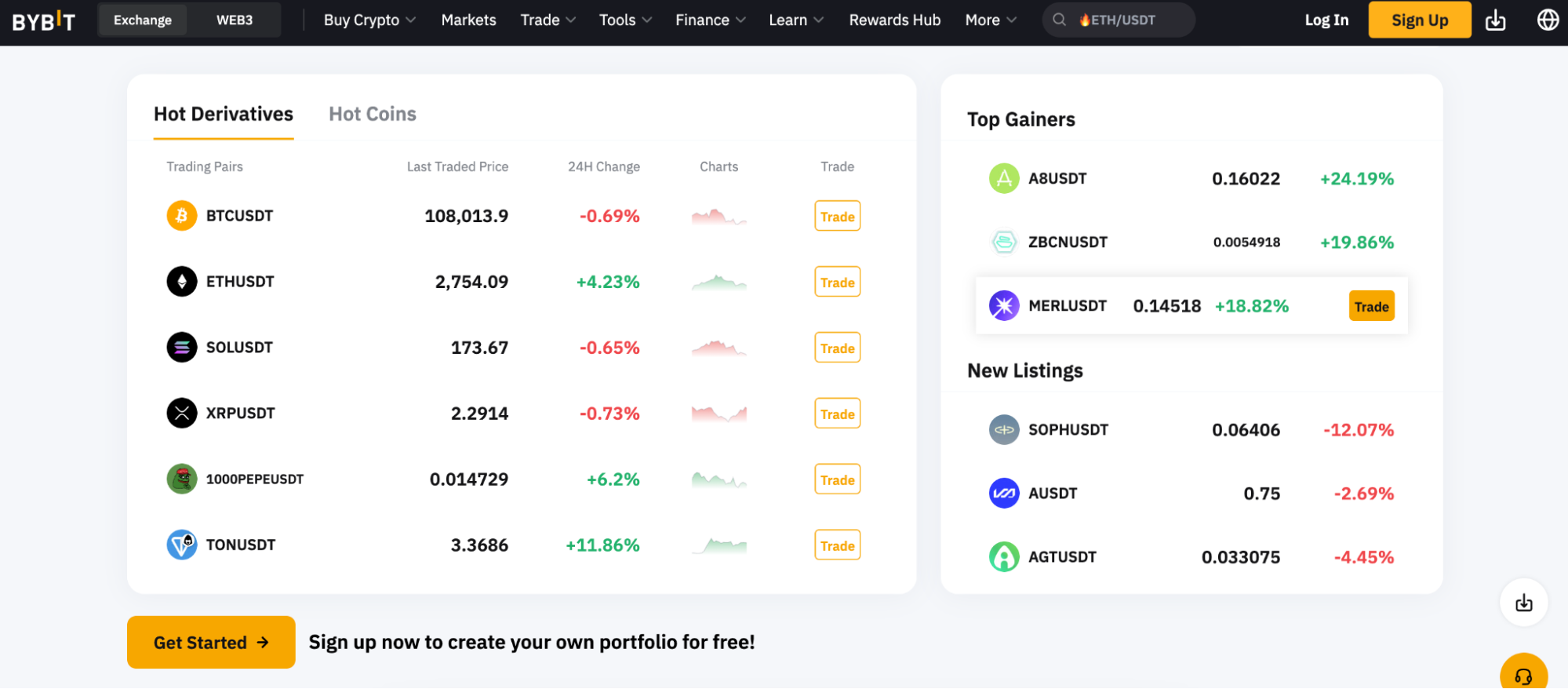
Investors also have a wide range of earning tools at their disposal, from fixed and flexible savings accounts to dual investments and liquidity mining. These products allow users to earn passive returns on supported crypto balances.
Editor’s Take:
“Bybit is packed with features and clearly built for active traders. The derivatives suite is one of the broadest around, and the overall platform experience is polished. For complete beginners, it may feel like more exchange than they need at first, but if you want advanced trading tools and room to grow, it remains a strong option.”
Compare the Best Crypto Exchanges
| Rank | Exchange | Coins Supported | Fees (Spot) | KYC Required | Wallet Type | Best For |
| 1 | MEXC | 2,300+ | 0% limit / low spot fees | No (basic use) | Custodial wallet | Altcoin variety & low fees |
| 2 | Kraken | 350+ | Tiered pricing | Yes | Custodial wallet | Trust, security & ease of use |
| 3 | KCEX | Hundreds | 0% spot fees on many pairs | No (basic use) | Custodial wallet | Spot trading & low-cost access |
| 4 | PrimeXBT | 100+ (crypto, forex, indices, commodities via CFDs) | 0.05%–0.2% (varies by asset) | Varies by product and region | Custodial (trading platform) | Leverage trading & multi-asset exposure |
| 5 | Binance | 350+ | 0.1% maker / 0.1% taker | Yes (mandatory in most regions) | Custodial wallet + Trust Wallet integration | Liquidity & global reach |
| 6 | Crypto.com | 400+ | Tiered pricing | Yes | Custodial wallet | Easy payments & beginner access |
| 7 | OKX | 350+ | 0.08% maker / 0.1% taker | Yes (tiered) | Custodial + Web3 wallet | Advanced trading & self-custody access |
| 8 | Best Wallet | 1,000+ | Varies | No for core wallet use | Non-custodial / Self-custody | Beginners who want self-custody |
| 9 | Margex | 50+ | 0.019% maker / 0.06% taker | No strict KYC | Custodial wallet | Simple futures trading |
| 10 | BloFin | 400+ | 0.1% maker / 0.1% taker | Yes | Custodial wallet | Small account minimums |
| 11 | WEEX | 600+ | Varies by market | Varies by region and feature | Custodial wallet | High-leverage trading |
| 12 | Bybit | 400+ | 0.1% maker / 0.1% taker | Yes (KYC needed for full access) | Custodial wallet | Derivatives & advanced tools |
What Is a Cryptocurrency Exchange?
A cryptocurrency exchange is an online platform where users can buy, sell, and trade digital assets such as Bitcoin, Ethereum, and stablecoins. These exchanges match buyers and sellers while displaying real-time prices. The two main types of exchanges are Centralized Exchanges (CEXs) and Decentralized Exchanges (DEXs).
CEXs act as intermediaries, managing transactions and custody of user funds. They typically offer strong liquidity, advanced tools, and customer support, but users must trust the platform with their assets and may sometimes have to complete Know Your Customer (KYC) verification. Most of the platforms listed in this article fall into this category, although Best Wallet also offers a self-custody experience.
DEXs operate on blockchain networks without intermediaries. Users trade directly from their wallets, keeping full control of their private keys. While DEXs enhance privacy and self-custody, they can have lower liquidity and fewer fiat payment options. Examples of DEXs include Uniswap or PancakeSwap.
Note: Most of the platforms featured in this article are beginner-friendly because they combine accessibility, user support, and relatively smooth onboarding. Best Wallet adds a self-custody angle for users who want more direct control over their assets while still using a simple app-based interface.
How Do Crypto Exchanges Work?
A crypto exchange is a place where buyers meet sellers. You want Bitcoin, someone else wants to sell theirs, and the exchange acts as an intermediary.
Most exchanges use an order book, a running list of everyone who wants to buy and everyone who wants to sell, along with the prices they’re willing to accept. When a buyer’s price matches a seller’s price, the trade happens automatically. You don’t need to find the other person or negotiate a price, because the system handles everything.
One more thing that’s important to keep in mind is that when you buy some crypto through a centralized exchange, the platform often holds it for you. Your funds are stored in their wallets, which is completely fine for day-to-day trading, but if the exchange gets hacked or goes under, your funds could disappear with it.
If you’re holding significant funds, it might be better to move a large chunk into cold storage to keep it safe.
How to Get Started on a Crypto Exchange
- Sign Up
First things first. You need an account. Head to the exchange, punch in your email, set a password, and you’re in.
Some platforms might require you to finish KYC, which stands for Know Your Customer. You upload a photo of your ID, sometimes a selfie, and wait for approval. Once you’re verified, you get access to higher limits and the full range of features.
- Add Funds
Now you need money in your account. Bank transfers are usually the cheapest route, but you might wait a few days for the funds to clear. Cards get you in faster, though you’ll pay for that convenience with added fees.
P2P is another option if your exchange supports it, and it lets you buy directly from another user however you both agree to settle up. If you already have crypto somewhere else, you can skip the fiat step entirely. Just send it to your deposit address on the exchange and you’re ready to trade.
- Make a Trade
This is the part you came for. Find the coin you want, decide how much you’re buying, and place your order. Market order if you want it done now, limit order if you want to wait for a better price.
The whole thing takes seconds once you get the hang of it. Your new crypto shows up in your exchange balance right away.
- Lock Down Your Account
This is the boring part that people skip and later regret. Turn on two-factor authentication before you do anything else. It’s one extra step at login that makes your account significantly harder to compromise.
After that, poke around the security settings. Whitelist your withdrawal addresses so your crypto can only go where you’ve already approved, and turn on time locks if they’re available. The goal is to create enough friction that even if someone gets into your account, they can’t actually take anything before you notice.
- Withdraw Your Crypto
Once you’re done trading, you have a choice. Leave your crypto on the exchange or move it somewhere safer. If you want to trade with it again, it’s easier to keep it on the platform. Otherwise, it’s often safer to move it to a personal wallet.
Just paste your wallet address, double-check it, confirm the withdrawal, and wait. Depending on the network, it could arrive in minutes or take longer. Either way, once it’s in your own wallet, it’s yours.
Are Crypto Exchanges Safe to Use?
Crypto exchanges are generally safe when using reputable platforms, practicing good security hygiene, and understanding where responsibility lies: with the platform on custodial exchanges and with the user on self-custody solutions.
Leading exchanges like Binance, OKX, and Kraken implement multi-layered security, including cold storage, two-factor authentication (2FA), encryption, and proof-of-reserves reporting. Many of the top exchanges such as Binance and Bybit also hold an insurance fund to be able to repay users in the event of a security breach resulting in lost funds. However, because centralized platforms hold custody of funds, they remain vulnerable to hacks or operational risks, and users are often advised to withdraw long-term holdings to self-custody wallets.
Self-custody tools, by contrast, eliminate custodial risk since users keep control of their keys. Yet, they also place more responsibility on the individual user.
Regulated mainstream crypto exchanges are often the safest place to begin, but the platform’s structure, reputation, and your own security practices all need to be taken into account.
Pro Tip: After trading on exchanges or interacting with DeFi platforms, always review your wallet’s crypto token permissions. Some platforms require token approvals that remain active until revoked. Regularly checking and removing unused approvals can improve DeFi wallet safety and reduce the risk of malicious contracts accessing your funds.
How to Choose a Safe and Trusted Crypto Exchange
Follow these best practices to ensure you’re using a legitimate Bitcoin exchange:
- Assess Trading Volumes and Users: The best crypto exchanges attract significant volumes, with Binance, OKX, Kraken, and MEXC processing large amounts of daily activity. These platforms have millions of users and generally strong brand recognition.
- Evaluate Account Security Features: Legitimate platforms offer a wealth of account security tools, from 2FA and device whitelisting to withdrawal time locks.
- Cold Storage: Exchanges should keep the vast majority of client-owned cryptocurrencies in cold storage wallets. This security system mitigates the risks of remote hacks.
- Check Proof of Reserves: Since the FTX bankruptcy, proof of reserves has become more common across the industry. Where available, users should assess whether reserve reporting is transparent and regularly updated.
How Do Crypto Exchange Fees Work?
Every exchange takes a cut. The question is how much and where.
Most platforms use what’s called a maker-taker model. If you place a limit order that sits on the order book and waits to be filled, you’re a maker. You’ve added liquidity to the market, and the exchange may reward that with lower fees.
If you place a market order that fills right away against someone else’s order, you’re a taker. You’ve removed liquidity, so you usually pay a bit more.
The difference isn’t huge, usually a few hundredths of a percent, but it adds up if you trade often.
Your fees can also drop based on how much you trade. Most exchanges run tiered structures where your rate gets better as your 30-day volume climbs. Casual users won’t notice much of a difference, but active traders can save a decent chunk over time.
Trading fees aren’t the whole picture though. Deposits can cost you, especially with cards. Withdrawals almost always carry a fee, sometimes flat, sometimes based on network congestion. And if you’re converting between currencies or swapping one coin for another, there’s usually a spread or fee baked into the rate.
Payment method can make a difference as well. Credit cards are fast but expensive because exchanges absorb chargeback risk and pass that cost to you. Bank transfers usually take longer but come in cheaper.
How to Use a Cryptocurrency Exchange in 2026
This section explains how to buy cryptocurrencies on the MEXC platform — our overall top pick in this guide.
- Step 1: Create an Account: Go to the MEXC website or mobile app and sign up with your email address.
- Step 2: Secure the Account: Activate all security features before you buy digital assets, including 2FA and anti-phishing protections if available.
- Step 3: Choose a Crypto to Buy: MEXC supports a broad range of cryptocurrencies, from large-cap coins to newer altcoins. Browse the available assets and choose one to purchase.
- Step 4: Enter the Purchase Requirements: Select your currency and payment method, then type in the purchase amount.
- Step 5: Complete Payment: Review the order details, confirm the transaction, and wait for the purchased coins to appear in your account balance.
- Step 6: Store or Withdraw Crypto: If you plan to hold for the long term, consider withdrawing the purchased assets to a personal wallet for additional control.
Methodology – How We Picked and Ranked the Best Cryptocurrency Exchanges
We tested 100+ crypto exchanges, including deposits, trading, core features, and withdrawals. We evaluated each platform on desktop and mobile devices to assess the overall user experience. The team then analyzed key variables by their importance, starting with safety, licensing, and security features like 2FA, proof of reserves, and cold storage.
Note: The “Best” classifications such as Best for Low Fees, Best for Beginners, Best for Advanced Trading, and similar labels are not investment recommendations. They’re intended to help readers identify each exchange’s primary strengths, ideal use cases, and overall value proposition.
The Coinspeaker team determined these categories through a combination of documented platform features and, where possible, direct analysis and limited hands-on testing of each exchange. This process allows us to highlight what each platform appears best suited for based on its functionality, user experience, and positioning within the market.
Our evaluation of crypto exchanges is based on the following weighted criteria:
Regulation (25%)
Licensed and regulated exchanges generally provide the safest environment for crypto investing, reducing risks of fraud and improving compliance with local laws.
Fees (20%)
Competitive trading fees and low deposit and withdrawal costs are critical for maximizing investor returns.
Tradable Cryptos (15%)
A broad selection of supported cryptocurrencies enables investors to diversify portfolios and access niche markets.
Wallet Security (12%)
Platforms with built-in, secure wallets or strong withdrawal options make it easier and safer to store digital assets.
Tools, Features and Apps (15%)
Advanced trading tools such as copy trading, demo accounts, automated bots, and technical indicators help traders of all levels navigate volatile markets. A user-friendly mobile app for iOS and Android also lets traders monitor markets and trade securely on the go.
Payment Methods (8%)
Easy fiat on-ramps, including Visa, MasterCard, and popular e-wallets, are important, especially for first-time investors.
Customer Service (5%)
Reliable support, ideally 24/7 with live chat, helps resolve issues quickly and builds trust with users.
Conclusion
After extensive research, we rank MEXC as the top cryptocurrency exchange in this guide for 2026. It combines wide altcoin support, low-cost trading, and a feature-rich platform that works well for both beginners and more active users.
Kraken and KCEX also performed strongly for different reasons. Kraken stands out for trust, transparency, and user experience, while KCEX offers low fees and strong spot market access for traders who want a broader range of smaller-cap opportunities.
As always, the right exchange depends on what matters most to you. Some users will prioritize regulation and simplicity, others will want self-custody, and others will care most about fees or leverage. The best platform is the one that fits your goals, your region, and your risk tolerance.
FAQ
Which cryptocurrency exchange is best?
What is the safest crypto exchange?
Which crypto exchange has never been hacked?
What is the most trusted site to buy crypto?
How to know if a crypto exchange is safe?
What happens if a crypto exchange goes bust?
References
Coinspeaker in Numbers
250K+
Monthly Users
80+
Articles & Guides
5000+
Research Hours
23
Authors
guides
How to Swap Crypto on Godex: A Step-by-Step Guide to No-KYC Crypto Swapping
June 12th, 2026
CoinDepo vs. WhiteBIT Earn Comparison: Yields, Features, Security and More
June 2nd, 2026
Divine Ray (DRC) Price Prediction 2026-2030
June 1st, 2026
In the competitive world of crypto yield generation, CoinDepo and WhiteBIT Earn have built notable reputations as centralized plat...
Although most Web3 social platforms struggle to move beyond the hype phase, Divine Ray has taken a more grounded route. Its team h...
Filip Stojanovic
, 45 postsI’m a crypto content strategist and writer who helps Web3 projects tell their story, build trust, and grow engaged communities in an increasingly competitive space. I’ve worked with presale tokens, exchanges, blockchain startups, and crypto marketing agencies, shaping content strategies that not only explain complex concepts but also inspire confidence, attract investors, and drive adoption.
My experience spans a wide variety of formats, from whitepapers, token launch campaigns, and pitch decks to thought leadership articles, technical documentation, and in-depth guides. Before diving into Web3, I built my expertise in B2B SaaS writing. This structured, analytical approach now underpins my work in crypto, allowing me to bring clarity and credibility to projects in a space often criticized for hype and jargon.
I’m especially interested in how blockchain innovation translates into real-world utility. My recent work explores the evolving role of DeFi protocols, NFT ecosystems, and next-generation infrastructure in reshaping industries and creating new opportunities for both businesses and individuals.