
 Fact-Checked by:
 33 mins
 Most crypto swap platforms have an identity threshold at some point in the process, such as a KYC trigger buried in the terms, a c...
Best Anonymous and No-KYC Crypto Exchanges in July 2026
Compare the best anonymous (no-KYC) crypto exchanges in 2026. Explore platforms like GhostSwap, SwapRocket, Best Wallet, Margex, and BloFin, offering private, high-speed trading without identity checks.
Based on our 2026 research and detailed selection methodology, which evaluated trading volumes, user privacy standards, KYC thresholds, security measures, and overall user experience, GhostSwap, SwapRocket, Bitbase, Margex, KCEX, LBank, BloFin, Weex, BestWallet, Changelly, and ChangeNOW are the top no-KYC anonymous crypto exchanges today.
GhostSwap in particular offers instant no-KYC and non-custodial swaps of 1,600+ cryptocurrencies. SwapRocket delivers lightning-fast anonymous cross-chain exchanges across 2,000+ assets.
Bitbase combines spot, USDT-margined futures, and TradFi instruments with smooth non-KYC onboarding. Margex supports high-leverage perpetual futures without ID verification. KCEX offers ultra-low fees and high withdrawal limits with no KYC for basic use. LBank stands out with one of the widest altcoin selections plus copy trading and leveraged tokens.
BloFin provides advanced futures and bot trading with up to 150x leverage. Weex delivers high-volume trading with up to 200x leverage. BestWallet enables anonymous DEX trading across 60+ blockchains. Changelly and ChangeNOW offer fast, simple no-KYC swaps.
Key Takeaways for Top No-KYC Crypto Exchanges
- GhostSwap is the leading privacy-first non-custodial platform offering no-KYC swaps of 1,600+ cryptos with complete anonymity.
- SwapRocket provides ultra-fast, registration-free cross-chain swaps across 2,000+ assets in a fully non-custodial environment.
- Bitbase offers spot, USDT-margined futures, and TradFi instruments with non-KYC onboarding.
- Margex enables up to 100x leveraged futures trading without KYC and includes copy trading tools.
- KCEX offers ultra-low fees, high withdrawal limits, and 500+ assets with no KYC for basic use.
- LBank provides one of the widest altcoin selections (800+ coins) with futures, copy trading, and leveraged tokens.
- BloFin supports advanced futures, automated bots, and up to 150x leverage with tiered no-KYC access.
Top 12 No-KYC Crypto Exchange List for July 2026
- GhostSwap – Privacy-first non-custodial aggregator for instant no-KYC swaps of 1,600+ cryptocurrencies.
- SwapRocket – Lightning-fast no-KYC swap aggregator supporting 2,000+ assets for direct wallet-to-wallet anonymous trading.
- Bitbase – Centralized exchange offering spot, USDT-margined futures, and TradFi instruments with non-KYC onboarding.
- Margex – No-KYC perpetual futures platform with up to 100x leverage and copy trading.
- KCEX – Ultra-low fee exchange with 500+ assets and high no-KYC withdrawal limits.
- LBank – High-volume exchange with 800+ cryptocurrencies, futures, copy trading, and leveraged tokens.
- BloFin – Advanced futures and bot trading platform with up to 150x leverage and tiered no-KYC access.
- Weex – High-volume exchange with up to 200x leverage and 1,700+ trading pairs.
- Best Wallet DEX – Fully non-custodial multi-chain trading across 60+ blockchains with no KYC required.
- Changelly – Instant no-KYC crypto swaps across 1,000+ assets with best-rate aggregation.
- ChangeNOW – Fast, simple no-KYC crypto swaps with no registration required.
Best Anonymous (No-KYC) Crypto Exchanges for Private Trading – Reviews and Analysis
Before we cover all the information you need on no-KYC exchanges, let’s review the top 12 platforms you should consider joining.
1. GhostSwap – Privacy-First Non-Custodial No-KYC Instant Crypto Swap Platform
GhostSwap is a non-custodial cryptocurrency swap aggregator that allows instant exchanges of over 1,600 cryptocurrencies without requiring any account registration or KYC verification. Users trade directly from their wallets in a privacy-focused environment, with support for cross-chain swaps across major blockchains.
The platform is particularly suited for users in jurisdictions with strict regulations or those prioritizing anonymity, offering seamless swaps including to privacy coins like Monero without leaving any personal data trail.
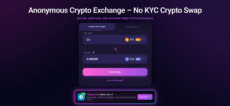
Based on our use, GhostSwap is particularly notable for its simplicity and emphasis on privacy. The platform’s flow follows a simple process: select coins, enter the receiving address, and confirm the deposit — no sign-up or personal info needed. We appreciated the fast swap times (typically 5-30 minutes) and transparent rates with no hidden fees beyond the displayed spread and network costs.
Key functionalities: Instant no-KYC swaps of 1,600+ cryptocurrencies, cross-chain trading across major blockchains, non-custodial wallet-to-wallet transfers, Telegram bot integration, VPN and Tor compatibility.
GhostSwap is a good fit for:
- Traders seeking full anonymity without any registration
- Users needing quick private cross-chain swaps
- Investors swapping privacy coins or low-cap assets
GhostSwap is not a good fit for:
- High-frequency traders requiring advanced tools and order books
- Users looking for leveraged trading or futures contracts
- Users needing fiat deposit or withdrawal options
| Feature | Details |
| KYC Requirement | No KYC to trade |
| Withdrawal Limits | Unlimited (non-custodial) |
| Supported Assets | 1,600+ across multiple blockchains |
| Leverage | None |
| Trading Fees | Spread included in rate + network fees |
| Custody | Non-custodial |
| Security Features | No data collection, non-custodial transfers, VPN/Tor support |
| Mobile App | No dedicated app (web and Telegram bot) |
2. SwapRocket – Fastest No-KYC Crypto Exchange and Swap Aggregator for 2,000+ Coins
SwapRocket delivers some of the quickest no-KYC crypto swaps currently available. The platform gives users access to more than 2,000 cryptocurrencies spanning every major blockchain without requiring any form of registration or identity verification.
There’s no need to create an account, provide an email address, or submit any documents – simply pick your trading pair, input your receiving wallet address, and execute the trade.
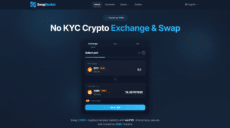
The platform’s strength lies in its smart aggregation system, as SwapRocket scans pricing across more than 20 different liquidity providers in real time, including top exchanges. This approach helps users secure better exchange rates than most single-source instant exchanges, particularly when handling bigger transaction volumes.
As a completely non-custodial service, SwapRocket never holds user funds. Transactions occur directly between the sender’s wallet and the recipient’s address on the blockchain. This setup offers strong privacy protection and reduces counterparty risk, which is why many users choose it when exchanging into coins like Monero or Zcash. The straightforward interface makes it accessible for newcomers, with most swaps completed in less than 10 minutes, and the team provides responsive 24/7 support.
Key functionalities: Instant non-custodial swaps, smart rate aggregation from 20+ providers, support for 2,000+ cryptocurrencies, complete anonymity with no registration required, responsive web platform, round-the-clock customer support.
SwapRocket is a good fit for:
- Users who prioritize fast execution and optimal exchange rates
- Privacy-focused traders who require full anonymity and no account creation
- Individuals conducting larger swaps or moving funds into privacy-oriented cryptocurrencies such as Monero and Zcash
- New users wanting an uncomplicated and efficient instant exchange experience
SwapRocket is not a good fit for:
- Traders looking for a native mobile application instead of a web-based platform
- Users who need fiat deposit options or advanced derivatives trading features
| Feature | Details |
| KYC Requirement | None – no KYC or account creation required |
| Withdrawal Limits | Unlimited |
| Supported Assets | 2,000+ cryptocurrencies across all major chains |
| Leverage | None (instant swaps only) |
| Trading Fees | Included in the displayed rate; no hidden charges |
| Custody | Fully non-custodial |
| Security Features | Direct wallet-to-wallet transfers |
| Mobile App | Responsive web app |
3. Bitbase – Spot, Futures & TradFi Instruments with Non-KYC Onboarding
Bitbase is a global digital asset platform built around the philosophy of “Trust Through Every Cycle” and combines spot trading, USDT-margined perpetual futures, and TradFi instruments (such as major equities and precious metals) within a single account.

Users can register and begin trading without a lengthy document-heavy KYC process for basic use. The exchange also offers fiat on-ramping and 24/7 live chat support.
Whether you’re a spot trader accumulating Bitcoin, a derivatives trader looking for competitive spreads, or someone seeking exposure to traditional assets like gold or Apple stock from within a crypto account, Bitbase is designed to handle multiple use cases smoothly.
Key functionalities: Spot trading, USDT-margined perpetual futures, TradFi instruments (equities, commodities and precious metals), competitive fees, MPC-based multi-signature security, fiat on-ramping, and 24/7 support.
Bitbase is a good fit for:
- Traders who want spot, futures, and TradFi exposure in one account
- Users looking for a clean interface with non-KYC onboarding
- Traders interested in competitive fees and strong security
Bitbase is not a good fit for:
- Users who need a very wide range of altcoins and memecoins
- Traders looking for extremely high leverage (above 100x)
| Feature | Details |
| KYC Requirement | No KYC for basic trading |
| Withdrawal Limits | Standard |
| Supported Assets | Spot, futures, and TradFi instruments |
| Leverage | Available on futures |
| Trading Fees | Spot: 0.1% / Futures: 0.02–0.06% |
| Custody | Custodial (MPC-based multi-signature) |
| Security Features | MPC multi-sig, hot/cold wallet separation, 99.99% uptime |
| Mobile App | Web-based (mobile responsive) |
4. Margex – No-KYC Crypto Derivatives Platform With Up to 100x Leverage and Copy Trading
Margex is a custodial crypto derivatives exchange focused on simplicity and privacy. It allows users to trade perpetual futures with up to 100x leverage without completing KYC, making it a suitable choice for traders who prioritize anonymity but still want access to advanced trading instruments.
The platform also features copy trading and staking, which broadens its appeal to both beginners and more experienced users interested in passive strategies.
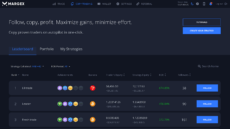
According to our experience, Margex delivers a smooth user interface and straightforward onboarding; you can start trading with just an email. We appreciated the platform’s clear fee structure (0.019% maker, 0.06% taker) and competitive leverage options.
Copy trading works well, with transparent trader profiles and simple allocation settings. However, the platform’s spot trading options are limited, and higher withdrawal limits require verification, which partially undermines the no-KYC appeal. Compared to other no-KYC exchanges, Margex feels more polished in terms of UX but less flexible in asset coverage.
Key functionalities: perpetual futures trading with leverage up to 100х, copy trading, staking, transparent fee model, risk management tools, cold storage.
Margex is a good fit for:
- Traders focused on leveraged perpetual futures
- Users looking for a no-KYC exchange with a clean UI
- Beginners interested in copy trading features
Margex is not a good fit for:
- Spot traders seeking a wide asset variety
- Users who want high withdrawal limits without verification
| Feature | Details |
| KYC Requirement | No KYC to trade |
| Withdrawal Limits | Moderate (exact limits not published) |
| Supported Assets | 50+ coins including BTC, ETH, XRP |
| Leverage | Up to 100× on futures |
| Trading Fees | Maker 0.019% / Taker 0.06% |
| Custody | Custodial |
| Security Features | 2FA, cold storage, address whitelisting |
| Mobile App | iOS & Android |
5. KCEX – Ultra-Low Fee No-KYC Exchange With 500+ Assets and High Withdrawal Limits
KCEX is a relatively new centralized exchange launched in 2021, offering over 500 crypto assets and competitive trading fees. The platform is designed for users who want access to both spot and futures markets without undergoing KYC for basic use.
Withdrawals up to 30 BTC/day are allowed without verification, which makes KCEX one of the more lenient no-KYC options in terms of limits.
According to our testing, KCEX offers excellent value for cost-conscious traders. Zero fees on spot trades and just 0.01% for futures are rare even among KYC platforms. The interface is clean, though not as feature-rich as some rivals.
A notable drawback is that many bonuses and rewards are tied to full KYC, and the exchange lacks advanced trading tools. Still, its flexible withdrawal limits and competitive fees make it a strong no-KYC contender.
Key functionalities: low fees, 500+ assets for spot and futures trading, leverage up to 200x, withdrawals up to 30 BTC per day without verification.
KCEX is a good fit for:
- Users seeking high withdrawal limits without KYC
- Cost-sensitive traders wanting ultra-low fees
- Those interested in both spot and futures trading
KCEX is not a good fit for:
- Traders who want access to bonuses without KYC
- Users who need advanced charting and analytics
| Feature | Details |
| KYC Requirement | No KYC for basic trading |
| Withdrawal Limits | Up to 30 BTC/day without KYC |
| Supported Assets | 500+ cryptocurrencies |
| Leverage | Up to 200× on futures |
| Trading Fees | Spot: 0% / Futures: 0.01% |
| Custody | Custodial |
| Security Features | Cold storage, account protection layers |
| Mobile App | iOS & Android |
6. LBank – Wide Altcoin Selection with Futures, Copy Trading & Leveraged Tokens
LBank is a British Virgin Islands-based centralized exchange founded in 2015 that has built a strong reputation for offering one of the widest selections of altcoins and memecoins in the industry. With over 800 cryptocurrencies and more than 1,000 spot trading pairs, it is particularly popular with traders looking for newer or smaller-cap tokens that may not yet be listed on larger platforms.
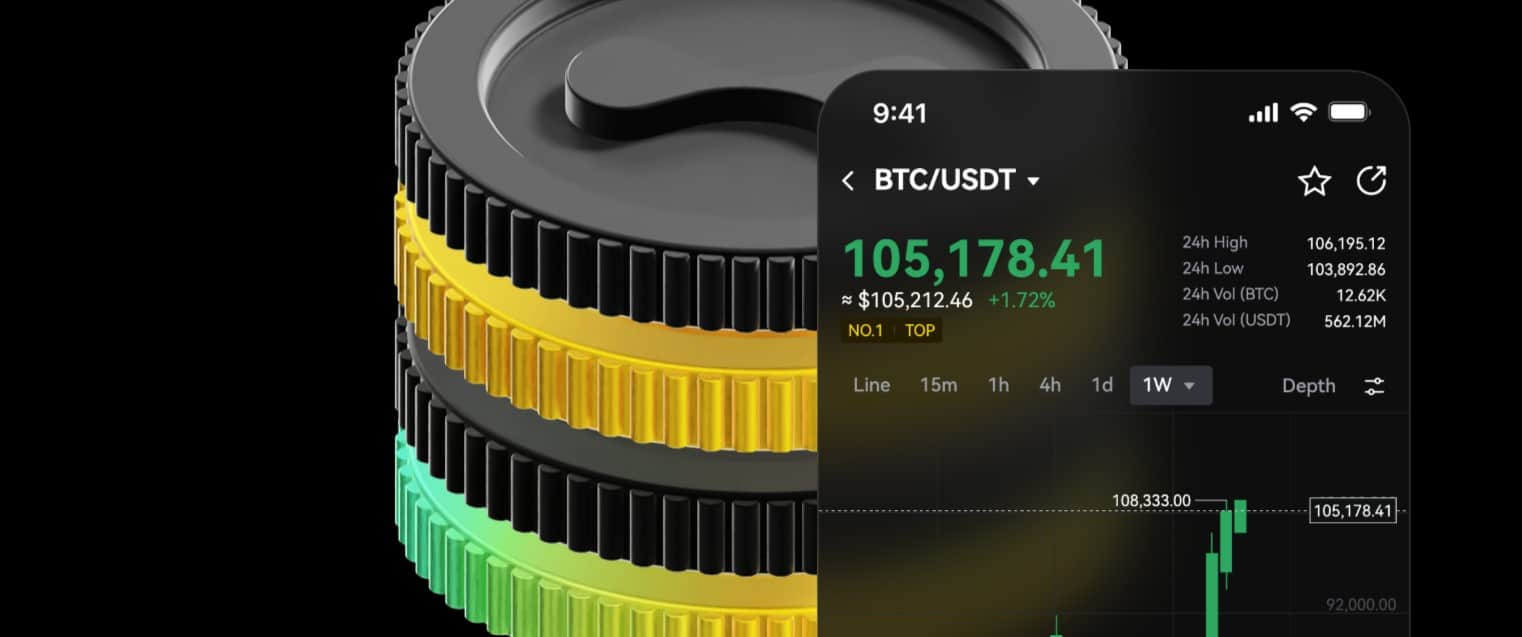
The exchange supports spot trading, perpetual futures with up to 125x leverage, leveraged tokens, and a growing copy trading feature. It also runs a token launchpad for early-stage projects. While the platform is accessible in over 160 countries, it is not available to users in the United States. LBank is generally considered suitable for intermediate traders who want variety and decent liquidity on altcoins without an overly complex interface.
Key functionalities: Spot and perpetual futures trading (up to 125x leverage), leveraged tokens, copy trading, token launchpad, wide altcoin selection (800+ coins), and a $100 million protection fund.
LBank is a good fit for:
- Traders looking for a very wide selection of altcoins and memecoins
- Users who want copy trading and leveraged tokens
- Intermediate traders who want high leverage with decent liquidity
LBank is not a good fit for:
- US-based traders (not available in the US)
- Users who need Proof of Reserves or maximum regulatory transparency
- Traders who want the lowest possible fees
| Feature | Details |
| KYC Requirement | No KYC for basic crypto trading |
| Withdrawal Limits | Standard |
| Supported Assets | 800+ cryptocurrencies |
| Leverage | Up to 125× on futures |
| Trading Fees | Spot: 0.1% / Futures: competitive |
| Custody | Custodial |
| Security Features | Cold/hot wallet separation, $100M protection fund |
| Mobile App | iOS & Android |
7. BloFin – Tiered No-KYC Centralized Exchange With Automated Trading Bots and 150x Leverage
BloFin is a centralized crypto exchange that caters to high-volume traders looking for tiered no-KYC access to spot and futures markets. Operating since 2019, it offers over 500 futures pairs, 250+ spot pairs, and leverage of up to 150x.
With additional features like copy trading, automated trading bots, and a reward system, BloFin targets semi-professional users who want more advanced features without mandatory identity checks.
Based on our experience, BloFin’s platform is rich in functionality and relatively easy to navigate. The tiered KYC system is fair; users can withdraw up to 20,000 USDT per day without verification. Futures fees are competitive, and automated bots are helpful for hands-off strategies.
However, the interface might feel overwhelming to beginners, and some promotions are gated behind full KYC. Compared to other no-KYC options, BloFin stands out for its automation tools and withdrawal flexibility, but falls short for those who want completely unrestricted access.
Key functionalities: 500 futures pairs and 250+ spot pairs with leverage up to 150х, automated trading bots, copy trading, rewards program.
BloFin is a good fit for:
- High-volume traders seeking advanced features
- Users interested in futures and bot trading
- Traders comfortable with tiered KYC systems
BloFin is not a good fit for:
- Users who want full platform access without verification
- Beginners looking for a simplified trading experience
| Feature | Details |
| KYC Requirement | No KYC for basic trading |
| Withdrawal Limits | Up to 20,000 USDT/day without KYC |
| Supported Assets | 400+ coins, 500+ futures pairs |
| Leverage | Up to 150× on futures |
| Trading Fees | Spot: 0.01% / Futures: 0.02–0.05% |
| Custody | Custodial |
| Security Features | 2FA, IP whitelisting, cold wallets |
| Mobile App | iOS & Android |
8. Weex – High-Volume No-KYC Exchange With 200x Leverage and 1,700+ Trading Pairs
Weex offers a comprehensive suite of trading options, including spot trading, futures trading with leverage up to 200x, and copy trading. The platform supports over 600 pairs, providing traders with a wide array of assets to choose from. This extensive selection enables users to diversify their portfolios and explore various trading strategies, all within a single platform.
Moreover, WEEX doesn’t charge maker fees. This means that every time a trader sets a limit order, they will pay 0% fees. Active and seasoned traders will find this valuable as it helps them retain money from each trade. On top of that, there are up to $30,000 USDT welcome bonus for completing tasks.
To protect user accounts and data, the exchange employs industry-standard security measures such as two-factor authentication and advanced encryption protocols. Furthermore, WEEX maintains a 1,000 BTC protection fund to safeguard user assets against unforeseen events. These robust security practices instill confidence among users and ensure their funds and personal information remain secure while trading on the platform.
Key functionalities: leverage up to 200x, 1,700+ trading pairs, cold storage and insurance, task-based bonuses for active traders.
Weex is a good fit for:
- Users interested in high-leverage margin trading
- Traders seeking broad asset selection
- Those who only need basic functionality without KYC
Weex is not a good fit for:
- Traders seeking low fees
- Users who want to access all bonuses without identity verification
| Feature | Details |
| KYC Requirement | No KYC for basic trading |
| Withdrawal Limits | Tiered; basic limits without KYC |
| Supported Assets | 600+ coins, 1,700+ trading pairs |
| Leverage | Up to 200× on futures |
| Trading Fees | Spot: 0.10% / Futures: 0.02–0.08% |
| Custody | Custodial |
| Security Features | 2FA, cold storage, user fund insurance |
| Mobile App | iOS & Android |
9. Best Wallet DEX – Non-Custodial Mobile Exchange for Cross-Chain DeFi Trading Without KYC
Best Wallet is a non-custodial mobile wallet integrated with a decentralized exchange (DEX), allowing users to trade thousands of crypto assets across 60+ blockchains without undergoing KYC verification.
It’s primarily designed for privacy-conscious traders who value complete control over their funds, as well as for mobile-first users seeking on-the-go access to DeFi tools, staking, and token swaps. The platform also appeals to early adopters of niche or trending meme tokens, as it often lists assets unavailable on centralized platforms.
Based on our use, Best Wallet stands out for its simplicity and breadth of supported networks. The DEX experience is clean and integrated directly within the app, removing the need to rely on separate DeFi protocols.
We particularly liked the ability to swap across chains and stake tokens directly from the interface. However, it’s still an evolving platform: some features, like advanced order types or external wallet integrations, are not yet available. Compared to more mature DEXs or hybrid exchanges, Best Wallet is less suited for active day trading or high-frequency users due to limited charting and execution tools.
Key functionalities: trading thousands of tokens across 60+ blockchains, built-in decentralized exchange and DeFi tools, cross-chain swaps, staking, portfolio management.
Best Wallet is a good fit for:
- Traders seeking full anonymity
- Users who prefer mobile-first non-custodial trading
- Investors in emerging or low-cap tokens
Best Wallet is not a good fit for:
- High-frequency traders who need advanced tools
- Users who prefer desktop interfaces or centralized order books
| Feature | Details |
| KYC Requirement | No KYC to trade |
| Withdrawal Limits | Unlimited (non-custodial) |
| Supported Assets | Thousands across 60+ chains |
| Leverage | None |
| Trading Fees | Varies by network liquidity provider |
| Custody | Non-custodial |
| Security Features | Recovery phrase, user-owned keys, contract audits |
| Mobile App | iOS & Android |
10. Changelly – Instant No-KYC Crypto Swaps Across 1,000+ Assets With Best-Rate Aggregation
Changelly is a non-custodial instant swap platform that lets users exchange 1,000+ cryptocurrencies without creating an account or completing KYC verification. Founded in 2016, it’s built for traders who already hold crypto and want to switch assets quickly, privately, and without leaving funds on an exchange.
It’s mainly created for privacy-conscious users who want fast, frictionless swaps rather than a full trading environment. It also appeals to users in restrictive jurisdictions who can’t access major centralized exchanges, and to those who prefer keeping full control of their wallet at all times.
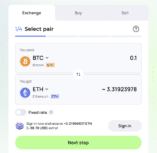
Based on our experience, Changelly’s biggest strength is simplicity. You select assets, enter a wallet address, send funds, and receive the swapped crypto, no login required. The platform aggregates rates from 20+ partner exchanges, which generally keeps pricing competitive.
That said, the ~0.25% floating fee is higher than what you’d pay on a spot exchange, and fiat purchases route through third-party providers that may require their own KYC. Compared to DEXs, Changelly is more beginner-friendly but slightly more expensive for frequent traders.
Key functionalities: instant crypto-to-crypto swaps, best-rate aggregation across 20+ partner exchanges, non-custodial wallet-to-wallet transfers, fiat on-ramp via third-party providers, Ledger and Trezor wallet integrations.
Changelly is a good fit for:
- Users who want fast, private swaps without registering an account
- Traders looking to convert between assets across different blockchains
- Beginners who find DEXs too technically demanding
Changelly is not a good fit for:
- Users who want spot or futures trading with order books
- Traders sensitive to fees who execute high volumes
- US-based users (service not available in the US)
| Feature | Details |
| KYC Requirement | No KYC for crypto-to-crypto swaps |
| Withdrawal Limits | Up to 1 BTC/day (Starter tier) |
| Supported Assets | 1,000+ cryptocurrencies |
| Leverage | None (swap only) |
| Trading Fees | ~0.25% floating fee |
| Custody | Non-custodial |
| Security Features | Wallet-based, Ledger & Trezor integration, no fund custody |
| Mobile App | iOS & Android |
11. ChangeNOW – Simplifying Crypto Swapping Without KYC Verification
If you’re looking to enjoy limitless crypto swaps without undergoing KYC, ChangeNOW might be the perfect fit. This exchange service enables you to buy and sell crypto without KYC, as well as swap tens of thousands of crypto assets with over 50 fiat currencies via credit card or bank account. With ChangeNOW, you can do all of this within minutes. You simply select your currency, make a deposit, and receive your crypto—starting from as little as $2, making it highly accessible.
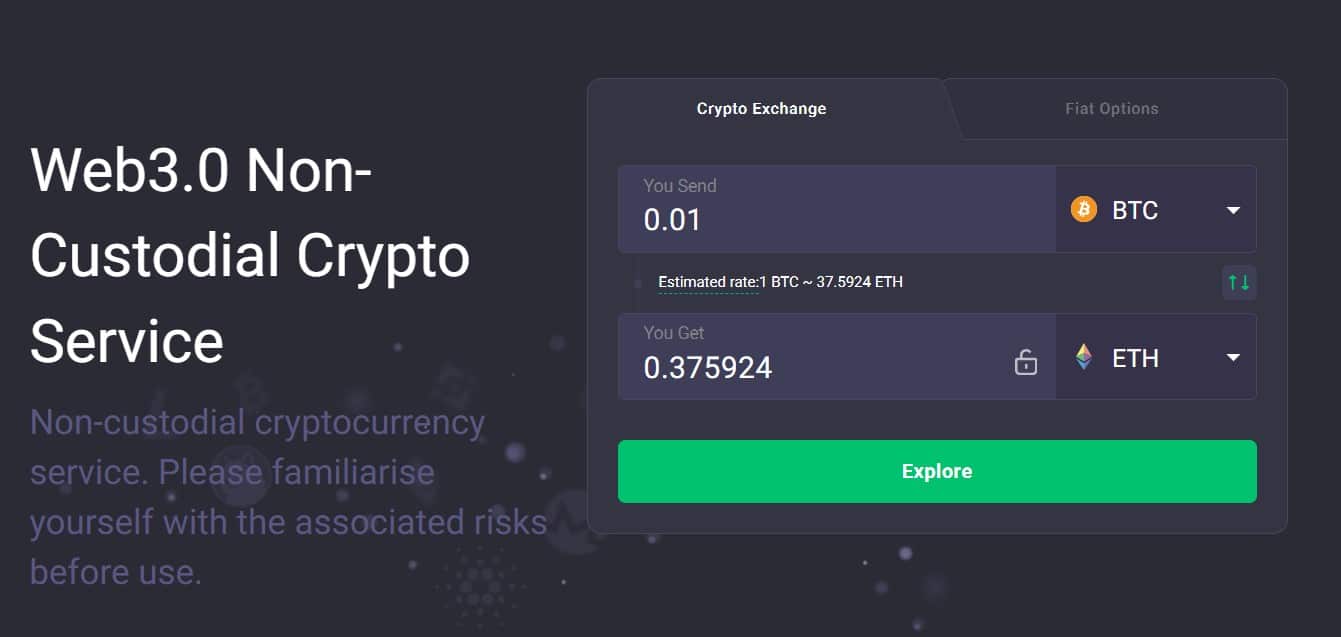
While registration is not required on ChangeNOW, creating an account allows you to save on fees for off-chain swaps, earn cashback on every transaction, and perform AML address checks. As a non-custodial crypto swap site, you retain exclusive access to your funds, ensuring both security and privacy.
ChangeNOW offers simple and fast crypto exchanges accessible on both desktop and mobile. Additionally, you can stake your crypto to earn passive income and explore dApps via its NOW Wallet with WalletConnect. The platform’s native token, NOW, is used for payments, airdrops, staking, and discounts within the ecosystem. With a market cap of $10 million, the token is burned quarterly to sustain its value.
Key functionalities: Instant crypto-to-crypto swaps, no registration or KYC required for most transactions, support for hundreds of cryptocurrencies, non-custodial wallet-to-wallet transfers, and fiat purchase options via third parties.
ChangeNOW is a good fit for:
- Users who want fast, simple swaps without creating an account
- Traders who prioritize privacy and minimal onboarding
- Users looking for quick conversions across many cryptocurrencies
ChangeNOW is not a good fit for:
- Traders who want advanced trading tools or order books
- Users who are very sensitive to fees
- People who need the absolute lowest rates on large swaps
| Feature | Details |
| KYC Requirement | No KYC for most transactions |
| Withdrawal Limits | High |
| Supported Assets | 300+ cryptocurrencies |
| Leverage | None |
| Trading Fees | Higher than some competitors |
| Custody | Non-custodial |
| Security Features | Wallet-based, no fund custody |
| Mobile App | iOS & Android |
Best No KYC Crypto Exchanges 2026 Compared
| Exchange | Supported Assets | KYC Policy | Withdrawal Limit | Leverage |
| GhostSwap | 1,600+ | No KYC | Unlimited (non-custodial) | None |
| SwapRocket | 2,000+ | No KYC | Unlimited (non-custodial) | None |
| Bitbase | Spot + futures + TradFi | No KYC for basic use | Standard | Available on futures |
| Margex | 50+ | No KYC for basic trading | Moderate | Up to 100x |
| KCEX | 500+ | No KYC for basic trading | High (up to 30 BTC/day) | Up to 200x |
| LBank | 800+ | No KYC for basic trading | Standard | Up to 125x |
| BloFin | 400+ | Tiered no-KYC | Up to 20,000 USDT/day | Up to 150x |
| Weex | 600+ | No KYC for basic use | Medium | Up to 200x |
| Best Wallet | 60+ chains | No KYC | Unlimited (non-custodial) | None |
| Changelly | 1,000+ | No KYC for swaps | Up to 1 BTC/day | None |
| ChangeNOW | 300+ | No KYC for most transactions | High | None |
How We Chose and Evaluated Anonymous Crypto Exchanges – Our Methodology
Selecting the best no-KYC crypto exchanges in 2026 requires more than simply scanning for platforms that skip identity verification. Our goal was to identify exchanges that not only protect user privacy but also offer robust functionality, credible security, and practical trading experiences. To achieve this, we applied a multi-layered evaluation framework based on six key criteria:
1. No-KYC Policy Verification
First and foremost, we independently verified the no-KYC status of each exchange. This included:
- Testing account creation and withdrawal thresholds without submitting personal documentation.
- Reviewing official documentation, terms of service, and FAQ pages.
- Cross-referencing user reports, audits, and updates from trusted sources like CoinGecko, CoinMarketCap, and specialized crypto privacy communities.
We excluded platforms that:
- Required KYC for withdrawals or after reaching low thresholds.
- Had inconsistent or vague policies regarding KYC triggers.
- Recently announced plans to implement mandatory identity checks.
2. Privacy and Anonymity Features
We assessed each exchange’s commitment to privacy beyond KYC, looking at:
- Support for privacy-preserving coins (e.g., Monero, Zcash).
- Integration with non-custodial wallets and Tor-enabled access.
- Optional registration or use of temporary deposit addresses.
- Lack of invasive browser tracking or third-party analytics.
Exchanges that offered advanced privacy tooling, such as CoinJoin integration or native mixers, received higher scores.
3. Trading Volume and Market Liquidity
To ensure practical usability, we examined real trading volume and liquidity depth across major pairs:
- Data was sourced from both centralized platforms (via public APIs) and DEX aggregators.
- We gave preference to platforms with deep liquidity in BTC, ETH, USDT, and privacy coins.
- Exchanges with frequent slippage or wash trading indicators were deprioritized.
We only included exchanges where trades above $1,000 could be executed without major price impact.
4. Security and Custody Risks
While no-KYC exchanges are often non-custodial, we still analyzed:
- History of hacks, downtime, or suspicious withdrawals.
- Open-source smart contracts (for DEXs) and external audits.
- Withdrawal timeframes and cold storage strategies.
Exchanges with full proof-of-reserves or robust multisig custody received higher trust ratings.
5. User Interface and Accessibility
We tested each exchange’s platform directly across desktop and mobile interfaces, evaluating:
- Onboarding friction (e.g., whether it requires email or wallet-only sign-in).
- Clarity of fee structures and trade execution speed.
- Availability of tools like limit orders, charts, and API support.
Preference was given to platforms that remained functional under high traffic, offered responsive design, and provided access from restricted regions (without geofencing or forced VPN blocks).
6. Community Trust and Transparency
Finally, we examined the exchange’s reputation within the privacy-focused crypto community:
- Active participation in forums such as Reddit’s r/Bitcoin and r/privacytoolsIO.
- Transparent communication via social channels and open-source contributions.
- Responses to user complaints, downtime disclosures, and update frequency.
Exchanges that ignored support tickets or received repeated reports of fund freezes were excluded, even if they passed technical requirements.
By combining these dimensions into a weighted scoring model, we prioritized platforms that truly align with the ethos of self-sovereign trading, where users can exchange digital assets without exposing sensitive personal data. Only exchanges that met or exceeded our benchmarks across at least four categories made it into the final list.
What Is a No-KYC Crypto Exchange?
A no-KYC exchange does not require its customers to complete the standard KYC verification process, where you need to provide:
- Government-issued documentation, like a passport or driver’s license, that verifies your identity and age
- Proof of address, like a utility bill
- A selfie for further identity verifications (sometimes)
KYC is a standard requirement that trading platforms like crypto exchanges usually impose, and it’s there to ensure there’s no money laundering involved and that the traders are real people from the jurisdictions where the exchange is registered to operate.
No-KYC exchanges can come in different shapes and forms:
- Full no-KYC exchanges: require little to no personal information, often just an email.
- Tiered KYC exchanges: offer depositing, basic trading features, and withdrawals with limits without having to go through KYC, while they require complete verification to unlock the full suite of functionalities and increase limits.
- Decentralized exchanges (DEXs) inherently privacy-focused and require no personal details, making them no-KYC by default. They facilitate peer-to-peer trading and let you use your own wallets.
Anonymous crypto exchanges that don’t require KYC tend to offer the same services as other exchanges, while also providing added benefits:
- Simplified registration procedure
- Higher privacy and near-anonymity
- Availability in highly restrictive jurisdictions
These are also some of the main reasons people choose to go no-KYC, along with not having to present personal and banking data. Many users also feel these exchanges are more in line with the decentralized nature of cryptocurrencies.
Moreover, they are helpful in some specific use cases. For instance, traders interested in small or infrequent trades find them more convenient because they don’t need to go through KYC for low trading activity. Furthermore, traders who want to test out platforms also find no-KYC exchanges a better choice.
Is It Legal to Use Non-KYC Crypto Exchanges in 2026?
There’s no straightforward answer to this because the laws differ for each jurisdiction. In addition, the legality of these platforms is constantly evolving, just like everything else in the realm of crypto.
However, there are some commonalities between countries. For instance, much of the Western world restricts or bans no-KYC exchanges; usually, only tiered KYC exchanges are allowed. The US, EU countries, Canada, Australia, Japan, and South Korea all have strict KYC requirements.
Only a few nations, notably China, ban exchanges and cryptocurrency in general. Most other countries either have no regulations or have relatively lax laws regarding cryptocurrencies and exchanges.
Even a $1 transaction gets reported. No-KYC on a CEX no longer equals anonymous from a tax perspective. DEXs, self-custody wallets, and node operators are not required to issue Form 1099-DA, but the absence of a form doesn’t make those transactions tax-free; it just means the IRS isn’t automatically notified. If you’re a US user, consider this before choosing a platform.
It’s worth adding that DEXs that don’t use fiat currency at all are not subject to KYC rules and are available worldwide. However, they tend to avoid countries with explicit bans or strict requirements. That’s why many no-KYC and decentralized exchanges don’t allow people from the US to join.
Benefits and Risks of Using No-KYC Crypto Exchanges
Everything in the crypto realm comes with benefits and risks, and no-KYC exchanges are no exception. Let’s start with the benefits:
- High privacy: The most significant advantage of a no-KYC exchange is the increased privacy that stems from you having to provide very little personal information to start trading.
- Higher speed: Even though trading itself isn’t faster, the time it takes to reach that point is significantly shorter. You don’t have to provide extensive information or wait for the platform to verify your documents.
- Better accessibility: No-KYC exchanges, especially DEXs, are more broadly available, especially in regions with higher restrictions.
And now, let’s cover the risks:
- Scams. The anonymity of no-KYC exchanges makes them attractive targets for scammers who list fake investment schemes and fraudulent cryptos. Users don’t get the same level of protection as on KYC exchanges when they get scammed.
- Hacks and security vulnerabilities. Some no-KYC exchanges have lax security measures, making them prime targets for hacks and other security breaches. Unless that exchange has an insurance policy, you’re unlikely to get your funds back in case of a breach.
- Lower user protection. Even though reputable no-KYC exchanges offer high user protection, the lack of KYC is a downside because law enforcement can’t do much to help you if there is an issue.
How to Choose the Best No KYC Crypto Exchange in 2026
If you’re still wondering where to buy crypto without KYC, there are a few key considerations you need to make to determine which no-KYC platform is safe and right for you. Let’s explore them:
- KYC limitations. Since many non-KYC exchanges use a tiered system where only specific functionalities are unlocked for unverified users, it’s important to check what is available. Focus on the withdrawal limits, as these tend to be very low on some no-KYC exchanges and might not be enough for you.
- Supported cryptocurrencies. The best non-KYC exchanges have many supported coins, usually in the hundreds. The same goes for trading pairs in both spot and futures trading.
- Security. You need to check that the no-KYC exchange employs top security measures since they’re not typically legally required to implement these. This is especially the case with DEXs. It’s thus best to go for reputable platforms with good ratings and user feedback.
- Fees. It’s crucial to check the fees involved, especially trading fees. Compare the maker/taker fees on spot and futures trading between the no-KYC exchange you’re considering and several reputable KYC exchanges to ensure they are equal or even lower. Also, check the fees for when you withdraw crypto, which tend to vary between cryptocurrencies.
- Availability. Even though no-KYC exchanges are more broadly available than their counterparts, many still don’t operate in certain jurisdictions, like the US, due to complex rules. It’s essential to check that the exchange you’re considering is available in your country.
- Check for red flags. The biggest red flags that should make you stay clear of a no-KYC exchange include anonymous or undisclosed owners, unrealistically high yields, lack of transparency, poor interface quality, limited or fake online presence, sudden changes in fee structure or key policy, and inflated trading volumes.
How Do I Trade Cryptos Anonymously on No-KYC Exchanges?
We’ve prepared a quick step-by-step guide to help you learn how to buy crypto without KYC. Here’s how anonymous trading works:
1. Pick a wallet and set up an account
You can choose any non-custodial software wallet, including one of the top picks on our list, Best Wallet, which is also one of the best non-KYC crypto exchanges because it includes a high-quality, integrated DEX. Visit its official site and download the app to start. Follow the instructions for setting up your non-custodial wallet and write down your recovery phrase.
2. Set up a VPN or Tor for added privacy
If you’re highly privacy-focused, install and keep a VPN running while trading. Top choices include NordVPN, ExpressVPN, Surfshark, Proton VPN, TunnelBear, and IPVanish.
You can also opt for Tor, the open-source platform for enhanced privacy and anonymity that uses onion routing to make it difficult for others to trace you to a specific location. It’s also often used to access the dark web.
3. Pick a no-KYC exchange and start trading
The last step is to choose an exchange without KYC. You can also continue using Best Wallet because it has an integrated DEX, which doesn’t require you to go through identity verification.
To start trading, you’ll need to transfer crypto to Best Wallet if you already have it, and if not, use the app to purchase some with fiat. Once you’re done, you can start trading in the Best Wallet DEX that covers thousands of cryptocurrencies.
Are Non-KYC Crypto Exchanges Here to Stay in 2026?
No-KYC exchanges are affected by regulations surrounding them and the rest of the crypto market.
CTF and AML rules continue to tighten globally, and enforcement is no longer theoretical. In late 2025, the DOJ fined OKX over $500 million for AML failures, including weak KYC checks and billions in suspicious transactions, while FinCEN hit Paxful with a $3.5 million penalty for willful BSA violations. These are real exchanges that real traders used, and both were forced to change or shut down as a result.
The practical consequence is already visible in the market. Regulatory pressure has forced former no-KYC exchanges like KuCoin and OKX to adopt mandatory KYC, and the list of platforms that still offer genuinely unrestricted access keeps shrinking. Western countries, especially the US, compel exchanges to register and implement full AML and KYC programs, which is why most surviving no-KYC platforms have moved to tiered systems where full access requires verification.
The direction of travel is clear: the no-KYC category will keep contracting. Platforms that exist today may not look the same in 12 months. Always verify a platform’s current policy before depositing funds.
Should You Use a No-KYC Crypto Exchange Today?
No-KYC crypto exchanges garner much attention, regardless of whether they’re full or partial non-KYC platforms. The latter shows just how sought-after this feature is, since CEXs are certainly not required to offer no-KYC trading. In fact, they must do the opposite.
If you’re interested in joining one and are unsure which crypto exchange does not require KYC, our top choices are GhostSwap and SwapRocket. They provide excellent fully anonymous alternatives with no account creation required whatsoever. Both operate on a pure non-custodial model, delivering instant cross-chain exchanges while preserving complete user privacy.
You can also go for another strong option, which is Best Wallet. It’s a non-custodial mobile wallet with an integrated no-KYC exchange that lets you trade thousands of cryptos from 60+ chains. The DEX integrates Onramper, which allows you to use fiat to purchase coins, and Best Wallet DEX strives to offer the best exchange rates and lowest processing fees.
FAQ
What is a no-KYC crypto exchange?
Are no-KYC exchanges legal in 2026?
What are the risks of trading on no-KYC exchanges?
Can I withdraw funds from a no-KYC exchange?
Do decentralized exchanges (DEXs) require KYC?
Can U.S. residents use no-KYC crypto exchanges?
How do I choose the best no-KYC crypto exchange?
References
- The KYC process explained (SWIFT)
- Custodial vs Non-Custodial Wallets (Crypto.com)
- What Are Crypto Wallets and How Do They Work? (Bloomberg)
- Hot vs. Cold vs. Warm Wallets: Which Crypto Wallet is Right for me? (Fireblocks)
- Is Your Wallet Snitching On You? An Analysis on the Privacy Implications of Web3 (Cornell University)
Coinspeaker in Numbers
250K+
Monthly Users
80+
Articles & Guides
5000+
Research Hours
23
Authors
guides
How to Swap Crypto on Godex: A Step-by-Step Guide to No-KYC Crypto Swapping
June 12th, 2026
CoinDepo vs. WhiteBIT Earn Comparison: Yields, Features, Security and More
June 2nd, 2026
Divine Ray (DRC) Price Prediction 2026-2030
June 1st, 2026
In the competitive world of crypto yield generation, CoinDepo and WhiteBIT Earn have built notable reputations as centralized plat...
Although most Web3 social platforms struggle to move beyond the hype phase, Divine Ray has taken a more grounded route. Its team h...
Tony Frank
Crypto Editor, 33 postsTony Frank is an accomplished cryptocurrency analyst, author, and educator whose work bridges the gap between complex blockchain technology and accessible, actionable insights for global audiences. Over the past decade, he has emerged as a respected voice in the rapidly evolving world of digital assets, combining technical expertise with a talent for storytelling to help readers navigate everything from Bitcoin’s monetary philosophy to the intricacies of decentralized finance (DeFi). Tony earned his Bachelor’s degree in Economics and Finance from the University of Melbourne, where he developed a deep interest in monetary systems and market structures. He later pursued a Master’s degree in Blockchain and Digital Currency from the University of Nicosia, one of the first academic institutions to offer accredited programs in cryptocurrency studies. Before focusing full-time on blockchain, Tony worked as a financial analyst for a multinational investment firm, covering emerging technologies and alternative asset classes. His early exposure to macroeconomic policy, global market behavior, and fintech innovation laid the foundation for his later work in crypto research and writing. Tony’s expertise spans multiple sectors of the blockchain industry, including cryptocurrency fundamentals, altcoin market cycles, DeFi and web3 trends and regulatory landscapes. Tony combines on-chain data analysis with macroeconomic research, providing readers with both the technical “how” and the market “why” of cryptocurrency movements.