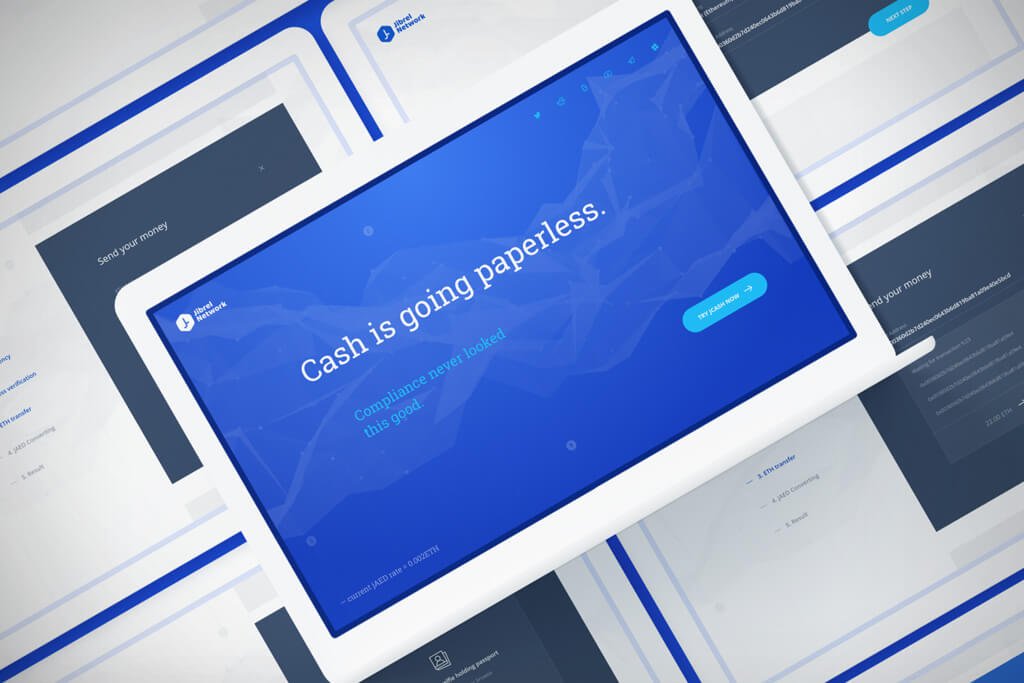
Jibrel Network Got Swiss VQF License for Functioning as Financial Intermediary
Jibrel that is actively working on building a bridge between blockchain and traditional finance is now licensed as a financial intermediary by VQF.
By Julia Sakovich
Updated
3 mins readPhoto: Jibrel Network
Jibrel AG has become an official member of the Association for the Quality Assurance of Financial Services (VQF). As a conformation of its status, Jibrel got a license permitting its functioning as a financial intermediary in the Swiss parabanking sector.
VQF itself is the largest cross-industry Self-Regulatory Organization (SRO) with the longest history that meets the standards established by the Financial Services Standards Association (FINMA).
All the members of VQF also need to meet the most serious requirements in order to get a membership. Moreover, their membership means that all their operations are carried out in strict compliance with the Anti-Money Laundering Act in Switzerland.
Jibrel AG entered in partnership with Lexpert Partners thanks to which it has become possible for it to offer services in accordance with VQF requirements, simultaneously its Jibrel Network platform continues its growth.
Jibrel AG’s joining VQF is a very serious step forward asset tokenization services to be offered by Jibrel Network that will provide users with an opportunity to convert currencies, commodities, and equities into ERC-20 tokens via the Ethereum blockchain.
All these processes will be carried out in full compliance with the existing regulations. At the moment, the platform has a permission to offer fiat-to-crypto and crypto-to-fiat transactions to its clients in three countries: the United Kingdom, Germany, and Switzerland. Nevertheless, some more jurisdictions are planned to be added in the future.
The introduction of these opportunities will boost promotion of the platform’s own currency solution called jCash. jCash is an enhanced solution that is said to stand out from the row of other stable-coin services like Tether that are quite often criticized for lack of transparency.
Thanks to jCash solution that is approved by VQF, Jibrel Network users will not be enforced to rely on third parties which quite often can be not very trustworthy.
Earlier, Yazan Barghuthi, Jibrel’s Founder and CEO, also expressed his concern about the model of Tether transactions saying that “in tether, users purchased USDT directly from an exchange, whereas in Jibrel, one purchases JNT and then uses that to purchase asset-backed tokens from the Jibrel DAO.”
Launch of Jibrel Network’ s localized crypto wallet jWallet and Jibrel Clear are among other crucial developments of the platform.
Though introduction of its own wallet is an important step for Jibrel, its Jibrel Clear tool is even a more exiting initiative as it will offer users reports on the risk profile of transactions, addresses, and contracts.
Jibrel Network’s plans include launching of other regulated services that will contribute to promotion of usability of blockchain technology among a wide audience. The platform has a goal to provide connection between blockchain and traditional financial system bringing more transparency to the latest.
It also worth mentioning that thanks to a number of private and institutional investors including TaaS Fund, Aurora Partners, Arabian Chain, and Tech Squared, Jibrel Network could raise over $30 million during its pre-sale and main sale rounds in 2017.
I’m a content writer and editor with extensive experience creating high-quality content across a range of industries. Currently, I serve as the Editor-in-Chief at Coinspeaker, where I lead content strategy, oversee editorial workflows, and ensure that every piece meets the highest standards. In this role, I collaborate closely with writers, researchers, and industry experts to deliver content that not only informs and educates but also sparks meaningful discussion around innovation.
Much of my work focuses on blockchain, cryptocurrencies, artificial intelligence, and software development, where I bring together editorial expertise, subject knowledge, and leadership experience to shape meaningful conversations about technology and its real-world impact. I’m particularly passionate about exploring how emerging technologies intersect with business, society, and everyday life. Whether I’m writing about decentralized finance, AI applications, or the latest in software development, my goal is always to make complex subjects accessible, relevant, and valuable to readers.
My academic background has played an important role in shaping my approach to content. I studied Intercultural Communications, PR, and Translation at Minsk State Linguistic University, and later pursued a Master’s degree in Economics and Management at the Belarusian State Economic University. The combination of linguistic, communication, and business training has given me the ability to translate complex technical and economic concepts into clear, engaging narratives for diverse audiences.
Over the years, my articles have been featured on a variety of platforms. In addition to contributing to company blogs—primarily for software development agencies—my work has appeared in well-regarded outlets such as SwissCognitive, HackerNoon, Tech Company News, and SmallBizClub, among others.