
 Julia Sakovich:
 11 mins
 Crypto theft is more common than most traders think, and it rarely takes a sophisticated hack. A forgotten token approval, a poorl...
JPYR Stablecoin Review 2026
A balanced review of the JPYR stablecoin, covering how it works, its main use cases, whether JPYR is a good investment, and how and where to buy it.
In this JPYR review, we take a look at a new stablecoin that’s tied to the Japanese yen. Our review methodology involved analyzing primary sources (such as the project’s official website and whitepaper, and real-time pricing from reputable trackers) to ensure an accurate and balanced conclusion based on verifiable facts.
We’ll cover a range of important topics, including what JPYR is, how the project works, safety considerations for JPYR holders, and investment-related factors. We’ll also examine JPYR’s strengths (such as DeFi compatibility and yen exposure), and note limitations – such as its emerging status in a competitive field.
What Is JPYR?
JPYR is a digital currency designed to mirror the value of the Japanese yen. It was launched to bridge traditional finance (TradFi) with blockchain technology, and targets users seeking stability in transactions regardless of the broader market’s volatility. JPYR is also designed to provide efficient cross-border payments, financial inclusion, and participation in decentralized applications. The stablecoin is backed by yen reserves on a one-to-one basis, while the team uses regular disclosures to maintain transparency.
At its core, JPYR is a Japanese stablecoin, which means its price stays aligned (pegged) to the value of the yen rather than swinging wildly like many other cryptocurrencies. This peg makes JPYR useful for mainstream financial activities such as remittances and e-commerce, where predictability and stability are vital. The team behind JPYR has emphasized global expansion, planning multi-chain support to reach more users.

JPYR website homepage. Source: JPYR
By its nature, JPYR is focused on the Japanese economy’s strengths. Japan has a reputation for financial discipline, and JPYR reflects that value by offering an equivalent of the yen to the crypto market. Holders can use the stablecoin for international transfers without incurring the high fees and long delays that are unavoidable when dealing with banks. The project also plans to accelerate adoption through partnerships with financial institutions, regulators, payment service providers, and other fintech organizations.
Despite JPYR’s promise, the project does operate in the stablecoin space, which is both crowded and highly competitive. On the other hand, JPYR’s small market cap indicates room for growth as Japan’s regulators continue warming to digital assets. Recent regulatory approvals for similar stablecoins in the country signal a supportive environment, which could boost JPYR’s traction.
For those interested in the JPYR stablecoin, its integration with exchanges like BTSE allows traders to access markets that pair JPYR with the yen and other assets.
How Does JPYR Work?
The JPYR stablecoin maintains its peg through reserves held in yen, ensuring that each coin corresponds directly to one unit of Japan’s native fiat currency. Issuance takes place when users deposit yen, which the JPYR project locks away, and redemption reverses this process by burning JPYR and releasing funds. This mechanism relies on trusted custodians to securely manage the assets involved.
On the technical side, JPYR currently operates on the Ethereum blockchain for low-cost transactions. Smart contracts handle JPYR’s minting and burning, while transparency comes from on-chain data that anyone can verify to confirm the asset’s reserve levels.
In practice, users mainly interact with JPYR via crypto wallets and exchanges. JPYR can also be integrated with DeFi protocols to facilitate on-chain financial services, such as lending and trading.
Is JPYR Safe to Use?
JPYR appears to be safe, as it’s backed by one-to-one yen reserves and the project has committed to ongoing transparency. JPYR also undergoes audits on a regular basis. As it’s a pegged asset, JPYR avoids the volatility that plagues non-stable cryptocurrencies, making it a reliable store of value.
The team’s focus on regulatory compliance in Japan also adds an additional layer of oversight, as the project is expected to remain aligned with Japanese laws governing digital payments. That said, the usual crypto risks still apply, such as vulnerabilities in DeFi smart contracts or exchange hacks. Therefore, users should always verify that their personal Web3 wallet is compatible with a given service, and only use reputable platforms.

JPYR website homepage. Source: JPYR
Is JPYR a Good Investment?
Questions about JPYR as an investment often arise, given its stable nature and ties to DeFi opportunities. While it doesn’t promise high returns like volatile tokens (as it is a stablecoin), JPYR’s utility in generating yields and facilitating advanced currency trading strategies is likely to draw the interest of institutions and other professional investors. Below, we’ll explore these angles with a balanced view.
Managing Risk on DeFi Platforms
Holding JPYR enables users to access various DeFi protocols and lend their tokens to earn interest or provide liquidity to earn rewards. DeFi services that support stablecoin pools enable JPYR holders to generate yields that often outpace those of traditional savings accounts. For instance, annual percentage yields have ranged from 2% to 8% on stablecoin farming platforms, although this depends on current market conditions.
JPYR’s DeFI integration helps manage risk by giving holders a way to diversify their exposure to the crypto and forex markets. Instead of holding yen in a fiat currency or trading account, JPYR lets market participants hedge against inflation while potentially compounding their returns. During volatile periods, stablecoins like JPYR can act as a safe haven within the DeFi space, offering a way to quickly shift to other assets without exiting the ecosystem.
However, risks still exist, including the possibility of impermanent loss when participating in liquidity pools, or losing funds during protocol exploits and hacks. JPYR’s peg does provide a buffer from the usual crypto market volatility, but users must monitor on-chain gas fees and stay up to date about platform security news.
Recent data from DeFiLlama shows increasing stablecoin usage in DeFi, with over $305 billion locked in a wide range of protocols. JPYR contributes to the sector by increasing yen-focused liquidity, which directly appeals to Asian markets and forex traders with an interest in Japan. Limitations include JPYR’s smaller scale compared to USD stablecoins, which may lead to lower liquidity and higher trade slippage.
Gain Exposure to the USD/JPY Pair
JPYR’s value is directly connected to the yen, so its USD value fluctuates in line with the USD/JPY exchange rate. When the yen strengthens against the dollar, JPYR appreciates in USD terms, thereby giving holders a form of indirect exposure without needing a separate forex trading account.
This arrangement could be suitable for market participants looking to bet on the yen’s price movements, such as exporters or investors watching Bank of Japan policies. JPYR also provides a way to track the effect of ongoing economic shifts and macroeconomic dynamics in real time. Drawbacks include a lack of leveraged trading options, and JPYR’s peg maintenance relies on its reserves, which could face pressure in extreme scenarios.
Maintaining Privacy While Holding the JPYR Stablecoin
Decentralized crypto wallets differ markedly from traditional finance bank accounts in their approach to user control and oversight. When you create a new crypto wallet, you also generate private keys that give you direct access to your assets through blockchain wallet addresses, without relying on intermediaries that can track your every move. A TradFi bank account, by contrast, operates under centralized authorities through the banking system, where the bank manages funds and reports activities to regulators.
Therefore, a stablecoin-focused setup can profoundly impact a user’s financial privacy. For example, banks often share their data with governments for tax purposes or investigations, which directly erodes or eliminates customers’ anonymity. On the other hand, crypto wallets avoid this constant, opaque surveillance, allowing users to transact via peer-to-peer networks.
Key privacy concerns for Web3 users often include KYC processes that require personal identification for compliance. Many exchanges require KYC to buy assets, but JPYR itself does not require KYC if you want to store it in your wallet. Holders can maintain their holdings discreetly, as the stablecoin’s design automatically emphasizes user sovereignty.

JPYR website homepage. Source: JPYR
JPYR Roadmap Overview
In the project’s roadmap, whitepaper, and other supporting materials, the team behind JPYR have outlined a multi-stage roadmap focused on the stablecoin’s long-term growth.
- Core Launch and Reserve Establishment: The project has already begun with JPYR’s initial deployment on Ethereum while ensuring 1:1 backing by yen reserves held in audited accounts. This phase focused on achieving full transparency through ongoing audits and building a secure foundation for price stability.
- Multi-Chain Expansion: After the project fully establishes itself within the Ethereum community, JPYR is expected to roll out across additional blockchains. These expansions will provide interoperability for JPYR holders, aim to reduce fees, and improve speed and accessibility for cross-border use cases.
- DeFi Integration and Security Updates: Over time, JPYR plans to expand into new decentralized finance applications, enabling a mix of lending, borrowing, and yield farming services tied to the asset’s JPY pegged stablecoin value. This will require the creation of more advanced security measures to prevent bad actors from exploiting DeFi platforms and services and to maintain user safety.
How to Buy JPYR Token
Buying the JPYR stablecoin starts with selecting a reliable exchange that supports it — such as BTSE, which already offers spot trading pairs like JPYR/JPY and JPYR/USDT. The platform has operated since 2018 and accepts fiat deposits via credit cards or bank transfers, making it an accessible choice for newcomers.
Step 1
First, create an account on BTSE by providing an email address and setting a strong password. BTSE requires identity verification for compliance, so have the necessary documents (such as a passport or driver’s license) on hand.
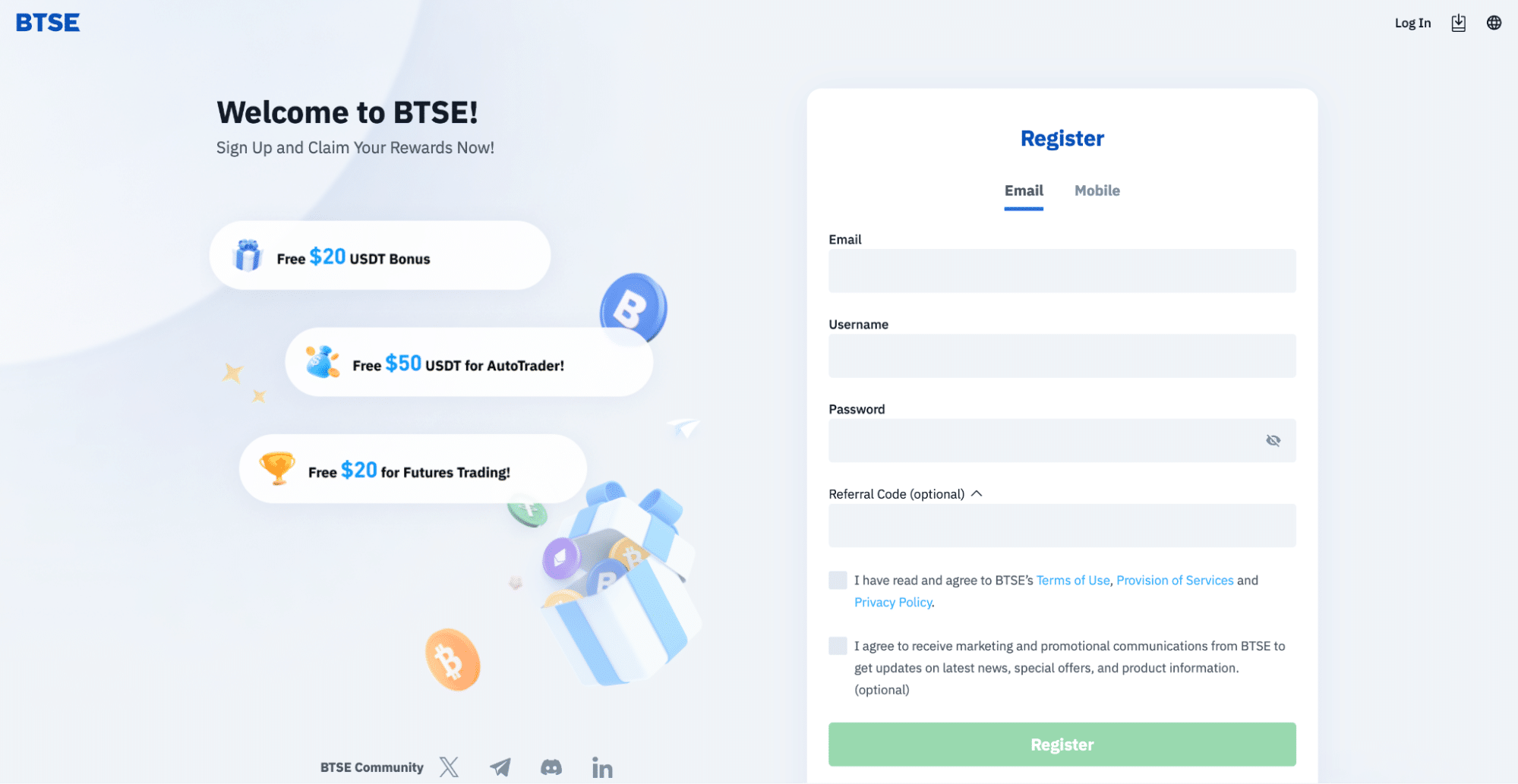
BTSE exchange homepage. Source: BTSE
Step 2
Once you’re verified on BTSE, you’ll need to fund your account. BTSE supports deposits in fiat currencies such as USD or JPY. After your funds arrive, navigate to the trading section.
Step 3
Search for a JPYR trading pair (either JPYR/USDT or JPYR/JPY) on the BTSE exchange. Enter the amount you want to purchase, review the current price, and execute the trade. BTSE offers market or limit orders for flexibility.
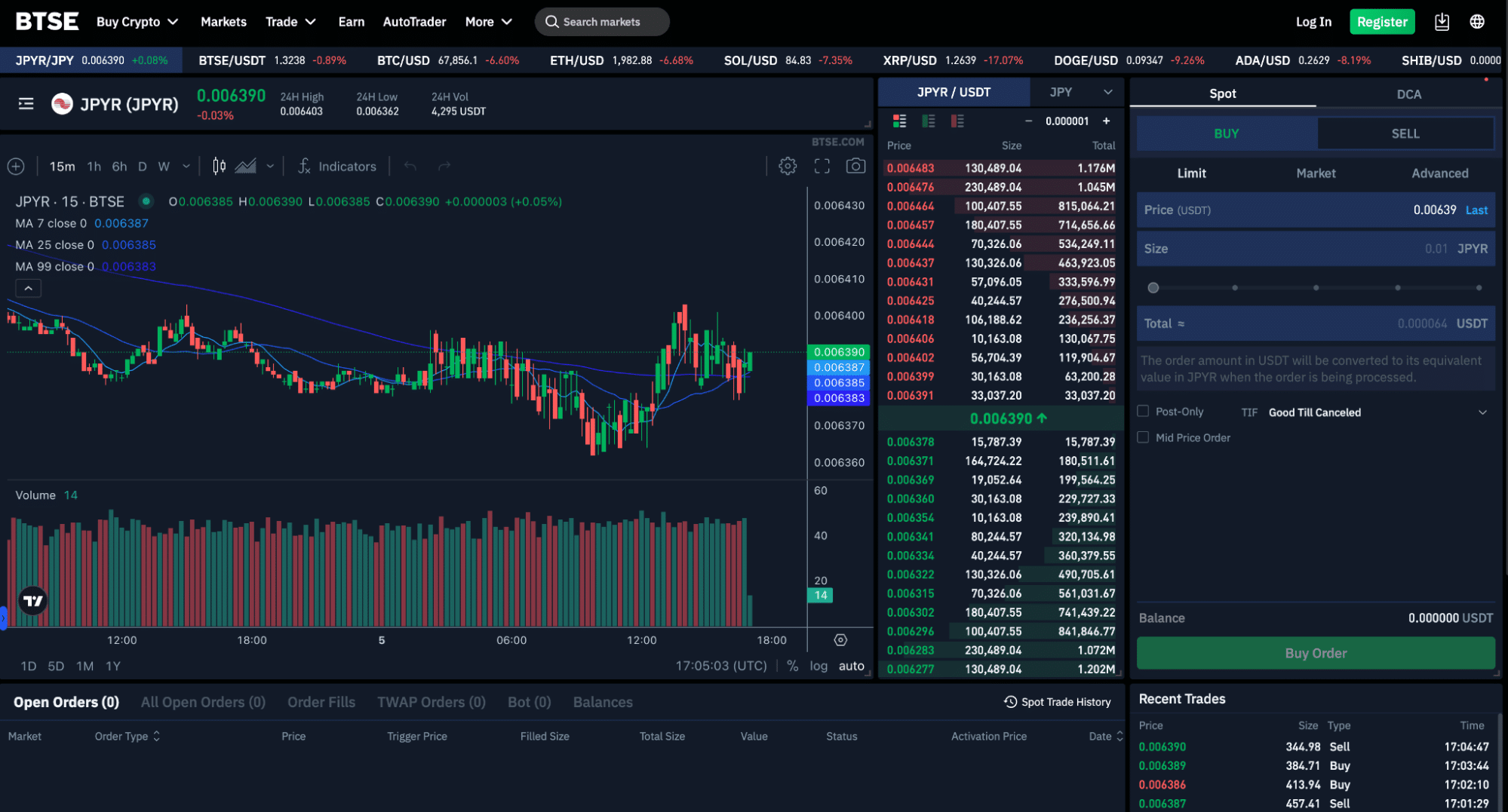
BTSE trading interface. Source: BTSE
Step 4
After buying JPYR, make sure you withdraw it to a personal crypto wallet for maximum security. BTSE allows transfers to Ethereum-compatible addresses. We recommend using IZAKA-YA, which offers a beginner-friendly interface, as well as biometric authentication and 2FA.
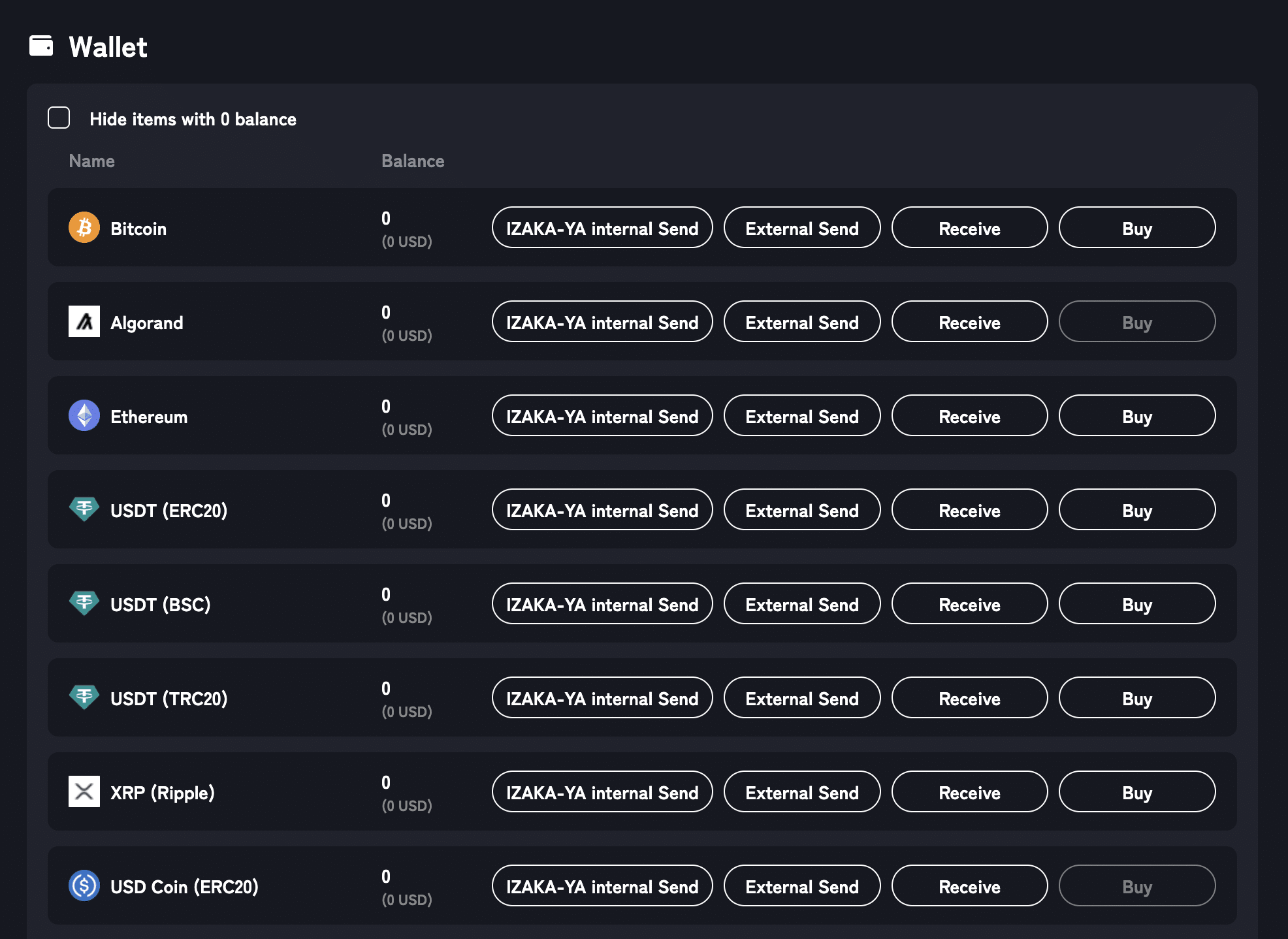
IZAKA-YA wallet interface. Source: IZAKA-YA
Input your wallet’s address carefully to prevent the risk of losses, confirm the network, and approve the withdrawal. Transactions usually process quickly, but blockchain congestion can add time.
You can also buy JPYR using the swap function within the IZAKA-YA wallet, which includes additional features such as crypto lending.
JPYR Review Conclusion
During this JPYR review, we accounted for the stablecoin’s strong backing by yen reserves, its focus on transparency, and its potential for efficient cross-border transactions. The team’s plans for multi-chain support and advanced DeFi integrations indicate JPYR’s strong potential for future growth, making it an important project to watch in 2026.
To buy the JPYR token, use exchanges like BTSE to enable fiat-to-crypto trades, then store your coins in a decentralized wallet like IZAKA-YA. Overall, the JPYR coin shows promise in a maturing market and offers a useful combination of price stability and on-chain transparency.
Our Review Methodology
We evaluated the JPYR crypto by examining its official website and exploring the project’s core features. The JPYR whitepaper provided insights into its technical design and roadmap. We also cross-checked reserve backing through available transparency reports and analyzed trading options on supported exchanges.
FAQs
What is JPYR?
What is the total supply of JPYR?
What can I do with the JPYR stablecoin?
Where can I buy JPYR?
References
- JPYR Official Website – JPYR
- JPYR Whitepaper – JPYR
- Stablecoins: Definition, How They Work, and Types – Investopedia
Coinspeaker in Numbers
250K+
Monthly Users
80+
Articles & Guides
5000+
Research Hours
23
Authors
guides
How to Keep Your Crypto Safe in 2026: Guide For Traders
March 6th, 2026
LiquidChain (LIQUID) Price Prediction 2026, 2027, and 2030
February 4th, 2026
IPO Genie Launch Date – When Does the Presale End?
February 4th, 2026
LiquidChain is a Layer 3 blockchain project that wants to unify the liquidity of Bitcoin, Ethereum, and Solana into a single execu...
The team behind IPO Genie has not yet announced an end date for the presale.
Otar Topuria
Crypto Editor, 40 postsI’m a crypto writer and analyst at Coinspeaker with over three years of experience covering fintech and the rapidly evolving cryptocurrency landscape. My work focuses on market movements, investment trends, and the narratives driving them, helping readers what is happening in the markets and why. In addition to Coinspeaker, my insights and analyses have been featured in other leading crypto and fintech publications, where I’ve built a reputation as a thoughtful and reliable voice in the industry.
My mission is to demystify the crypto markets and help readers navigate the noise, highlighting the stories and trends that truly matter. Before specializing in crypto, I worked in the IT sector, writing technical content on software development, digital innovation, and emerging technologies. That made me something of an expert in breaking down complex systems and explaining them in a clear, accessible way, skills I now find very useful when it comes to unpacking the intricate world of blockchain and digital assets.
I hold a Master’s degree in Comparative Literature, which sharpened my ability to analyze patterns, draw connections across disciplines, and communicate nuanced ideas. I’m particularly passionate about early-stage project discovery and crypto trading, areas where innovation meets opportunity. I enjoy exploring how new protocols, tokens, and DeFi projects aim to disrupt traditional systems, while also evaluating their potential risks and rewards. By combining market analysis with forward-looking research, I strive to provide readers with content that is both informative and actionable.