Bybit Doubles Down on Asian Market with JPY and KRW Fiat Support
Bybit’s evolution into a global powerhouse that ships new products at a dizzying rate has been a gradual one, but it’s picking up pace.
By Julia Sakovich
Updated
3 mins readPhoto: Shutterstock
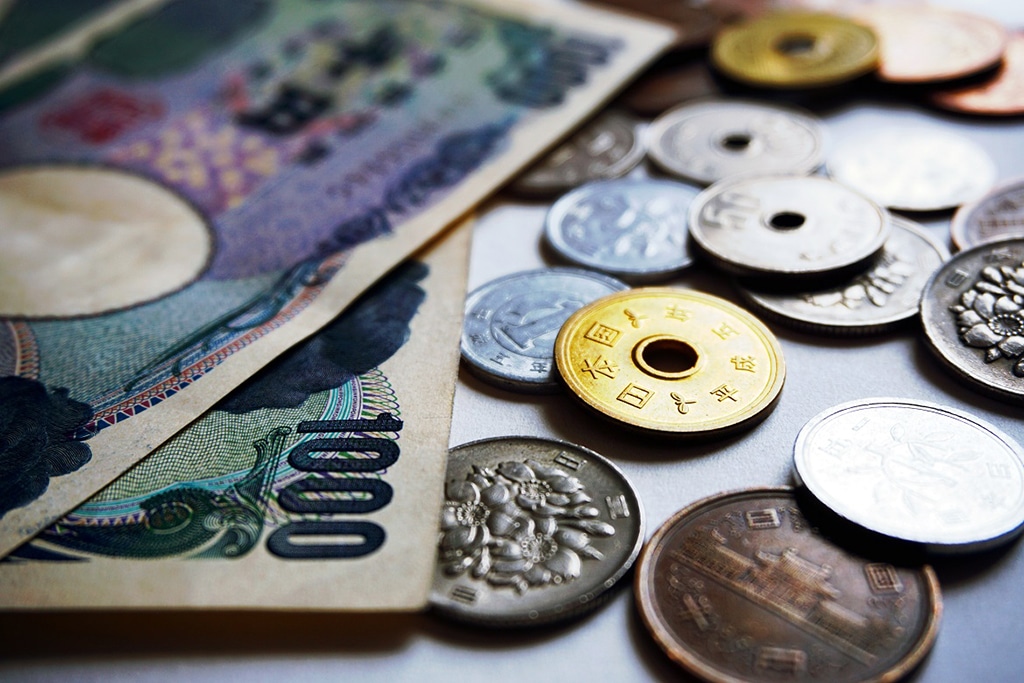
Bybit has reiterated its commitment to the Asian crypto market with the largest expansion of its fiat gateway to date. 20 new currencies have been added to Bybit Fiat Gateway including the South Korean won and Japanese yen, as well as Vietnamese language support, making it easier for Asian traders to interact with the derivatives exchange. Meanwhile, Bybit’s World Series of Trading (WSOT) continues to capture attention as the event, which boasts over a $1 million prize pool, nears its climax.
Bybit Adds JPY and KRW Direct Deposits
MoonPay is the payment partner Bybit has used to implement its fiat gateway, which debuted in June. The ability for traders to directly deposit funds using their local currency is a godsend for getting funds into an exchange account quickly when the market goes parabolic. While Bitcoin is still teasing as to whether it’s entering a new bullish phase, its ascent to $12K, followed by a gentle retreat to $11.5K territory, augurs well.
When BTC gathers pace and teases towards new all-time highs, the FOMO from traders will be intense. Exchanges with fiat gateways in place can expect an influx of money from traders who have been sitting on the sidelines, waiting for the right time to re-enter the market. Many derivatives exchanges, including former market leader BitMEX, still lack this ability.
BitMEX’s decision to introduce KYC has provided a boost to Bybit, which has welcomed disaffected traders with open arms. These headwinds have given the derivatives exchange momentum that it’s now seeking to build on to grow its market share, starting with the lucrative Asian market. Western exchanges have struggled to gain a foothold in crypto-savvy Asian nations such as South Korea, Japan, and Vietnam, having been hampered by a lack of localized knowledge and inadequate support for local currencies.
Asian Traders Flirt with DEXs but Still Favor CEXs
The Uniswap mania that’s gripped defi traders has yet to filter through to the Asian market, where CEXs hold sway. Platforms such as Binance, Huobi, and Bybit capture a large slice of the market within the region, leaving the long tail of local exchanges to cater to the rest of the demand. There are signs that Asian traders are starting to experiment with defi, which is now blooming on other blockchains than Ethereum.
The launch of TRON’s JustSwap on August 18, which pulled in $10M in volume in its first day, shows there is demand for decentralized trading options on other chains. For derivatives trading, however, where low fees and high volume are imperative, CEXs such as Bybit and Deribit dominate.
Bybit’s evolution into a global powerhouse that ships new products at a dizzying rate has been a gradual one, but it’s picking up pace. Only Binance can claim to have rolled out more products in the last quarter than Bybit, which was founded by CEO Ben Zhou in 2018. Products such as mutual insurance for options traders, integrated crypto swaps, and an enhanced trading engine have earned Bybit support from pro and semi-pro traders who like their leverage high and their order execution lightning fast.
Disclaimer: Coinspeaker is committed to providing unbiased and transparent reporting. This article aims to deliver accurate and timely information but should not be taken as financial or investment advice. Since market conditions can change rapidly, we encourage you to verify information on your own and consult with a professional before making any decisions based on this content.
I’m a content writer and editor with extensive experience creating high-quality content across a range of industries. Currently, I serve as the Editor-in-Chief at Coinspeaker, where I lead content strategy, oversee editorial workflows, and ensure that every piece meets the highest standards. In this role, I collaborate closely with writers, researchers, and industry experts to deliver content that not only informs and educates but also sparks meaningful discussion around innovation.
Much of my work focuses on blockchain, cryptocurrencies, artificial intelligence, and software development, where I bring together editorial expertise, subject knowledge, and leadership experience to shape meaningful conversations about technology and its real-world impact. I’m particularly passionate about exploring how emerging technologies intersect with business, society, and everyday life. Whether I’m writing about decentralized finance, AI applications, or the latest in software development, my goal is always to make complex subjects accessible, relevant, and valuable to readers.
My academic background has played an important role in shaping my approach to content. I studied Intercultural Communications, PR, and Translation at Minsk State Linguistic University, and later pursued a Master’s degree in Economics and Management at the Belarusian State Economic University. The combination of linguistic, communication, and business training has given me the ability to translate complex technical and economic concepts into clear, engaging narratives for diverse audiences.
Over the years, my articles have been featured on a variety of platforms. In addition to contributing to company blogs—primarily for software development agencies—my work has appeared in well-regarded outlets such as SwissCognitive, HackerNoon, Tech Company News, and SmallBizClub, among others.