Key Notes
- VanEck thinks cycle dynamics point to consolidation rather than melt-up or crash.
- Best risk-reward in miners shifts to AI/HPC, with cheap power and credible economics.
- Stablecoin B2B settlement offers upside: VanEck favors a disciplined 1–3% BTC allocation.
VanEck expects [NC] to enter 2026 with “mixed but constructive” signals and a higher likelihood of consolidation than of a dramatic melt-up or crash.
According to a new firmwide crypto outlook led by Matthew Sigel (Head of Digital Assets Research), Bitcoin’s realized volatility has roughly halved since the prior cycle. It implies that the next cyclical drawdown should be smaller (around 40% vs. ~80% last time), with much of that already absorbed by the market. They also say Bitcoin’s four-year cycle, which often peaks in the post-U.S. election window, “remains intact” after the early-October 2025 high. This supports the case for 2026 as a digestion year.
VanEck frames its call through three lenses:
- Global liquidity: rate cuts likely help, but parts of U.S. liquidity are tighter as AI capex collides with a fragile funding market.
- System leverage: meaningfully reset after several washouts.
- On-chain activity: still soft, but improving.
For investors, the firm reiterates a disciplined 1–3% BTC allocation, built via dollar-cost averaging and opportunistic adds into leverage unwinds.
The Big 2026 Trade: Miners Morphing into AI/HPC Providers
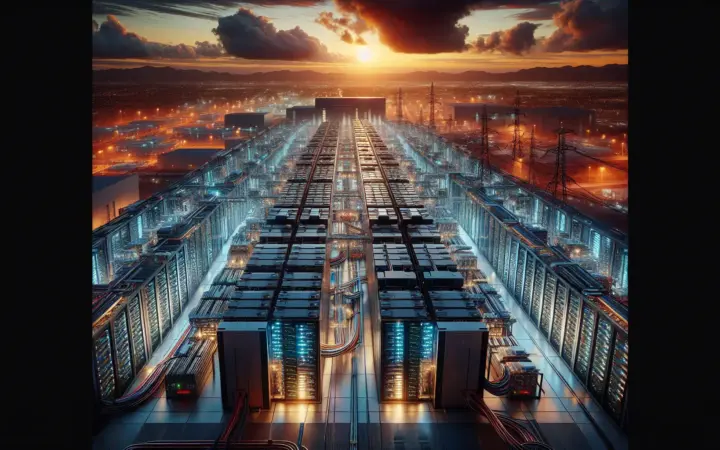
VanEck spotlights the capital-intensive pivot underway at Bitcoin miners, expanding hash rate while simultaneously building AI/HPC data-center capacity. The firm’s other research tracks public miners planning to scale from ~7 GW energized in early 2025 to ~16 GW by 2026 and ~20 GW by 2027, with 20–30% of that power likely repurposed to AI/HPC workloads. In VanEck’s view, miners with cheap/secured power, credible HPC economics, and non-dilutive financing should lead a consolidation cycle reminiscent of 2020–2021.
That pivot is already visible in headlines: ex-pure-play miners are signing multi-year AI compute leases measured in the hundreds of megawatts. Hut 8, for example, unveiled a 15-year, ~$7B data-center deal backed by Anthropic/Fluidstack with expansion options into the gigawatt range. This serves as an emblem of the sector’s shift toward energy-backed compute revenue. Other operators, such as Core Scientific, are winning upgrades on expanding HPC pipelines.
Stablecoins and Digital Payments: Selective Upside
Beyond mining, VanEck sees a more selective opportunity in digital payments and stablecoin settlement. In particular, B2B flows can reduce cross-border costs and improve working-capital cycles.
The firm cautions that pure-play public-equity exposure is limited. Near-term beneficiaries may be fintech and e-commerce operators that embed stablecoin rails to unlock margin leverage. Broader market coverage likewise suggests near-term stablecoin use cases tilt toward cross-border B2B, even as consumer card networks remain resilient.
Why the “Consolidation” Call Is Plausible
- Lower realized volatility: VanEck’s data and mid-2025 chain checks flagged BTC vol drifting to cycle lows, consistent with smaller (though still sharp) drawdowns.
- Cycle structure intact: A post-election peak pattern and the October 2025 high fit the four-year template, pointing to range-building in 2026.
- Reset leverage, soft-but-improving on-chain: Past deleveraging reduces fragility; incremental on-chain upticks favor grinding rather than cliff-edge moves.
next
Disclaimer: Coinspeaker is committed to providing unbiased and transparent reporting. This article aims to deliver accurate and timely information but should not be taken as financial or investment advice. Since market conditions can change rapidly, we encourage you to verify information on your own and consult with a professional before making any decisions based on this content.
Bitcoin News, News