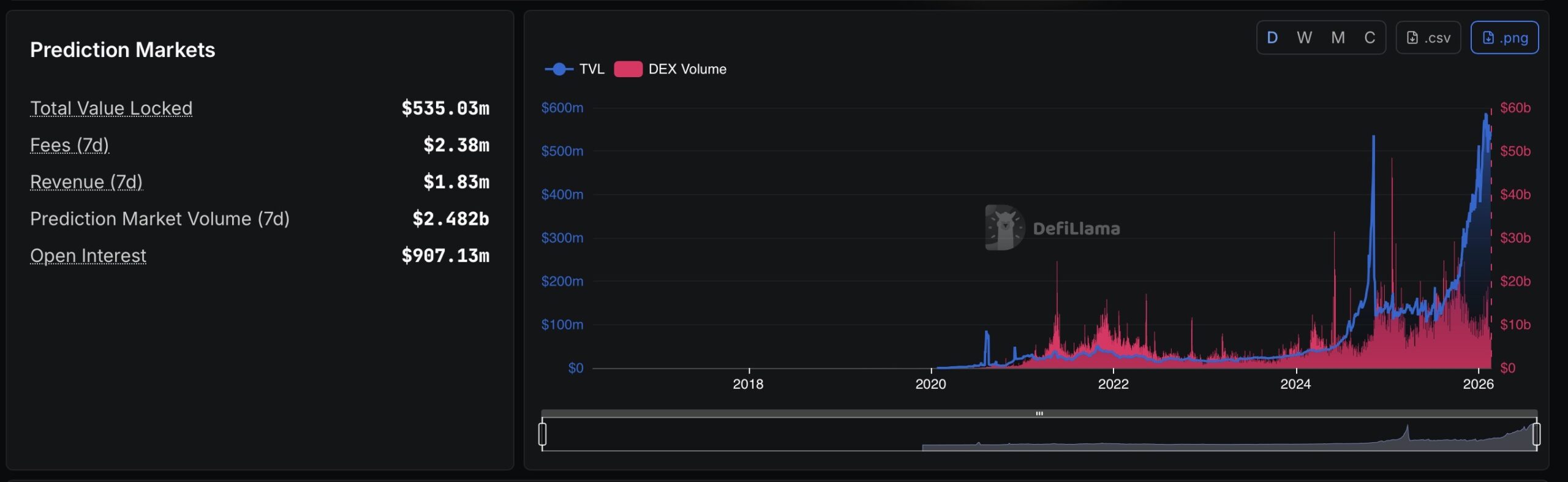
The race for the prediction market sector is heating up with two ETFs giants entering the fray. Asset managers Bitwise and GraniteShares have filed prospectuses with the United States Securities and Exchange Commission (SEC) to launch exchange-traded funds (ETFs) tied to the outcomes of US political elections.
The filings, submitted on Tuesday, follow a similar move by Roundhill Investments earlier this week, signaling a competitive rush to bring event-based contracts to traditional financial markets.
This flow of filings seeks to capitalize on the surging popularity of prediction markets, a sector that has seen growing volumes and interest from retail investors. While crypto-native firms have led the charge, exemplified by news that Crypto.com launched a prediction market platform recently, these proposed ETFs aim to package event contracts into regulated financial instruments accessible via standard brokerage accounts.
Prediction Market ETFs: Bitwise and GraniteShares Propose Election-Outcome Funds
Bitwise plans to launch a suite of products branded “PredictionShares”. The lineup consists of six ETFs designed to offer exposure to the 2026 midterm elections and the 2028 presidential election. The funds are structured to invest primarily in binary event contracts traded on exchanges regulated by the Commodity Futures Trading Commission (CFTC).
The mechanics of these funds rely on binary outcomes. Contracts are designed to settle at $1 if the referenced political party wins the specific election, or $0 if they do not. Consequently, the share price of the ETF is expected to fluctuate between these values, reflecting the market’s implied probability of the election result based on polling and sentiment.
GraniteShares has proposed a nearly identical structure. The firm is already established in providing niche and tactical investment vehicles, evidenced by its suite of leveraged ETF strategies that cater to active traders. Per the Bitwise prospectus, the risks are significant:
“In the event that a member of the Democratic Party is not the winner of the 2028 Presidential election, the fund will lose substantially all of its value.”
The involvement of established issuers in the prediction market underscores a wider trend of financialising real-world events. Institutional infrastructure is rapidly developing to support this asset class, with decentralized exchanges like Hyperliquid supporting prediction market contracts alongside centralized counterparts. Analysts suggest that the “ETF-ization” of these markets could bring significant liquidity from traditional finance.
However, regulatory hurdles remain a primary concern. The SEC has historically been cautious regarding crypto and event-based derivatives. While the underlying contracts may trade on CFTC-regulated venues, the broader industry has faced scrutiny, seen recently when Polymarket sued over prediction bans in Massachusetts.
Whether regulators will approve these vehicles for retail stock investors remains an open question as the sector eyes a valuation of $63 billion.
Disclaimer: Coinspeaker is committed to providing unbiased and transparent reporting. This article aims to deliver accurate and timely information but should not be taken as financial or investment advice. Since market conditions can change rapidly, we encourage you to verify information on your own and consult with a professional before making any decisions based on this content.
Neil is a professional cryptocurrency content writer with years of experience. He has written for various cryptocurrency websites to report on breaking news, and been hired by all sorts of cryptocurrency projects, to create content that would increase their exposure and attract more potential investors.