Gate.io Raises $64 Million to Fund Its Own Cryptocurrency
Chinese cryptocurrency exchange Gate.io has managed to raise $64 million for its new cryptocurrency called Gatechain Token that is expected to be launched in the fourth quarter.
By Julia Sakovich
Updated
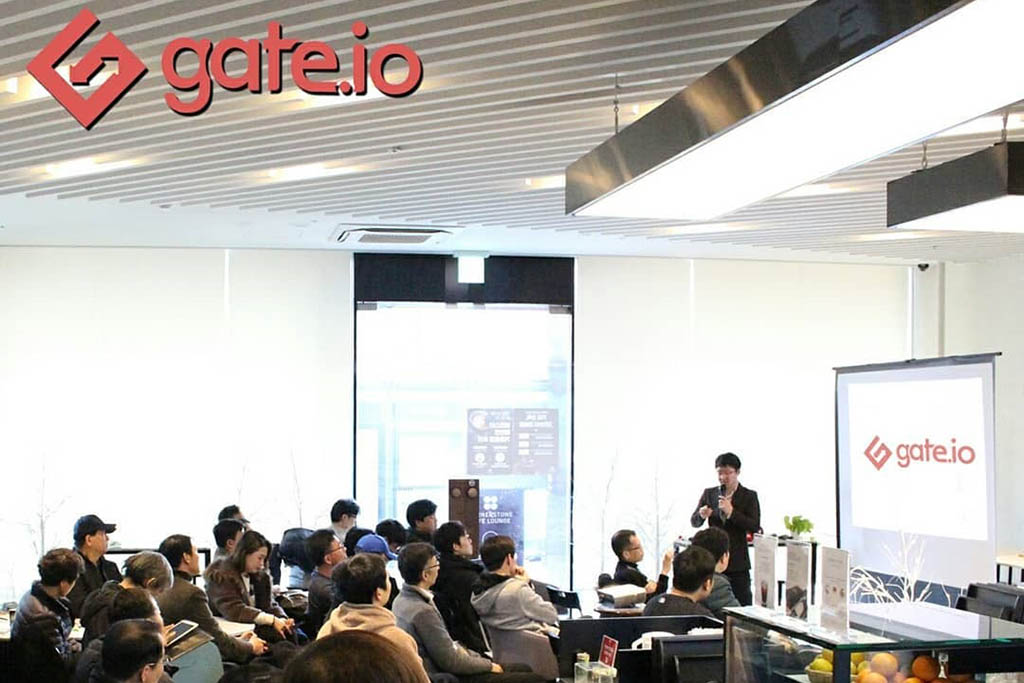
3 mins readPhoto: Gate.io / Instagram
As it has been just recently announced it took crypto exchange Gate.io just seven days to raise $64 million worth of crypto assets that will be allocated for the launch of its own native cryptocurrency. Nevertheless, the community needs to wait for it for at least six months.
$64 Million for Gatechain Token
According to the information disclosed, Gate.io that is one of the oldest crypto exchanges in China is going to launch the asset that will serve similarly to Binance’s Binance Coin (BNB). The coin is intended to facilitate the investment process on its respective platform.
The crypto that is to be introduced by Gate.io is called Gatechain Token (GT), and as we have already mentioned the exchange has managed to raise an impressive amount of $64 million to fund it.
Despite the fact that investors have demonstrated such a high interest in this asset, the exchange has scheduled its launch only for the fourth quarter.
On Monday, the exchange announced that it had received orders totaling $2.99 billion for the so-called Gate Points which had exceeded their expectations. These Gate Points are intended for being used to offset trading fees on the platform.
But it is not all of its functions. Each Gate Point provides its holder with the right to get 2.5 Gate Tokens.
The first phase of the Gate Points sale started on April 8 and lasted for a week. The exchange’s fees are paid in Tether (USDT) that is pegged to the U.S. dollar, so the price of one Gate Point was established at the level of 1 USDT in reduced fees.
It was possible to pay for Gate Points with Bitcoin, Tether, Ether, EOS, or the tokens of Gate’s competitors, Binance (BNB) and Huobi (HT).
As it was announced by Marie Tatibouet, chief marketing officer of Gate.io, in the first phase Gate Point holders received 150 million Gatechain Tokens. In this context, it’s worth mentioning that though the initial reward ratio was 2.5 GT for 1 Gate Point, it was depreciated by three percent every day during the week.
Let us also remind you that the exchange was founded in 2013 but at that time it was known the name Bter.com, in 2015 it experienced a hack in 2015 and lost nearly 7,000 Bitcoin that was stored in its cold wallets.
In 2017, following the ban on ICOs and fiat-to-crypto spot trading imposed by the central bank, the exchange was rebranded to Gate.io and its focus was shifted to crypto-to-crypto and Chinese yuan over-the-counter (OTC) trading.
IEO Platforms
The practice of issuing an exchange token with a trading fee point system instead of holding ICOs is not a new one. The similar model was applied by Huobi when it launched its HT in 2017.
And now when an epoch of initial exchange offerings (IEOs) has come, more and more crypto exchanges are joining the rows of those who are actively introducing their own IEO platforms, similar to Binance’s LaunchPad.
Gate.io is also expected to announce its own one.
Among the other exchanges that have already decided to opt for the IEO fundraising model are Bitmax, Huobi, Bittrex, OKEx, Exmo, Cobinhood, Coinbene, Probit, and KuCoin.
If you are interested in the latest data on the projects joining IEO bandwagon, check Coinspeaker’s IEO List, and find out more details about this model of fundraising in our IEO guide.
I’m a content writer and editor with extensive experience creating high-quality content across a range of industries. Currently, I serve as the Editor-in-Chief at Coinspeaker, where I lead content strategy, oversee editorial workflows, and ensure that every piece meets the highest standards. In this role, I collaborate closely with writers, researchers, and industry experts to deliver content that not only informs and educates but also sparks meaningful discussion around innovation.
Much of my work focuses on blockchain, cryptocurrencies, artificial intelligence, and software development, where I bring together editorial expertise, subject knowledge, and leadership experience to shape meaningful conversations about technology and its real-world impact. I’m particularly passionate about exploring how emerging technologies intersect with business, society, and everyday life. Whether I’m writing about decentralized finance, AI applications, or the latest in software development, my goal is always to make complex subjects accessible, relevant, and valuable to readers.
My academic background has played an important role in shaping my approach to content. I studied Intercultural Communications, PR, and Translation at Minsk State Linguistic University, and later pursued a Master’s degree in Economics and Management at the Belarusian State Economic University. The combination of linguistic, communication, and business training has given me the ability to translate complex technical and economic concepts into clear, engaging narratives for diverse audiences.
Over the years, my articles have been featured on a variety of platforms. In addition to contributing to company blogs—primarily for software development agencies—my work has appeared in well-regarded outlets such as SwissCognitive, HackerNoon, Tech Company News, and SmallBizClub, among others.