Arrested two alleged Polymarket insiders in Israel: prosecutors have charged an IDF reservist and a civilian for allegedly using classified military information to profit on the crypto prediction.
In a joint statement from the Israel Police, Shin Bet, and the Ministry of Defense, the reservist accessed non-public operational intelligence through his military role and shared it with the civilian. The civilian then allegedly placed trades on Polymarket markets tied to Israeli military actions.
Authorities claim the activity generated around $150,000 in profits. The exact markets were not fully disclosed, but local media reports suggest they were linked to the timing of Israeli military operations during the June 2025 attack on Iran.
Significant chance Israel made these very public arrests because they got the green light from Trump yesterday and they don’t want these dumbasses tipping off Iran with their bets 😭😭😭 https://t.co/2pwTRinipI
This case highlights a growing tension in crypto markets. Prediction platforms are decentralized and operate globally, but traders are still subject to local laws, especially when national security is involved.
Geopolitical markets have become some of the most liquid categories on Polymarket. They often move faster than traditional media because traders price in real-time expectations. But that same speed creates risks if insiders exploit sensitive data.
Platforms like Polymarket have surged in popularity, recently integrating native USDC support to streamline betting infrastructure.
While prediction markets are often used for sports or crypto, such as when BTC$67 63324h volatility:1.6%Market cap:$1.35 TVol. 24h:$39.26 B
price odds jumped significantly, contracts tied to sovereign military actions present unique legal and ethical challenges. In this instance, the ability to wager on specific dates of military action created a direct financial incentive for the misuse of state secrets.
Role of Lahav 433 and Shin Bet In The Arrest Of the Two Polymarket Insiders
The investigation was conducted by the Israel Defense Forces (IDF), the Shin Bet internal security agency, and the Israel Police’s Lahav 433 unit. Based on a joint statement, the reservist allegedly accessed classified documents to inform the civilian co-conspirator, who then executed the trades.
Reports indicate the betting account in question may have wagered tens of thousands of dollars on markets like “Israel strike on Iran,” yielding over $150,000 in profits. Local prosecutors intend to file indictments for aggravated espionage, bribery, and obstruction of justice.
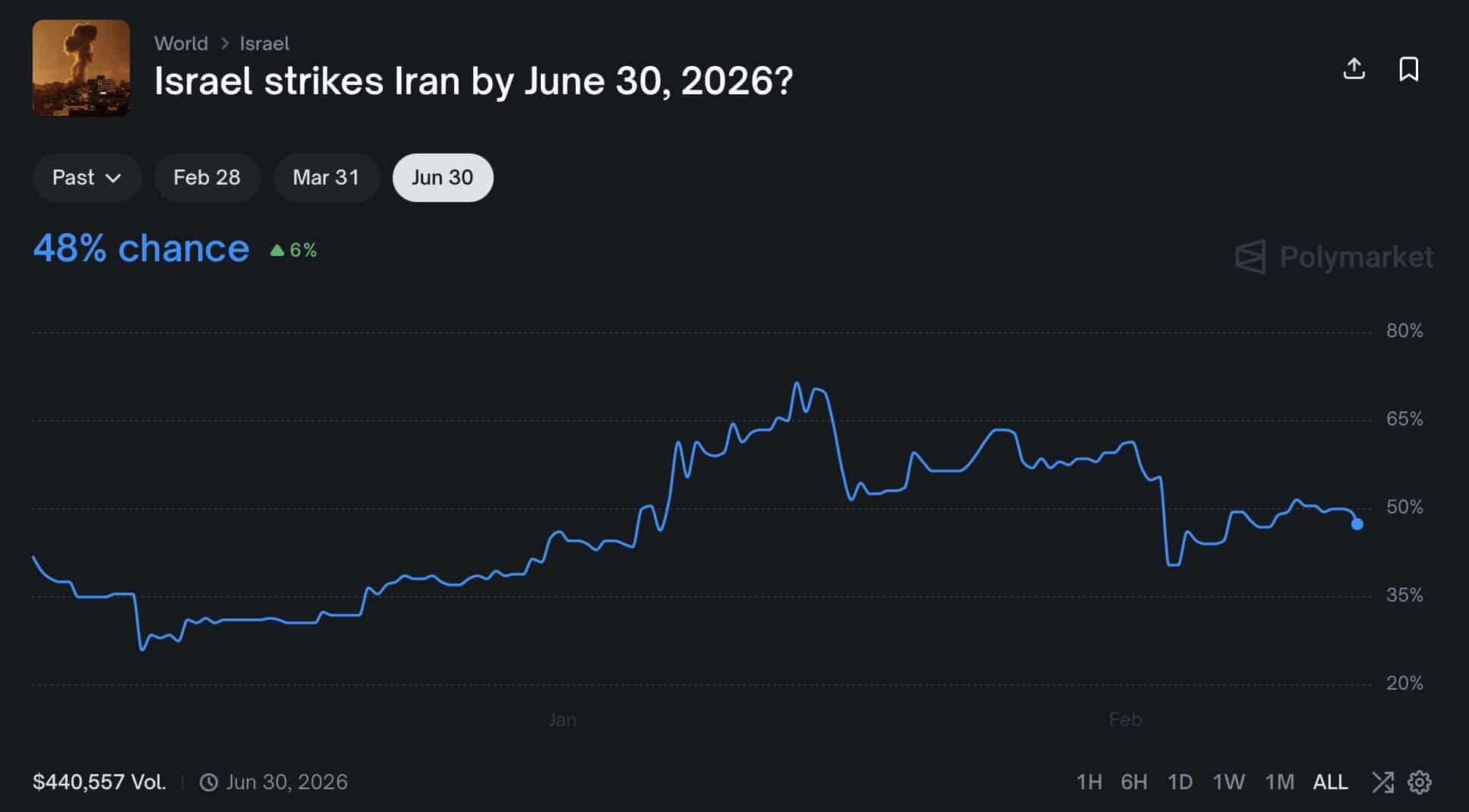
Investigators say the suspected wagers were not isolated: traders placed multiple bets on outcome contracts about when Israel would strike Iran. People are clearly still betting on the possible next attack, such as this one by June 30, 2026.
Israel strikes Iran by June 30, 2026? Source: PolyMarket
The Ministry of Defense emphasized the gravity of the breach in a statement:
“The use of classified information for financial gain poses a real security risk to IDF operations and national security.”
This case sets a precedent for crypto legal enforcement regarding decentralized ledgers and state jurisdiction. While the protocol itself is decentralized, the actors remain subject to local laws regarding espionage and financial fraud. This scrutiny comes as prediction markets fight regulatory battles globally, with Polymarket currently suing to block a sports prediction ban in Massachusetts.
Appears to be the first arrests related to insider trading on Polymarket. One user made $150k last year on Polymarket trading on the war between Israel and Iran. pic.twitter.com/fIVGhVHNI2
The incident reinforces arguments from global lawmakers that prediction markets could incentivize corruption or intelligence leaks. Despite these hurdles, the sector is expanding, with competing platforms like Hyperliquid supporting outcome contracts, suggesting the industry will continue to grow even as it faces tighter forensic tracking by state authorities.
Disclaimer: Coinspeaker is committed to providing unbiased and transparent reporting. This article aims to deliver accurate and timely information but should not be taken as financial or investment advice. Since market conditions can change rapidly, we encourage you to verify information on your own and consult with a professional before making any decisions based on this content.
Daniel Frances is a technical writer and Web3 educator specializing in macroeconomics and DeFi mechanics. A crypto native since 2017, Daniel leverages his background in on-chain analytics to author evidence-based reports and deep-dive guides. He holds certifications from The Blockchain Council, and is dedicated to providing "information gain" that cuts through market hype to find real-world blockchain utility.