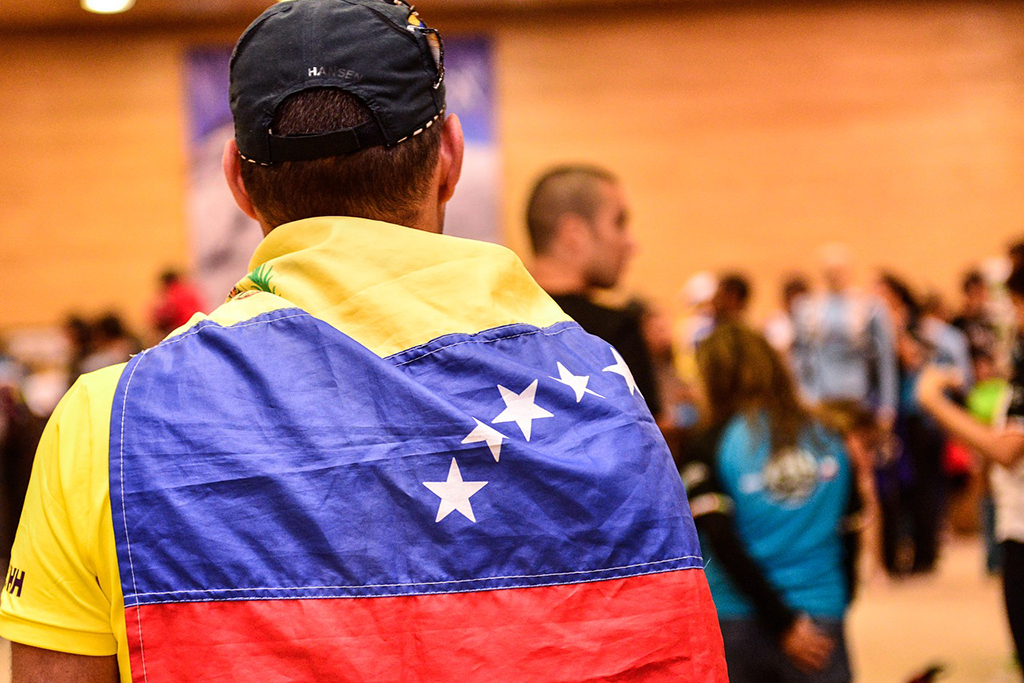
Venezuela is one of the countries that have made a lot of headlines over the last year. Its plans to overcome inflation with the help of cryptocurrencies it has managed to puzzle the entire world and to cause a lot of troubles for its own society. But now it is moving further.
Now the country is in talks in Russia. The final goal is to reach an agreement on using the Ruble in their mutual trade settlements. Such an initiative is said to help the countries to avoid the usage of the US dollar in country-to-country transactions
Moreover, the issue of using El Petro, Venezuela’s oil-pegged cryptocurrency, as the second medium of exchange is also under consideration.
The trade plans of Venezuela were announced by the country’s representative to the UN office in Geneva Jorge Valero.
Role of the Petro
Let me remind you that the Petro is pegged to the value of a barrel Venezuelan oil. And at the same time, the bolivar, the local currency is pegged to it. Nevertheless, initially, there were even some doubts whether this crypto really existed. But earlier this year, it has been proved: the Petro is real.
And now, having plans to make the Petro a central element of their trading activities, Venezuela wants not just to promote its crypto but to avoid the US sanctions.
It’s also worth mentioning that all sanctions that had been introduced against the country made the Bolivarian Republic find an alternative to the dollar for its international transactions. Last October, it was announced that Venezuela would switch to euro.
Moreover, the country took a decision to initiate swapping crude oil for imported products. And in December 2018, the country disclosed that it would start selling oil in exchange for Petros. At that time the country’s president Maduro enumerated a lot of benefits of using their national crypto and even called the initiative a ‘genius economic’ move that could ensure ‘greater dynamism and security’ for Venezuelans.
It is known that the country’s economy was seriously affected by the US penalties against the Venezuelan oil sector and the consequences of freezing its dollar accounts. As a result, Venezuela has lost free access to international financial support and investments in its oil sector.
The serious sanctions were imposed against the Venezuelan government and its crypto exchange Evrofinance after the Petro had been launched. According to the US Treasury that was an initiator of these sanctions, the involvement of Evrofinance in the Petro project could be viewed as a sign of Maduro’s desire to circumvent U.S. financial sanctions with the help of the Petro.
Nevertheless, now we should admit that now there are still no real positive results of all the efforts of Venezuela as there are no open crypto exchanges in the country as well as no real ways to use the crypto for payments.
I’m a content writer and editor with extensive experience creating high-quality content across a range of industries. Currently, I serve as the Editor-in-Chief at Coinspeaker, where I lead content strategy, oversee editorial workflows, and ensure that every piece meets the highest standards. In this role, I collaborate closely with writers, researchers, and industry experts to deliver content that not only informs and educates but also sparks meaningful discussion around innovation.
Much of my work focuses on blockchain, cryptocurrencies, artificial intelligence, and software development, where I bring together editorial expertise, subject knowledge, and leadership experience to shape meaningful conversations about technology and its real-world impact. I’m particularly passionate about exploring how emerging technologies intersect with business, society, and everyday life. Whether I’m writing about decentralized finance, AI applications, or the latest in software development, my goal is always to make complex subjects accessible, relevant, and valuable to readers.
My academic background has played an important role in shaping my approach to content. I studied Intercultural Communications, PR, and Translation at Minsk State Linguistic University, and later pursued a Master’s degree in Economics and Management at the Belarusian State Economic University. The combination of linguistic, communication, and business training has given me the ability to translate complex technical and economic concepts into clear, engaging narratives for diverse audiences.
Over the years, my articles have been featured on a variety of platforms. In addition to contributing to company blogs—primarily for software development agencies—my work has appeared in well-regarded outlets such as SwissCognitive, HackerNoon, Tech Company News, and SmallBizClub, among others.