This Cybersecurity Pioneer Thinks Bitcoin Cannot Replace the Current Financial System
While some experts insist that quite soon Bitcoin will replace fiat money, cybersecurity pioneer Eugene Kaspersky believes that the world is not ready for such changes.
By Julia Sakovich
Updated
3 mins readPhoto: CEBIT AUSTRALIA / Flickr
Since cryptocurrencies were introduced for a wide public, there have been discussions whether they will be able to replace fiat money one day or not. Though new use cases and crypto-related products appear here and there, still it is too early to say that they are ready to take the role of fiat money.
World Is Not Ready
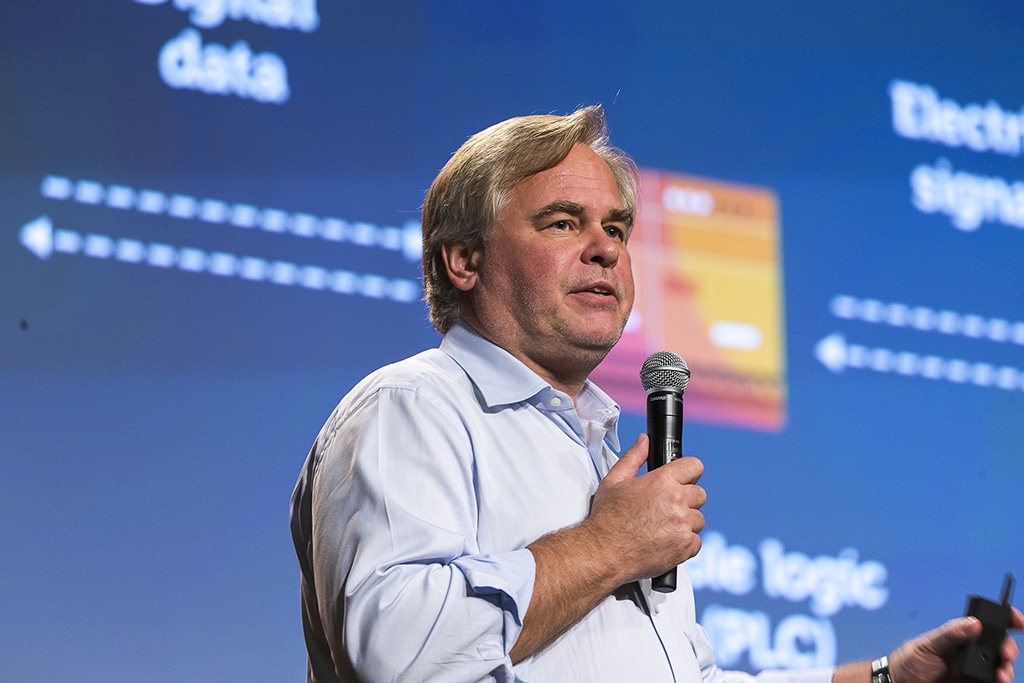
One of those who doesn’t believe that the world is ready for full adoption of cryptocurrencies is billionaire Eugene Kaspersky who is known as cybersecurity pioneer and the CEO of Russian cybersecurity firm Kaspersky Lab. According to his forecast, such changes are possible but they will take place in rather remote future – at least in 100 years.
“Cryptocurrencies are a great idea, but the world is not ready for them yet. The world must be united if we want to have encrypted currencies. At the moment, governments will want to control them.”
In his opinion, the world will have a possibility to shift to a crypto financial system only under the single government – the Government of the Earth. Only if all the existing governments unite, one common currency will be possible. Kaspersky said that in such a situation there still could be more than one currency but on a global scale they would be unified.
The cybersecurity pioneer also noted that in the future digital currencies would have much more chances that paper money. Though he said that today’s cryptocurrencies like Bitcoin wouldn’t be able to replace the existing financial system, the underlying technologies and ideas that these currencies are based on could be rather useful for the development of new currencies that would meet all requirements of the future world.
But Kaspersky also voiced his concern about potential trials of some governments to ban digital currencies in case they see that they can’t control them as this class of assets may represent a serious threat for central banks. Moreover, some countries have already tried to do it. He said:
“I am beyond certain that different countries will try to forbid the use of cryptocurrencies, because they are beyond their control. Authorities will not pay attention, as long as [cryptocurrencies] do not pose a threat. When they start supplanting national currencies, they will be banned immediately.”
Opposite Position
Nevertheless, it is not the only possible point of view. Coinspeaker has also recently reported about those experts who belong to the camp of active supporters of cryptocurrencies. For example, Tim Draper, a well-known VC, is absolutely sure that in 5 years the fiat era will come to an end and fiat money will be used only in criminal circles.
Twitter CEO Jack Dorsey also believes that Bitcoin will soon unite the word and become the Internet’s single native currency.
While it remains to be seen what the future holds for us, who do you think is closer to the truth?
I’m a content writer and editor with extensive experience creating high-quality content across a range of industries. Currently, I serve as the Editor-in-Chief at Coinspeaker, where I lead content strategy, oversee editorial workflows, and ensure that every piece meets the highest standards. In this role, I collaborate closely with writers, researchers, and industry experts to deliver content that not only informs and educates but also sparks meaningful discussion around innovation.
Much of my work focuses on blockchain, cryptocurrencies, artificial intelligence, and software development, where I bring together editorial expertise, subject knowledge, and leadership experience to shape meaningful conversations about technology and its real-world impact. I’m particularly passionate about exploring how emerging technologies intersect with business, society, and everyday life. Whether I’m writing about decentralized finance, AI applications, or the latest in software development, my goal is always to make complex subjects accessible, relevant, and valuable to readers.
My academic background has played an important role in shaping my approach to content. I studied Intercultural Communications, PR, and Translation at Minsk State Linguistic University, and later pursued a Master’s degree in Economics and Management at the Belarusian State Economic University. The combination of linguistic, communication, and business training has given me the ability to translate complex technical and economic concepts into clear, engaging narratives for diverse audiences.
Over the years, my articles have been featured on a variety of platforms. In addition to contributing to company blogs—primarily for software development agencies—my work has appeared in well-regarded outlets such as SwissCognitive, HackerNoon, Tech Company News, and SmallBizClub, among others.