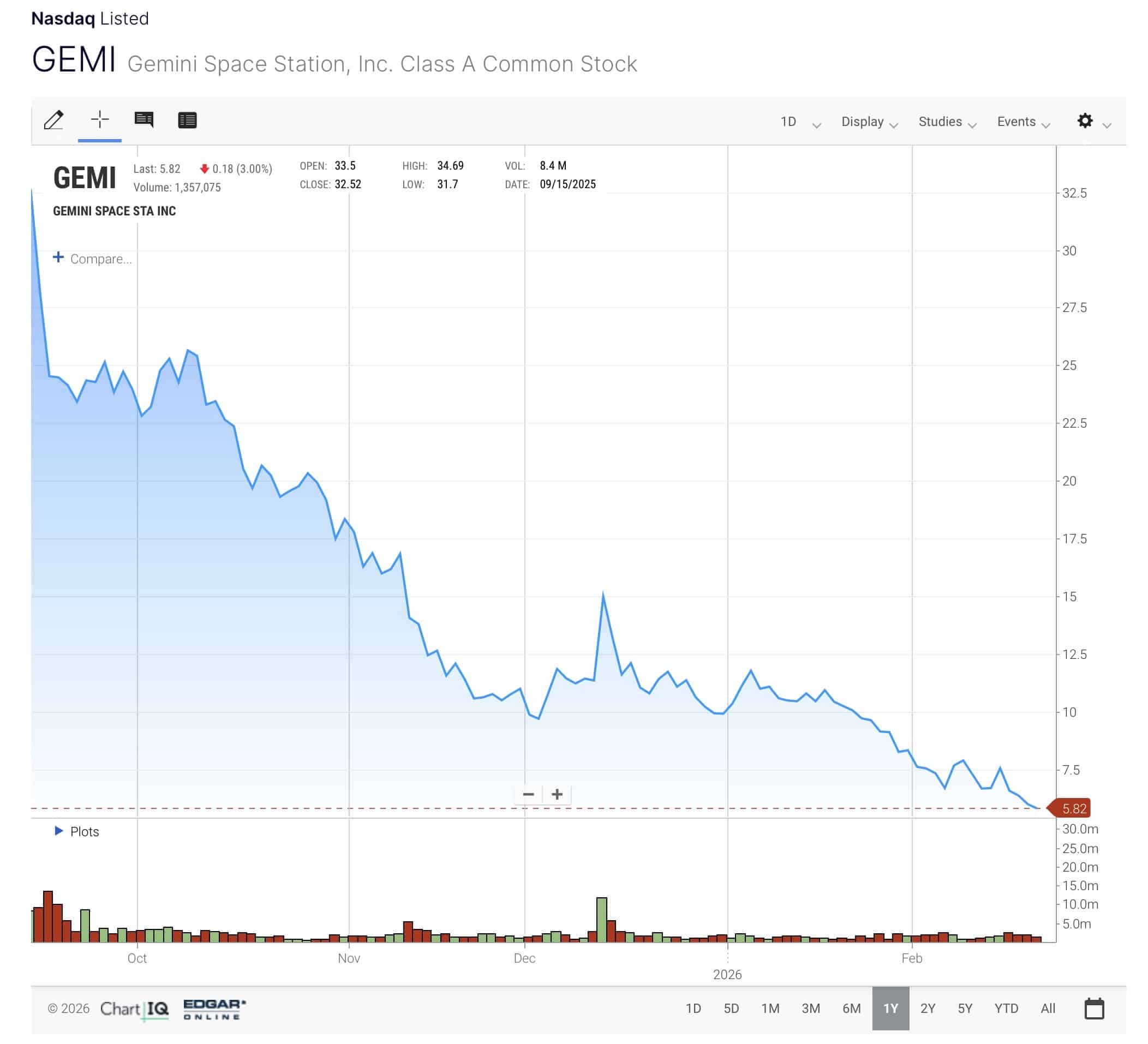
The crypto market’s strong correction is affecting everyone. Cameron and Tyler Winklevoss’s Gemini faces significant peril following a massive plunge in crypto prices. The New York-based exchange, which went public in late 2025, is now grappling with a “hard landing” scenario as the crypto winter exposes the fragility of its aggressive expansion plans amid a 40% market correction.
The downturn has erased the bull market gains that underpinned the company’s growth strategy, forcing management to test how quickly they can reposition a money-losing operation with little margin for error.
80% Drop For Gemini As Crypto Market Keeps Declining
A swift reversal of fortune for Gemini (GEMI), which listed on Nasdaq in September 2025 with a valuation nearing $4 billion. The subsequent market downturn has decimated the stock price, currently trading roughly 80% below its peak. This financial squeeze recently forced the company into drastic restructuring measures.
As Coinspeaker reported earlier, Gemini slashed staff and exited Europe this month to preserve capital, signaling deep operational stress beneath the surface. The move to retreat from UK, EU, and Australian markets marks a significant contraction for a firm that had positioned itself for global dominance just months prior.
Financial metrics reveal the extent of the damage. While net revenue grew to $175 million in 2025, expenses surged nearly 70% to $530 million, driven by expansion efforts that failed to anticipate the market reversal. Consequently, Gemini’s global spot trading market share has evaporated, falling from 0.6% to just 0.1%.
Amidst the restructuring, reports confirm the departure of the COO CFO and Chief Legal Officer from the executive suite. This contraction mirrors broader industry struggles, similar to how Galaxy Digital stock crashed reporting a $482 million loss, highlighting the systemic risks facing crypto-native equities during prolonged drawdowns.
Public status has further complicated the situation, turning the IPO into a “test of performance disclosure” rather than a capital victory. Stringent reporting requirements now expose the company’s cash burn rate to skeptical public market investors.
How to Save the Ship: Moving to Prediction Markets?
Management is attempting a strategic change toward prediction markets to diversify revenue, though analysts remain cautious given the crowded competitive scene. The immediate concern for investors remains liquidity and operational continuity. As Bitcoin exchange reserves surge amid market demand for self-custody or safer harbors, centralized platforms face heightened scrutiny regarding their solvency.
With a low financial strength score, Gemini’s post-IPO journey serves as a cautionary tale of risks when high operational burn meets a crypto winter. Market observers will be closely watching the company’s Q1 2026 earnings to see if the drastic reduction in headcount is sufficient to stabilize the firm’s cash flow.
Disclaimer: Coinspeaker is committed to providing unbiased and transparent reporting. This article aims to deliver accurate and timely information but should not be taken as financial or investment advice. Since market conditions can change rapidly, we encourage you to verify information on your own and consult with a professional before making any decisions based on this content.
Daniel Frances is a technical writer and Web3 educator specializing in macroeconomics and DeFi mechanics. A crypto native since 2017, Daniel leverages his background in on-chain analytics to author evidence-based reports and deep-dive guides. He holds certifications from The Blockchain Council, and is dedicated to providing "information gain" that cuts through market hype to find real-world blockchain utility.