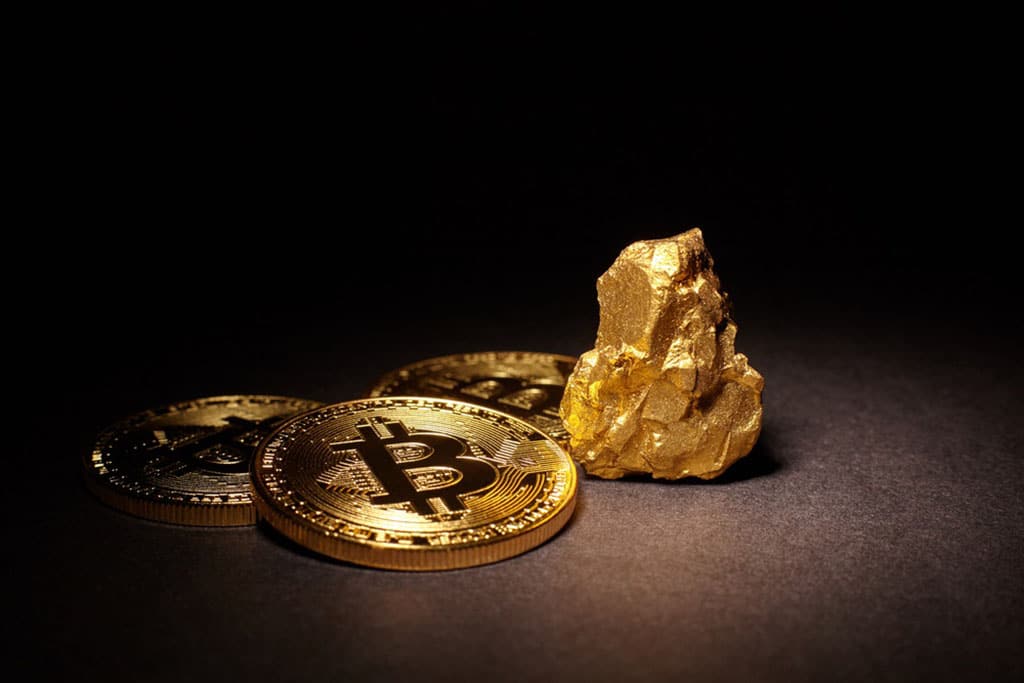
Scientists Turned Copper into Gold: Can We Expect the Same for Bitcoin?
Researchers in China have found a way to produce gold which may lead to a serious drop in the gold demand and open new opportunities for Bitcoin.
By Julia Sakovich
Updated
3 mins readPhoto: cabriolet2008 / Flickr
From the beginning of the world, scientists have always surprised the wide audience, presenting new developments and inventions that had never been seen before. Though it may seem that today nothing new can be discovered, it is definitely a mistake to think so. And Chinese researchers have recently proved it.
New Gold
As it has become known, scientists from China have made a cutting-edge discovery and created a material which behavior under certain conditions is very similar to the behavior of gold. According to researchers, this new material’s characteristics are very close to those that are observed in precious metals: it can resist the impact of high temperature and is not vulnerable to erosion and oxidization.
With a view to create the pseudo-gold, Professor Sun Jian and his colleagues at the Dalian Institute of Chemical Physics, at the Chinese Academy of Sciences in Liaoning, made a copper target and shot it with a payload of hot, electrically-charged argon gas.
As a result, the ionized particles managed to dislodge atoms of copper from the target. Then they fell down to the surface of a collecting device where they cooled off and became a thin layer of microscopic sand.
This new material is not so expensive as gold which may lead to a serious decrease in the demand for gold in the manufacturing industry as it will be much more feasible to create it than to purchase gold. Such a discovery may significantly affect the precious metals industry and open new opportunities for Bitcoin.
Bitcoin to Become New Gold?
In the context of this new discovery and potential changes in the sphere of stock market assets, the following question has arisen once again: has Bitcoin any chances to become a mainstream store of value?
There are completely different points of view on this issue. While some enthusiasts believe that it may happen quite soon, experts insist that it won’t happen, at least in the nearest future.
For example, according to Lou Kerner, co-founder of CryptoOracle, despite all its misfortunes, Bitcoin has enough potential to become a fundamental store of value and replace gold in the long-term perspective.
Gold has been used for more than several thousand years but Bitcoin’s functionality is much more flexible. “So we expect that over time — not in a day, not in a week, not even in 5 years, — for some of the people using gold as a store of value to switch to Bitcoin,” explained Kerner.
Some crypto enthusiasts have even tried to analyze the difference between the changes in the both assets’ values. And it has been found out that the gold’s 43-year price history and BTC’s 9-year lifecycle have much in common which makes these two assets close to each other. Nevertheless, before making very optimistic forecasts about Bitcoin’s chances to replace gold, it will be sensible not to forget about its high volatility.
But once again: in the long-term perspective, everything may change. And the decrease in gold demand together with cryptocurrency adoption and technological improvements may turn everything upset down.
I’m a content writer and editor with extensive experience creating high-quality content across a range of industries. Currently, I serve as the Editor-in-Chief at Coinspeaker, where I lead content strategy, oversee editorial workflows, and ensure that every piece meets the highest standards. In this role, I collaborate closely with writers, researchers, and industry experts to deliver content that not only informs and educates but also sparks meaningful discussion around innovation.
Much of my work focuses on blockchain, cryptocurrencies, artificial intelligence, and software development, where I bring together editorial expertise, subject knowledge, and leadership experience to shape meaningful conversations about technology and its real-world impact. I’m particularly passionate about exploring how emerging technologies intersect with business, society, and everyday life. Whether I’m writing about decentralized finance, AI applications, or the latest in software development, my goal is always to make complex subjects accessible, relevant, and valuable to readers.
My academic background has played an important role in shaping my approach to content. I studied Intercultural Communications, PR, and Translation at Minsk State Linguistic University, and later pursued a Master’s degree in Economics and Management at the Belarusian State Economic University. The combination of linguistic, communication, and business training has given me the ability to translate complex technical and economic concepts into clear, engaging narratives for diverse audiences.
Over the years, my articles have been featured on a variety of platforms. In addition to contributing to company blogs—primarily for software development agencies—my work has appeared in well-regarded outlets such as SwissCognitive, HackerNoon, Tech Company News, and SmallBizClub, among others.