About
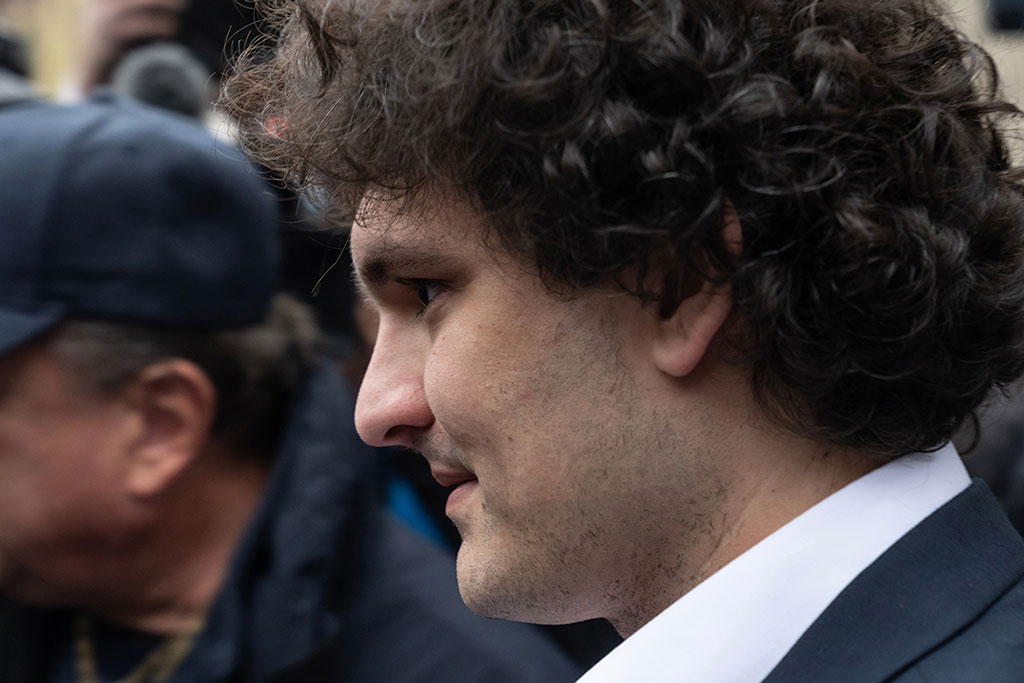
Sam Bankman-Fried, commonly referred to as SBF, was once one of the most powerful and celebrated figures in cryptocurrency. He founded FTX and Alameda Research, building a sprawling crypto empire that at its peak rivaled the largest financial institutions in the digital asset space. Marketed as a principled technologist guided by “effective altruism,” Bankman-Fried positioned himself as a responsible steward of crypto’s future. This narrative unraveled spectacularly with the collapse of FTX in late 2022.
Today, SBF’s name is synonymous with one of the largest financial frauds in modern history. His rise and fall reshaped regulatory attitudes toward crypto exchanges, triggered criminal prosecutions across multiple jurisdictions, and permanently altered how centralized crypto platforms are perceived.
Early Life and Intellectual Background
Sam Bankman-Fried was born in 1992 in Stanford, California, into a family deeply embedded in academia and law. Both of his parents were professors at Stanford Law School, specializing in legal ethics and compliance. This background later became an ironic footnote in the FTX saga.
At the Massachusetts Institute of Technology (MIT), Bankman-Fried studied physics and mathematics. There, he became involved with the philosophy of effective altruism. This movement advocates maximizing positive global impact through rational, utilitarian decision-making. This framework later served as a central pillar of his public persona.
After graduating, SBF worked briefly as an intern at Jane Street Capital, a quantitative trading firm. He gained experience in arbitrage strategies and market structure, skills that would become foundational to his crypto ventures.
Founding Alameda Research
In 2017, Bankman-Fried founded Alameda Research, a quantitative crypto trading firm. Alameda initially focused on arbitrage opportunities between Asian and Western crypto markets. It exploited price discrepancies driven by fragmented liquidity and regulatory inefficiencies.
Alameda quickly became one of the most powerful market-making firms in crypto. It provided liquidity across major exchanges, engaged in high-frequency trading, and participated heavily in token launches and early-stage crypto projects.
Crucially, Alameda operated with minimal transparency. Unlike traditional hedge funds, it was largely unregulated, opaque, and deeply intertwined with the broader crypto ecosystem.
The Creation of FTX
In 2019, Bankman-Fried launched FTX, a cryptocurrency exchange designed to cater to professional traders. The platform distinguished itself by offering:
-
Crypto derivatives and perpetual futures;
-
Leveraged trading products;
-
Tokenized stocks and prediction markets.
FTX grew rapidly, positioning itself as a sophisticated, compliant alternative to offshore exchanges. Its branding emphasized risk management, regulatory cooperation, and institutional credibility. At that time, it was a contrast to the aggressive, loosely governed exchanges of the time.
By 2021, FTX was among the largest crypto exchanges globally, with a valuation exceeding $30 billion. High-profile sponsorships with sports leagues, celebrities, and stadium naming rights cemented its mainstream visibility.
The Alameda–FTX Relationship
Behind the scenes, the separation between FTX and Alameda Research was largely illusory.
Here are just a few facts that were revealed later during the collapse:
-
Alameda had special trading privileges on FTX.
-
Customer funds from FTX were secretly routed to Alameda.
-
Alameda used FTX-issued tokens as collateral for massive borrowing.
-
Risk controls that applied to other users did not apply to Alameda.
This structural conflict of interest was central to the eventual collapse. FTX was not merely an exchange serving Alameda. It was a primary funding source.
The FTX Token (FTT) and Financial Fragility
FTX issued its own native token, FTT, which played a critical role in the platform’s balance sheet. FTT was used as collateral for loans, to reduce trading fees, and as a financial asset backing FTX and Alameda’s liabilities.
Because FTT’s value was primarily supported by internal demand and confidence in FTX itself, the system was circular and fragile. Any significant loss of trust threatened the entire structure.
The Collapse of FTX
In November 2022, reports surfaced questioning Alameda Research’s financial health, revealing that much of its balance sheet consisted of illiquid FTT tokens.
A chain reaction then followed. Market confidence eroded rapidly, with customers rushing to withdraw funds from FTX. In turn, FTX lacked sufficient liquid assets to meet withdrawals. As a consequence, Binance briefly considered (and then abandoned) a bailout. Within days, FTX halted withdrawals and filed for bankruptcy.
FTX’s bankruptcy became one of the largest financial failures in U.S. history. The fallout was immediate and catastrophic. Billions of dollars in customer assets were frozen or lost, affecting hundreds of thousands of users. As a consequence, crypto markets plunged, and trust in centralized exchanges collapsed.
Arrest, Charges, and Extradition
In December 2022, Sam Bankman-Fried was arrested in the Bahamas, where FTX was headquartered. U.S. authorities charged him with multiple counts, including wire fraud, securities fraud, commodities fraud, money laundering, and campaign finance violations.
He was extradited to the United States and initially released on bail under strict conditions, including house arrest at his parents’ home.
Sam Bankman-Fried’s Trial
The criminal trial of Sam Bankman-Fried took place in 2023 and became a landmark case in crypto history.
Prosecutors argued that SBF knowingly misused customer funds, lied to investors, lenders, and users. Moreover, they insisted he orchestrated a deliberate fraud using FTX as a vehicle
Central to the prosecution was testimony from former FTX executives, most notably Caroline Ellison, CEO of Alameda Research.
Caroline Ellison’s Role
Caroline Ellison was a former quantitative trader and longtime associate (and on-and-off romantic partner) of Bankman-Fried. She played a pivotal role in the case.
As head of Alameda Research, she admitted to orchestrating fraud under SBF’s direction and testified that Alameda used billions in customer funds. Moreover, she described internal knowledge of insolvency.
Ellison pleaded guilty to multiple charges and became the prosecution’s star witness. Her cooperation significantly strengthened the government’s case and contrasted sharply with Bankman-Fried’s decision to testify in his own defense. Later, the move was widely viewed as damaging.
SBF’s Conviction and Sentence
In late 2023, Sam Bankman-Fried was convicted on all major counts. The verdict marked one of the most consequential fraud convictions in financial history.
In 2024, he was sentenced to 25 years in federal prison. Sentence length may vary slightly depending on jurisdictional reporting and appeals, but it is firmly measured in decades.
The judge cited the scale of losses, the deliberate nature of the fraud, lack of remorse, and, finally, the systemic damage caused to financial trust.
When Could Sam Bankman-Fried Be Free?
Under U.S. federal sentencing rules, inmates may earn limited reductions for good behavior. However, parole does not exist for federal sentences.
Assuming maximum good-time credit, SBF could potentially be released after serving approximately 85% of his sentence. This places a possible release window in the late 2040s, depending on appeals, sentence adjustments, or extraordinary circumstances.
As of early 2026, an appeal from 2025 is ongoing. Still, no pardon or sentence reduction has been announced. His conviction stands as final pending appellate review.
Impact on Crypto Regulation
The FTX collapse became a watershed moment for crypto regulation worldwide. FTX shifted the narrative from “crypto innovation” to “crypto risk,” influencing lawmakers, investors, and institutions alike for years.
Key consequences may be summed up as such:
-
Accelerated regulatory scrutiny of centralized exchanges.
-
Heightened focus on custody, segregation of funds, and transparency.
-
Increased enforcement actions by U.S. regulators before Donald Trump took office.
-
Greater skepticism toward founder-controlled crypto empires.
Perhaps one of the most lasting impacts of the SBF case was the collapse of the “effective altruism” image he cultivated. Prosecutors argued, and jurors agreed, that the rhetoric of altruism in this case masked reckless behavior. Moreover, misappropriated assets funded philanthropic promises, while ethical branding was used as reputational armor
The case sparked deep introspection within the effective altruism community and broader tech circles.
Click to see more