BTC Fork Bitcoin Ultimatum Launches Mainnet and Gets Approval from Biggest Crypto Exchanges
The Airdrop of BTCU implies crediting newly issued coins in a 1:1 ratio to the wallets of BTC users at the moment of the fork, and the team will send the coins to those wallets which platforms say they support the BTCU fork.
By Julia SakovichUpdated
3 mins readPhoto: BTCU / Twitter
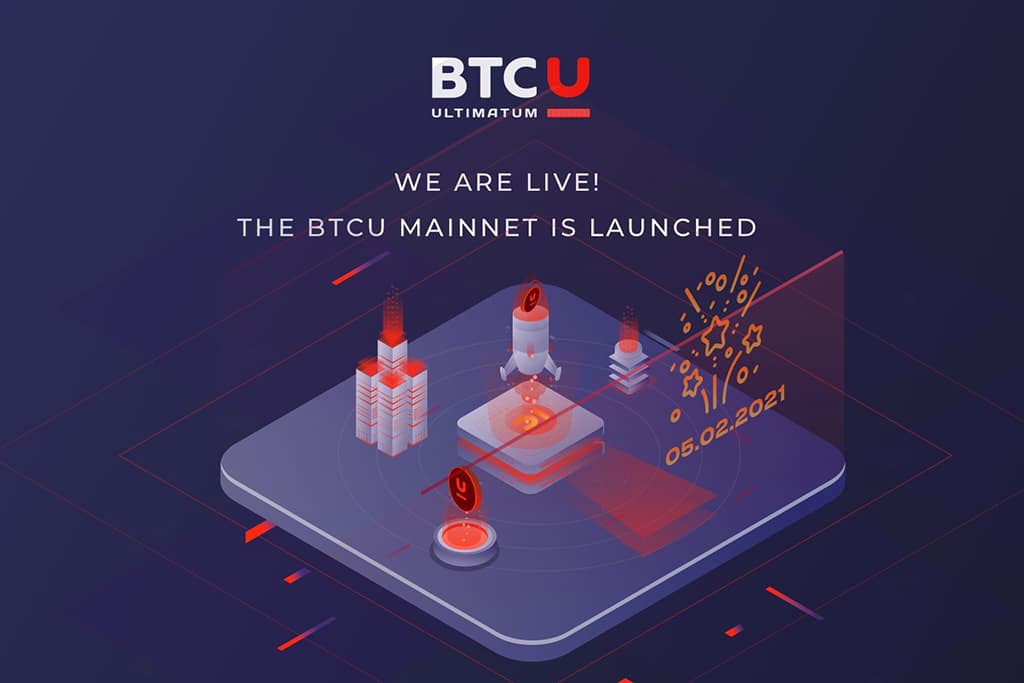
The Bitcoin Ultimatum mainnet launch took place on February 5th, 2021. BTCU blockchain is the hybrid of Bitcoin and Ethereum, the two giant cryptos with huge capitalization and lots of fans, and it takes the best from their infrastructure. The new BTC fork initially is mined by staking and allows launching smart contracts, and its security and transaction speed is ensured by an innovative consensus algorithm which BTCU named UPoS (Ultimatum PoS).
The protocol of Bitcoin Ultimatum will be able to fully function only after the 1st level crypto trading platforms will endorse the fork. BTCU is pursuing Binance, Huobi, Okex, and KuCoin to recognize the project as a full-fledged fork of BTC at the time. Several platforms already support BTCU, including LocalTrade, Liquid, Probit, Bkex, Biki, P2Pb2b, Bitforex, Coinsbit, Alterdice, LBank, Folgory, BiOne, and Yobit.
The BTCU network wallets are currently run in test mode on the Orion platform to check how all the system components work. Leasing, fees, masternodes, and validators will be checked during testing for bugs and errors to make the blockchain work like clockwork at startup.
The Airdrop of BTCU implies crediting newly issued coins in a 1:1 ratio to the wallets of BTC users at the moment of the fork, and the team will send the coins to those wallets which platforms say they support the BTCU fork. This is necessary for people not to lose new coins.
“BTCU is a universal tool for many areas of customers” daily lives,” – says Bitcoin Ultimatum CEO Eric Ma. “It allows users to tokenize assets, rights management, build a supply chain and document flow, and make international payments. It can also be used in areas such as real estate, financial technology, healthcare, and many others. We want to give the blockchain enthusiasts the most modern technology for earning money and starting business.”
The inspiration for BTCU became the ETH inventor Vitalik Buterin‘s speech during the Hong Kong crypto conference. Its organizer, Nikolai Udianskiy, who had 7+ years of experience in crypto projects development, decided to design an extraordinary blockchain and brought together the BTCU team. Nikolay became the co-founder of BTCU, and Bohdan Prilepa, who also had more than 7 years of experience in IT and web development, became its COO. The BTCU CEO Eric Ma was one of the key employees of Coinmarketcap, and the two Bitcoin Ultimatum advisors became Dinis Guarda and Juliet Su who are both well-known personalities in the crypto world.
Disclaimer: Coinspeaker is committed to providing unbiased and transparent reporting. This article aims to deliver accurate and timely information but should not be taken as financial or investment advice. Since market conditions can change rapidly, we encourage you to verify information on your own and consult with a professional before making any decisions based on this content.
I’m a content writer and editor with extensive experience creating high-quality content across a range of industries. Currently, I serve as the Editor-in-Chief at Coinspeaker, where I lead content strategy, oversee editorial workflows, and ensure that every piece meets the highest standards. In this role, I collaborate closely with writers, researchers, and industry experts to deliver content that not only informs and educates but also sparks meaningful discussion around innovation.
Much of my work focuses on blockchain, cryptocurrencies, artificial intelligence, and software development, where I bring together editorial expertise, subject knowledge, and leadership experience to shape meaningful conversations about technology and its real-world impact. I’m particularly passionate about exploring how emerging technologies intersect with business, society, and everyday life. Whether I’m writing about decentralized finance, AI applications, or the latest in software development, my goal is always to make complex subjects accessible, relevant, and valuable to readers.
My academic background has played an important role in shaping my approach to content. I studied Intercultural Communications, PR, and Translation at Minsk State Linguistic University, and later pursued a Master’s degree in Economics and Management at the Belarusian State Economic University. The combination of linguistic, communication, and business training has given me the ability to translate complex technical and economic concepts into clear, engaging narratives for diverse audiences.
Over the years, my articles have been featured on a variety of platforms. In addition to contributing to company blogs—primarily for software development agencies—my work has appeared in well-regarded outlets such as SwissCognitive, HackerNoon, Tech Company News, and SmallBizClub, among others.