Treasury Secretary Invokes Satoshi as CLARITY Act Faces Senate Collapse
Scott Bessent cited Satoshi Nakamoto to pressure Senate Democrats blocking the CLARITY Act, as the August recess threatens to stall crypto regulation until 2027.
Treasury Secretary Scott Bessent publicly attacked Senate Democrats on July 30 for blocking a floor vote on the CLARITY Act, the House-passed digital asset market-structure bill that has spent more than a year awaiting Senate action, accusing them of political cowardice in the face of pressure from Senator Elizabeth Warren and what Bessent described as her self-described “anti-crypto army,” and closing his argument by invoking Satoshi Nakamoto’s most-quoted dismissal from early Bitcoin forum history.
More than a year ago, the House passed the Clarity Act.
There’s been progress since — thousands of hours of bipartisan negotiations took place at the staff and Member levels. The Senate Committees on Banking and Agriculture advanced their respective titles. And Senate…
— Treasury Secretary Scott Bessent (@SecScottBessent) July 30, 2026
This is not simply an administration lobbying push ahead of the August recess. It is a coordinated executive-branch escalation, Treasury and the SEC moving in parallel – designed to force a binary public choice on Democratic senators before the calendar closes the window entirely.
CLARITY Act Legislative Status: One Year Passed, No Senate Vote
The CLARITY Act passed the House in 2025 with a 294–134 vote and has since accumulated Calendar No. 423 status in the Senate, where the Banking Committee cleared a revised version in May 2026, and a merged draft incorporating Agriculture Committee revisions landed around July 13.
Despite thousands of staff hours on bipartisan negotiation, Bessent’s characterization, via his July 30 post on X – Senate Majority Leader John Thune has said he does not expect the bill to clear the chamber before the August recess, citing unresolved ethics provisions that would restrict senior federal officials from engaging in personal crypto business activity while in office.
JUST IN: 🇺🇸 JPMorgan says failure to pass the Clarity Act will hurt crypto markets.
"The longer the approval of the Clarity Act is postponed, the greater the threat to crypto markets."
Republicans hold 52–53 seats but need 60 votes to clear the filibuster threshold, making 7–8 Democratic crossover votes essential. Two Banking Committee Democrats backed the bill in May but have conditioned final floor votes on stronger ethics enforcement language, specifically, the scope of who can bring enforcement actions and whether restrictions extend to officials’ children.
As of July 31, prediction markets tracked by CoinMarketCap placed the probability of Senate passage before the August recess at roughly 26.5%.
Bessent’s Attack and the Satoshi Deployment
Bessent’s X post framed the Democratic holdout as a structural failure of political will rather than a substantive legislative dispute. He stated that Senate Democrats are afraid to advance the bill because they fear Warren and the “anti-crypto army” she once promised to build.
He also challenged Majority Leader Thune directly, questioning whether lawmakers would support American innovation or allow other nations to capture digital asset market leadership by default.
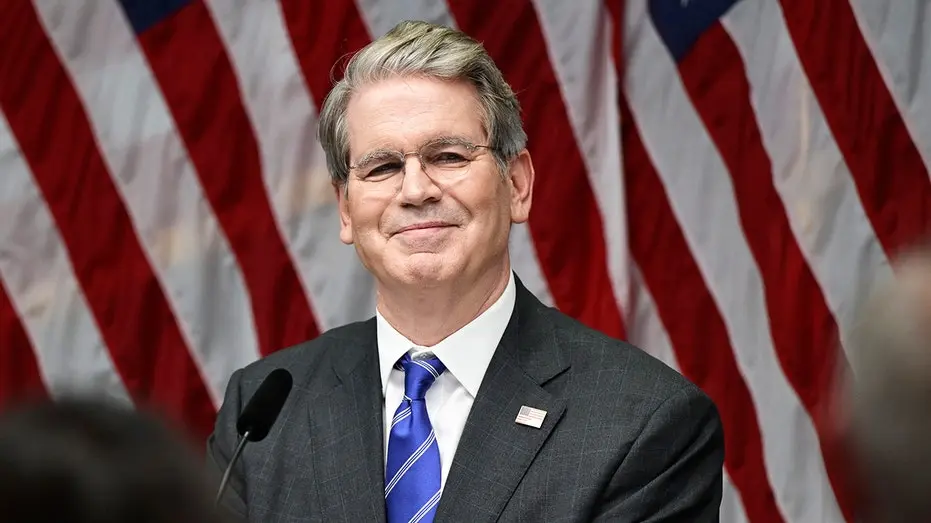
Scott Bessent, nominee for U.S. Treasury Secretary.
On the bill’s substance, Bessent pushed back on Democratic claims that the CLARITY Act lacks consumer protections, arguing that Titles II and III would significantly expand compliance requirements for digital asset intermediaries and bring them closer to the standards applied to traditional financial institutions. He also defended the Blockchain Regulatory Certainty Act provision – embedded within CLARITY – which protects decentralized software developers from Bank Secrecy Act registration requirements, characterizing it as a codification of longstanding Treasury policy rather than a new carve-out. He noted that the Fraternal Order of Police, which previously opposed the measure, now supports it.
Bessent closed the post by paraphrasing Bitcoin creator Satoshi Nakamoto’s line from early forum exchanges: that if someone does not believe or does not understand, there is simply no time left to try to convince them. The invocation – a sitting Treasury Secretary deploying crypto’s founding mythology as a rhetorical close – drew immediate attention across market and policy circles as a deliberate cultural signal rather than an accidental one.
Disclaimer: Coinspeaker is committed to providing unbiased and transparent reporting. This article aims to deliver accurate and timely information but should not be taken as financial or investment advice. Since market conditions can change rapidly, we encourage you to verify information on your own and consult with a professional before making any decisions based on this content.
Neil is a professional cryptocurrency content writer with years of experience. He has written for various cryptocurrency websites to report on breaking news, and been hired by all sorts of cryptocurrency projects, to create content that would increase their exposure and attract more potential investors.