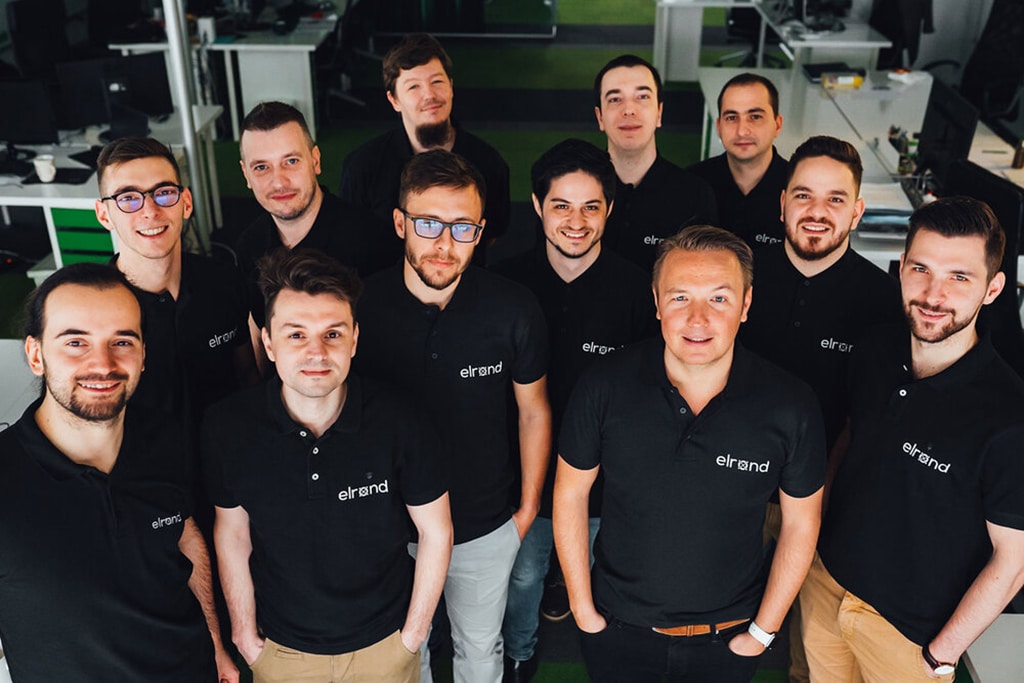
Elrond’s mainnet has launched in a blaze of glory and wave of publicity. The DPoS chain, whose high throughput is achieved by sharding, will compete with smart contract networks such as Ethereum, and has significant community support behind it. Crucially, it’s also got the first signs of development, having launched its first app on day one which, in keeping with the defining theme of 2020, is all about defi.
Maiar will provide lending, staking, payments, and fiat capability, packed into a consumer-friendly app that showcases Elrond’s capabilities. It will support native Elrond assets, including ERD, whose tokenomics have been refreshed in time for the mainnet launch. A significant reduction in the release curve for ERD will see no new coins issued after year 10 and an 11% reduction in output in year one. Elrond’s native asset has enjoyed strong demand in the run-up to its mainnet launch and is up 400% over the past month.
Elrond Dials Up the Stock to Flow for ERD
Stock to flow (S2F) is commonly used to model the impact that new production of commodities will have on the price of the current supply. Although designed for gold and oil, it can also be applied to cryptocurrencies. Divide the total assets in circulation by the annual issuance and you get the number of years it would take to replenish the current supply. For gold, that figure stands at 62 years; for ERD, a stock to flow of 275 has been estimated by year five.
Elrond’s decision to adjust its token model was motivated by a desire to increase the relative scarcity of the token, encouraging the community to view it more like digital gold – or at the very least to slow its velocity and incentivize hodling. Instead of issuing another 20 billion ERD as originally scheduled, just 20 million tokens will now be issued in the future.
According to Elrond founder and CEO Beniamin Mincu, the adjustment to the emission schedule was motivated in part by reflection on global events, which have seen unprecedented amounts of central bank money printing, prompting a flight to hard assets like bitcoin and gold. “A large population of the world is unbanked, without access to the existing financial infrastructure, and so their opportunities to participate in wealth creation are extremely limited,” Mincu explains.
He adds: “What’s more, this skewed distribution means that incentives and risks can remain hidden until they blow up, creating a problem for everyone. We saw evidence of this during the 2008 financial crisis and we’re seeing it again these days.”
40,000 on Maiar Waitlist
40,000 users have signed up to use Elrond’s debut app, Maiar. The mobile app looks set to become the main jumping off point for people seeking entry to Elrond’s ecosystem from the fiat world; more than 150 fiat currencies are supported by the app, whose features include a multisig option allowing users to nominate friends as “guardians” to secure their wallet and provide access should they get locked out. Funds can be sent to other app users and to contacts at the touch of a button using Maiar.
Another innovative feature that comes bundled with Maiar is the ability for users to set progressive security tiers based on the value of the funds they’ve custodied. This enables experienced users with a lot invested in the Elrond economy to have rigorous account protection, while providing more user-friendly options for newcomers with smaller holdings, lowering the barriers to entry.
Elrond Claims the Title of Newest Blockchain in Town
Elrond is officially the newest blockchain in the industry, even though other blockchains may stake a claim to the contrary. Cardano has just completed its upgrade to Shelly, which entailed a hard fork, so is not strictly a mainnet launch, since the network was already operational. Likewise with the forthcoming ETH 2.0, which will be an upgrade – albeit a major one – rather than a new network. With TRON having recently upgraded its network and NEO planning to follow suit in Q4, Elrond will have company soon, even if its revitalized rivals won’t be able to match its high throughput achieved through adaptive state sharding.
Disclaimer: Coinspeaker is committed to providing unbiased and transparent reporting. This article aims to deliver accurate and timely information but should not be taken as financial or investment advice. Since market conditions can change rapidly, we encourage you to verify information on your own and consult with a professional before making any decisions based on this content.
I’m a content writer and editor with extensive experience creating high-quality content across a range of industries. Currently, I serve as the Editor-in-Chief at Coinspeaker, where I lead content strategy, oversee editorial workflows, and ensure that every piece meets the highest standards. In this role, I collaborate closely with writers, researchers, and industry experts to deliver content that not only informs and educates but also sparks meaningful discussion around innovation.
Much of my work focuses on blockchain, cryptocurrencies, artificial intelligence, and software development, where I bring together editorial expertise, subject knowledge, and leadership experience to shape meaningful conversations about technology and its real-world impact. I’m particularly passionate about exploring how emerging technologies intersect with business, society, and everyday life. Whether I’m writing about decentralized finance, AI applications, or the latest in software development, my goal is always to make complex subjects accessible, relevant, and valuable to readers.
My academic background has played an important role in shaping my approach to content. I studied Intercultural Communications, PR, and Translation at Minsk State Linguistic University, and later pursued a Master’s degree in Economics and Management at the Belarusian State Economic University. The combination of linguistic, communication, and business training has given me the ability to translate complex technical and economic concepts into clear, engaging narratives for diverse audiences.
Over the years, my articles have been featured on a variety of platforms. In addition to contributing to company blogs—primarily for software development agencies—my work has appeared in well-regarded outlets such as SwissCognitive, HackerNoon, Tech Company News, and SmallBizClub, among others.