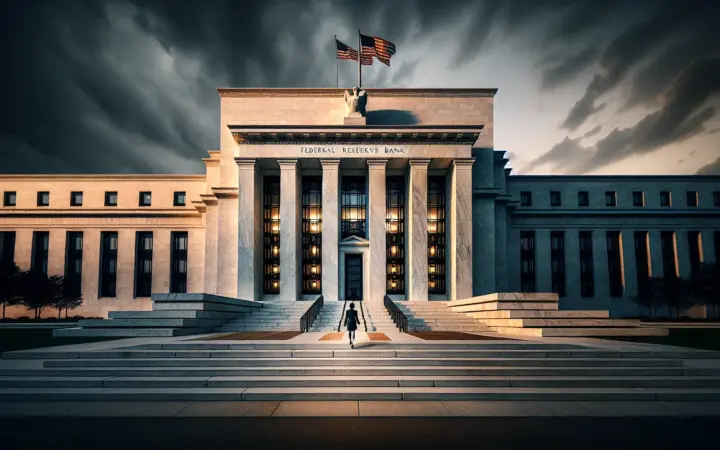
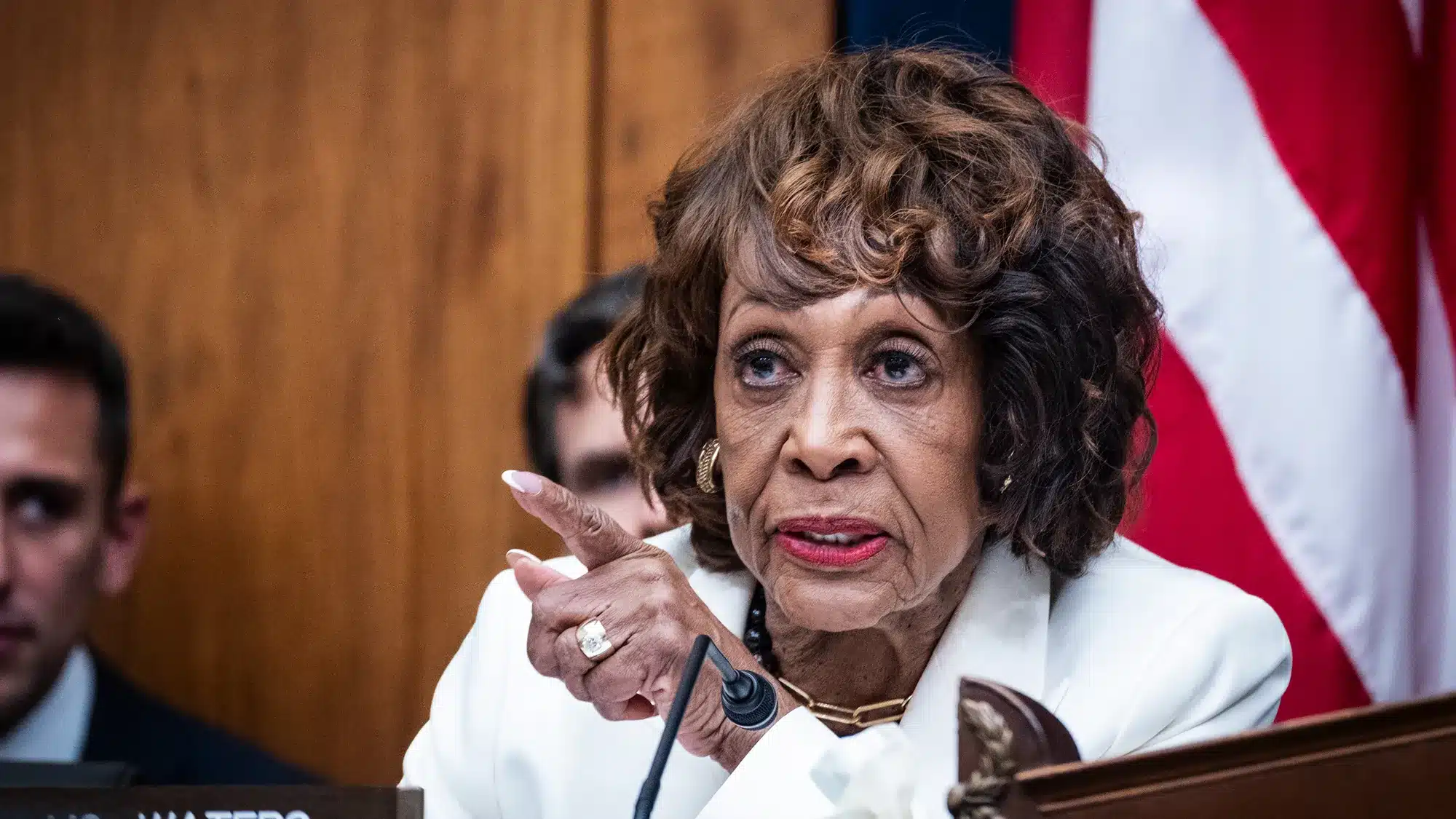
U.S. Representative Maxine Waters (D-CA), the ranking Democrat on the House Financial Services Committee, has formally demanded that the Federal Reserve Bank of Kansas City explain its legal basis for approving a Federal Reserve master account for Payward Financial, the entity doing business as Kraken Financial, marking the first time a crypto exchange has secured direct access to the Fed’s core payment infrastructure.
In a letter transmitted Thursday to Kansas City Fed President Jeff Schmid, Waters requested a written response by April 10, citing transparency deficiencies and the absence of any statutory or regulatory basis for the regional bank’s account classification. The approval, which the Kansas City Fed confirmed on March 4, 2026, was structured as a “limited purpose account” — a designation that appears in neither the Federal Reserve Act nor the Federal Reserve Board’s Account Access Guidelines.
We suspect the Waters inquiry signals something larger than a single account approval: it reflects Democratic lawmakers’ determination to assert congressional oversight over a regulatory posture that has visibly shifted toward accommodation since the change in administration. Crypto-native banks and exchange operators with pending master account applications would be mistaken to treat this as routine oversight noise.
A Federal Reserve master account grants its holder direct access to the Fed’s payment rails, principally Fedwire Funds Service for high-value real-time gross settlement and FedACH for batch retail transfers, without routing through an intermediary correspondent bank.
For a crypto exchange like Kraken, that operational shift is material: it eliminates the counterparty dependency on traditional banking intermediaries, accelerates settlement finality, and reduces the structural vulnerability that has made crypto firms targets of debanking pressure over the past several years.
Kraken Financial holds a Wyoming Special Purpose Depository Institution (SPDI) charter, operates on a full-reserve model with no lending activity, and is not covered by the Federal Deposit Insurance Corporation (FDIC).
The Kansas City Fed, which is the relevant district bank for Wyoming-chartered institutions, approved what it designated a “limited purpose account” — a category that restricts certain privileges, including interest on excess reserves, but grants access to Fedwire settlement. Kraken Co-CEO Arjun Sethi publicly described the arrangement as the “convergence of crypto infrastructure and sovereign financial rails.”
Maxine Waters
Waters’ letter to Schmid identifies the core procedural problem precisely: no provision of the Federal Reserve Act and no section of the Fed Board’s Account Access Guidelines published in 2022 references a “limited purpose account” as a distinct account tier.
She asked Schmid to clarify whether Kraken’s account includes FedACH, Fedwire, or cash services access; whether it is subject to overdraft restrictions, balance caps, or enhanced supervisory conditions; and whether the Kansas City Fed coordinated the approval with the Federal Reserve Board of Governors or other federal agencies.
Waters also noted the Kansas City Fed’s stated refusal to disclose account-holder details, citing the “confidentiality of business information provided by applicants”, a position she characterized as inconsistent with public accountability for access to sovereign financial infrastructure.
Fed Master Accounts and Crypto Banks: The Legal Battleground
The legal history here is not abstract. Custodia Bank, also a Wyoming SPDI, spent years litigating against the Federal Reserve Board of Governors and the Federal Reserve Bank of Kansas City after both denied its master account application and Federal Reserve membership.
A federal district court ultimately ruled against Custodia in 2024, finding that the Kansas City Fed retained discretion under the Federal Reserve Act — specifically under 12 U.S.C. § 342 — to deny account access to state-chartered non-member banks. That ruling, and the Fed Board’s 2022 supervisory guidance establishing a tiered review framework for novel bank applications, created a legal architecture that appeared to foreclose direct Fed access for crypto-native depositories classified in the highest-risk tier.
A historic moment for crypto.
Kraken Financial has been granted a Federal Reserve master account, making us the first digital asset bank with direct access to the U.S. payments system.
A major step toward connecting crypto infrastructure with the core rails of global finance.…
Kraken’s approval arrived through a different procedural channel. Rather than seeking full master account membership, Payward Financial obtained a circumscribed account structured as a one-year pilot, confirmed as such by Federal Reserve Vice Chair for Supervision Michelle Bowman at an American Bankers Association conference one week after approval.
Bowman described the account as a test for nonbanks occupying a “grey area” between regulated depositories and firms with no supervisory relationship, stating explicitly: “We’re trying to learn.” That framing is notable because it positions the approval not as a policy determination but as a supervised experiment, which may limit its precedential value for other applicants while simultaneously shielding it from the kind of finality challenge that doomed Custodia’s application.
The Bank Policy Institute’s Co-Head of Regulatory Affairs, Paige Pidano Paridon, articulated the institutional banking sector’s concern directly: “We are deeply concerned… This action ignores public comment… with no transparency into the process for approval or the risk mitigants.” That reaction matters because it aligns the traditional banking lobby with Waters’ transparency argument, creating a cross-ideological pressure coalition that the Kansas City Fed will find difficult to dismiss as partisan. We anticipate that the Fed Board’s pending “skinny” master account framework — intended to limit capital regime benefits for crypto firms while permitting narrow payment access — will become the focal document in any formal response to Waters’ inquiry.
Disclaimer: Coinspeaker is committed to providing unbiased and transparent reporting. This article aims to deliver accurate and timely information but should not be taken as financial or investment advice. Since market conditions can change rapidly, we encourage you to verify information on your own and consult with a professional before making any decisions based on this content.
Neil is a professional cryptocurrency content writer with years of experience. He has written for various cryptocurrency websites to report on breaking news, and been hired by all sorts of cryptocurrency projects, to create content that would increase their exposure and attract more potential investors.