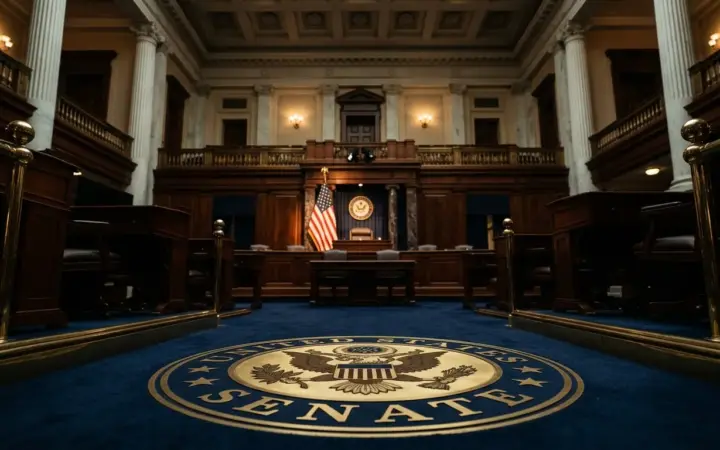
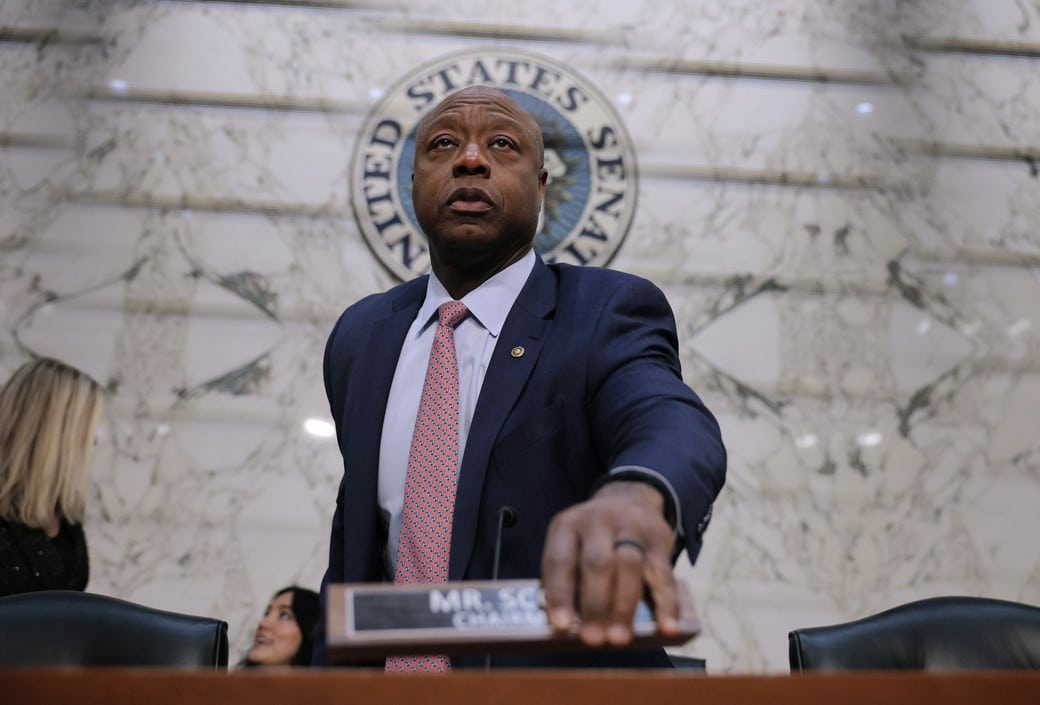
Senate Banking Committee Chairman Tim Scott declared in a Fox Business News interview on Thursday that the Digital Asset Market Clarity Act, the bipartisan legislation designed to establish statutory regulatory boundaries for digital assets in the United States – is “in the red zone” and approaching a committee markup expected in May 2026, signaling that years of jurisdictional negotiation between the SEC and CFTC may be nearing a legislative resolution contingent on unified Republican support within the Senate Banking Committee.
This is not simply a routine scheduling update. It is the clearest indication yet that the extended stalemate over U.S. crypto legislation, marked by the Senate Banking Committee’s postponed January 15, 2026, markup and months of unresolved turf disputes between federal regulators, is entering a decisively different phase, one in which procedural momentum is replacing protracted deliberation.
CLARITY Act News and Senate Banking Committee: Legislative History and the Path to Markup
The Clarity Act passed the House on a 294-134 vote, a margin that signaled substantial bipartisan appetite for establishing a coherent federal framework governing digital asset classification and agency oversight. The bill builds structurally on the stablecoin regulatory debate already advanced through the GENIUS Act, formally the Stablecoins Act of 2025, by addressing the broader market structure questions that payment-specific legislation deliberately left unresolved.
Progress stalled after the Senate Banking Committee postponed its scheduled markup in January 2026, with jurisdictional friction between the SEC and CFTC remaining the primary legislative obstacle. Scott’s Thursday remarks represent the first affirmative timeline commitment from the committee’s Republican leadership since that postponement, and they carry particular weight given his role as the committee’s presiding chair.
Scott emphasized that securing full Republican committee alignment is the precondition for advancing to markup, framing unified GOP support as the mechanism that would enable a smoother bipartisan process rather than a partisan forcing maneuver. We suspect this sequencing reflects a deliberate strategy: consolidating the Republican bloc first removes the procedural risk of a fractured majority and strengthens Scott’s hand in any subsequent negotiation with Democratic members over amendments and agency scope.
Stablecoin regulation, though addressed in part through the GENIUS Act, remains intertwined with the Clarity Act’s market structure provisions. The Clarity Act creates a third category – “permitted payment stablecoins” covering instruments such as USDC and PYUSD – that sits alongside its classifications for digital commodities and investment contract assets, meaning that stablecoin issuers operating under any eventual GENIUS Act framework will also be subject to the market structure rules the Clarity Act establishes.
Disclaimer: Coinspeaker is committed to providing unbiased and transparent reporting. This article aims to deliver accurate and timely information but should not be taken as financial or investment advice. Since market conditions can change rapidly, we encourage you to verify information on your own and consult with a professional before making any decisions based on this content.
Daniel Frances is a technical writer and Web3 educator specializing in macroeconomics and DeFi mechanics. A crypto native since 2017, Daniel leverages his background in on-chain analytics to author evidence-based reports and deep-dive guides. He holds certifications from The Blockchain Council, and is dedicated to providing "information gain" that cuts through market hype to find real-world blockchain utility.