Vitalik Buterin: If the Price is Zero, Then the Network Can’t Be Secure
In his recent interview, Vitalik Buterin explained why Ethereum price is important for the crypto industry and answered to many other questions.
By Julia Sakovich
Updated
3 mins readPhoto: TechCrunch / Flickr
In his recent live-stream interview with Laura Shin for the crypto journalist’s Unchained podcast, Ethereum co-founder VitalikButerin has shared his views on the current situation on the crypto markets and answeres a number of other crypto-related questions including the value of Ethereum (ETH), industry’s regulation, future of ICOs and the work of Satoshi Nakamoto.
Ethreum Price: What’s Going on
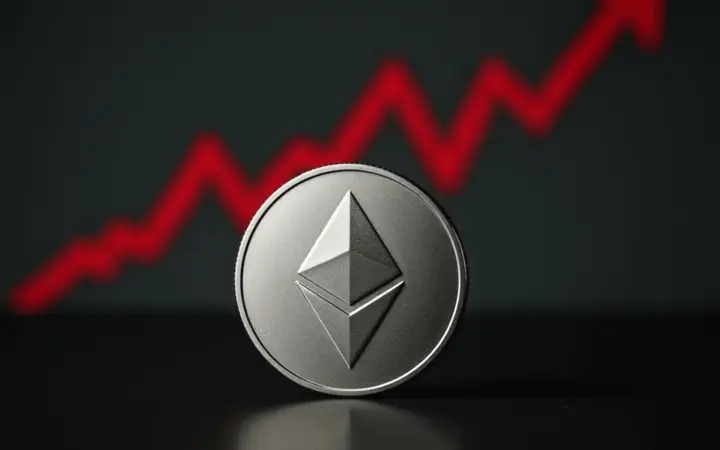
It’s not a surprise the Buterin was asked about his stance towards the current ETH price. In his opinion, the Ethereum price has a strong influence on the entire market. He explained his position the following way:
“In part, it was counter-signaling to distinguish [Ethereum] from other crypto projects that do pumping and lambo-ing way too much. But also it was about minimizing the legal risk by basically trying to make the project seem more distant from something that would be covered by financial regulation.”
Now regulators as well as businesses and developers have started to realize the nature of cryptocurrencies and the fact that digital assets have their value. What’s more important, now they understand that blockchain applications can bring significant benefits to people’s lives.
Buterin insists that despite the fact that many people try to claim that prices do not matter at all, it is absolutely not so. Prices play a crucial role in the network’s growth.
“I can tell you what things are clearly important about why the price being higher rather than lower is good. One of them is obviously security. If the price is zero, then the network can’t be secure. That’s true in proof-of-work and proof-of-stake,” explained Vitalik.
Moreover, many Ethereum-based projects hold a significant part of their funds in crypto. That’s also one of the reason why prices matter. If the price increases, it means that they are more funded.
ICOs Still Have Future
Buterin agreed that success of Ethereum greatly depended on the fact that the network was used as a launchpad for a large number of ICOs. Nevertheless, he highlighted that even without Ethereum ICOs would have taken place and developed.
The only bad thing about ICOs, according to Buterin, is scam. A lot of projects turned out to be scammy and weak which was rather negative for the reputation of other ICOs.
What Satoshi Should Have Done
“Satoshi had a really hard job and could not have predicted which way the ecosystem would have went, [that it] would have turned into something more than a science experiment, ” said Buterin when asked about his potential recommendations to Satoshi that he would made if he could go back into the past.
He also joked that he would advise the Bitcoin creator to build Ethreum 2.0 following the link on GitHub. And it’s not the first time when he tried to show the dominace of ETH. Now so long ago he compared ETH with a smartphone while BTC was named just a calculator.
I’m a content writer and editor with extensive experience creating high-quality content across a range of industries. Currently, I serve as the Editor-in-Chief at Coinspeaker, where I lead content strategy, oversee editorial workflows, and ensure that every piece meets the highest standards. In this role, I collaborate closely with writers, researchers, and industry experts to deliver content that not only informs and educates but also sparks meaningful discussion around innovation.
Much of my work focuses on blockchain, cryptocurrencies, artificial intelligence, and software development, where I bring together editorial expertise, subject knowledge, and leadership experience to shape meaningful conversations about technology and its real-world impact. I’m particularly passionate about exploring how emerging technologies intersect with business, society, and everyday life. Whether I’m writing about decentralized finance, AI applications, or the latest in software development, my goal is always to make complex subjects accessible, relevant, and valuable to readers.
My academic background has played an important role in shaping my approach to content. I studied Intercultural Communications, PR, and Translation at Minsk State Linguistic University, and later pursued a Master’s degree in Economics and Management at the Belarusian State Economic University. The combination of linguistic, communication, and business training has given me the ability to translate complex technical and economic concepts into clear, engaging narratives for diverse audiences.
Over the years, my articles have been featured on a variety of platforms. In addition to contributing to company blogs—primarily for software development agencies—my work has appeared in well-regarded outlets such as SwissCognitive, HackerNoon, Tech Company News, and SmallBizClub, among others.