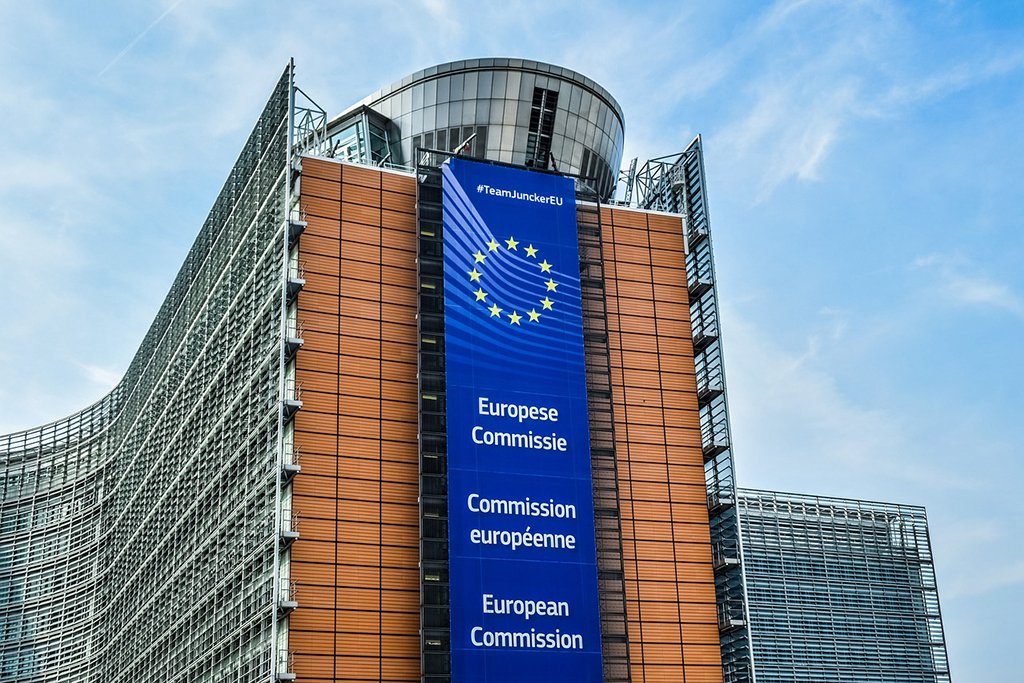
Despite all the negative trends on the cryptocurrency market, the European Commission is rather positive about its future. This executive body that is in charge of proposing legislation for the entire European Union is planning to focus its work on the development of crypto asset classification and regulatory mapping.
This year, the European Commission has been working on analysis of the cryptocurrencies market and evaluation of its perspectives and potential ways of development. Based on the obtained results of their studies, experts have come to the conclusion that cryptos are here to stay for a long period of time despite recent turbulence.
In his speech at a press conference that took place after a meeting of the Economic and Financial Affairs Council last Friday, the vice president of the European Commission, Valdis Dombrovskis, stated that a lot of members of the commission express their willingness to support cryptos and to start working on the development of regulation.
In other worlds, according to the high official, the majority of the E.U. states want to enhance the conditions for the market’s growth. To achieve this aim, according to the commissioner, it is really necessary to focus on the challenge that is considered to be a priority one – to find a way to categorize and classify crypto assets.
The commission will also examine whether it is possible to apply the E.U. financial regulation that already exists to the crypto markets or it is necessary to develop new rules for the industry.
Speaking on the issue and commenting the results of their work, Dombrovskis said:
“In this context, we are currently working together with European Supervisory Authorities on what we call regulatory mapping of crypto assets to answer exactly these questions. This will provide a solid ground to build on and to decide on further steps in this area.”
It is important to mention that, according to the vice president of the commission, the Initial Coin Offerings are considered to be an alternative form of financing. Last year, thanks to ICOs, businesses managed to raise more than $6 billion USD. Moreover, the amount of the raised funds as well as the number of companies that may benefit from ICOs will growth if this way of getting investment is legitimized.
It was not the first situation when the vice president of the commission expressed his positive attitude to crypto technologies. Earlier, he had already stated that ICOs represent themselves a cutting-edge and innovative way of raising money. According to him, the regulators should pay their attention to it and explore it on a case by case basis.
Dombrovskis also spoke about some challenges that the industry may face with. Among the problems, he named lack of transparency, risk of fraud and hacking as well as a necessity to offer effective tools that will help to deal with money laundering.
According to the commissioner, to get over these issues it is important to keep monitoring the dynamics of the industry and to establish collaboration with such organizations as the Financial Stability Board and G20.
I’m a content writer and editor with extensive experience creating high-quality content across a range of industries. Currently, I serve as the Editor-in-Chief at Coinspeaker, where I lead content strategy, oversee editorial workflows, and ensure that every piece meets the highest standards. In this role, I collaborate closely with writers, researchers, and industry experts to deliver content that not only informs and educates but also sparks meaningful discussion around innovation.
Much of my work focuses on blockchain, cryptocurrencies, artificial intelligence, and software development, where I bring together editorial expertise, subject knowledge, and leadership experience to shape meaningful conversations about technology and its real-world impact. I’m particularly passionate about exploring how emerging technologies intersect with business, society, and everyday life. Whether I’m writing about decentralized finance, AI applications, or the latest in software development, my goal is always to make complex subjects accessible, relevant, and valuable to readers.
My academic background has played an important role in shaping my approach to content. I studied Intercultural Communications, PR, and Translation at Minsk State Linguistic University, and later pursued a Master’s degree in Economics and Management at the Belarusian State Economic University. The combination of linguistic, communication, and business training has given me the ability to translate complex technical and economic concepts into clear, engaging narratives for diverse audiences.
Over the years, my articles have been featured on a variety of platforms. In addition to contributing to company blogs—primarily for software development agencies—my work has appeared in well-regarded outlets such as SwissCognitive, HackerNoon, Tech Company News, and SmallBizClub, among others.