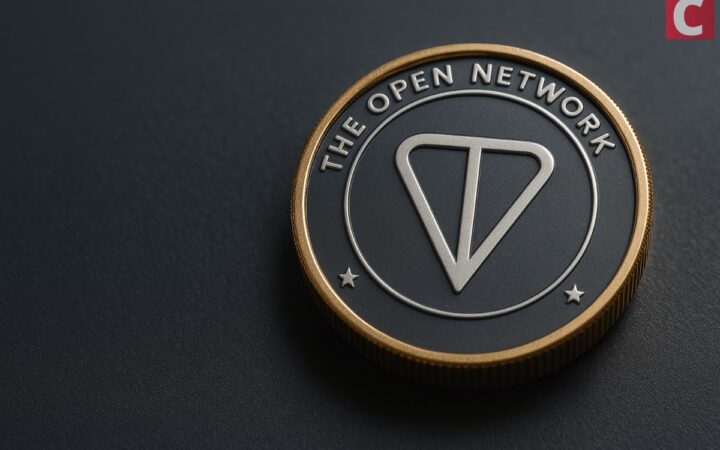
The popular secure messaging app Telegram has announced canceling its initial coin offering. The results of the company’s presale round have surpassed the company’s initial targets of $1.2 billion. Though Telegram managed to raise $1.7 billion during its Pre-ICO, the company took a decision not to make their tokens available for public sale.
The cancellation of ICO is disappointing for a number of public investors who wanted not to miss their chance to join the platform and use one of the greatest crypto investment opportunities in the history.
In the beginning of the year, Telegram revealed its plans launch an ICO with a view to raise funds for developing its Telegram Open Network (TON). Telegram claimed its new network to be a “third-generation” blockchain that uses its native tokens called Gram. Moreover, TON should become an entire ecosystem the size of which should exceed the size of Ethereum. Telegram intended to enable people to create their own decentralized apps on TON platform.
Some sources familiar with the matter believe that cancellation of the planned ICO can be a result of increasingly strict regulations that are proposed by such entities as the Securities and Exchange Commission, Commodity Futures Trading Commission, and others since the company initially began examining a possibility to launch its ICO. The regulatory environment has been seriously changed since January.
In February Jay Clayton, chairman of the Securities and Exchange Commission, noted that “many ICOs are being conducted illegally”, as “their promoters and other participants are not following the security laws”. In March dozens of companies working in the crypto sphere received subpoenas from the Commission. In a row of those companies there were also IT organizations launching ICOs.
Among other factors leading to the ICO cancellation can be just a simple explanation that Telegram has already raised enough money during its private sales, so, there is no need to attract funds via ICO.
In the first Telegram’s presale that took place in February, 81 investors brought to the company $850 million and in March another $850 million were received from 94 investors. In total, Telegram attracted $1.7 billion from fewer than 200 investors.
All these investments are expected to be allocated for development of TON project. The network is said to be created with a public ledger that according to Telegram could be used as an alternative to Mastercard or Visa.
Another interesting fact that also is worth to be mentioned is that in March when it was believed that Telegram would carry out its plans to launch its ICO, experts were actively making predictions about the future of Gram coin. It was predicted that Gram would need only 5 years to reach a $200 billion market cap. Nevertheless, some other specialists insisted that Telegram’s ICO was extremely overvalued and criticized the company for its desire to give an opportunity to purchase Gram only to accredited investors with at least a half a million dollars.
I’m a content writer and editor with extensive experience creating high-quality content across a range of industries. Currently, I serve as the Editor-in-Chief at Coinspeaker, where I lead content strategy, oversee editorial workflows, and ensure that every piece meets the highest standards. In this role, I collaborate closely with writers, researchers, and industry experts to deliver content that not only informs and educates but also sparks meaningful discussion around innovation.
Much of my work focuses on blockchain, cryptocurrencies, artificial intelligence, and software development, where I bring together editorial expertise, subject knowledge, and leadership experience to shape meaningful conversations about technology and its real-world impact. I’m particularly passionate about exploring how emerging technologies intersect with business, society, and everyday life. Whether I’m writing about decentralized finance, AI applications, or the latest in software development, my goal is always to make complex subjects accessible, relevant, and valuable to readers.
My academic background has played an important role in shaping my approach to content. I studied Intercultural Communications, PR, and Translation at Minsk State Linguistic University, and later pursued a Master’s degree in Economics and Management at the Belarusian State Economic University. The combination of linguistic, communication, and business training has given me the ability to translate complex technical and economic concepts into clear, engaging narratives for diverse audiences.
Over the years, my articles have been featured on a variety of platforms. In addition to contributing to company blogs—primarily for software development agencies—my work has appeared in well-regarded outlets such as SwissCognitive, HackerNoon, Tech Company News, and SmallBizClub, among others.