About
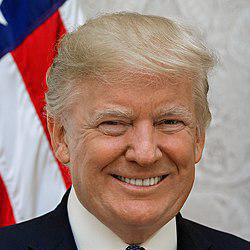
Donald J. Trump, the 45th and 47th President of the United States, has left a distinct and controversial imprint on the world of cryptocurrency. He blends public policy, personal wealth creation, and the rapid expansion of crypto markets into the mainstream of American political economy.
In his second presidential term, beginning in January 2025, Trump’s engagement with digital assets transcended typical regulatory oversight to become a defining feature of his administration’s economic strategy and, controversially, his family’s business empire.
From Skepticism to Crypto Champion
During his first term in office (2017–2021), Trump’s public statements about [NC] and digital assets were often dismissive. He referred to Bitcoin as a speculative asset and warned that it could facilitate unlawful behavior.
However, after returning to the White House in 2025, Trump dramatically reversed course. Recognizing the economic momentum and political capital in the burgeoning crypto sector, he embraced cryptocurrency policy reform and integrated digital assets into the U.S. economic agenda.
This seismic shift earned him the unofficial title of the first crypto-era president, a leader whose political and economic fate became deeply entangled with the trajectory of digital assets.
Policy and Regulatory Framework: Deregulation and Expansion
One of Trump’s earliest and most consequential actions on crypto came on January 23, 2025, when he signed Executive Order 14178, “Strengthening American Leadership in Digital Financial Technology.”
This executive order reversed earlier federal policy by revoking a Biden-era framework, prohibiting the promotion of a central bank digital currency (CBDC), and establishing a federal working group to propose a regulatory framework for digital assets.
Building a Pro-Crypto Regulatory Environment
Under Trump, the U.S. government took several steps that industry advocates heralded as blockchain-friendly:
- Regulatory deregulatory shifts: Federal agencies appointed officials with strong ties to the crypto industry and scaled back enforcement of specific crypto regulations. This partly reduced oversight burdens on digital asset firms.
- Bank participation in crypto markets: In December 2025, the U.S. Office of the Comptroller of the Currency (OCC) authorized banks to act as intermediaries in crypto transactions without holding assets on their balance sheets, enabling traditional banks to integrate crypto services.
- Crypto trust banks: Later in 2025, the OCC conditionally approved major crypto firms to establish national trust bank charters. The list included Ripple, Circle, BitGo, Paxos, and Fidelity Digital Assets.
These policy shifts reflect an administration committed to reducing institutional resistance to crypto innovation while positioning the United States as a global hub for digital finance.
The United States Strategic Crypto Reserve
Another high-profile initiative under Trump was the push for a U.S. strategic crypto reserve. It is envisioned as a kind of “Digital Fort Knox” for Bitcoin and other significant digital assets held by the government. Proposals floated not only the accumulation of seized cryptocurrencies but also the long-term strategic hosting of key tokens such as [NC], [NC], [NC], and [NC] to strengthen America’s digital financial infrastructure.
Supporters argued this could enhance U.S. leadership in digital finance. Critics questioned the price volatility and broader market implications.
Trump’s Crypto Projects and Family Ventures
While steering federal crypto policy, Trump and his family simultaneously built an expansive web of crypto ventures that attracted both enormous investment inflows and intense public scrutiny.
World Liberty Financial (WLFI)
Perhaps the most prominent of these ventures is World Liberty Financial. This blockchain and decentralized finance (DeFi) platform was co-founded in 2024 by members of the Trump family and associates. The Trump family is reported to control approximately 40 to 60% of World Liberty, which issues its own governance token ($WLFI) and a U.S. dollar–pegged stablecoin called USD1.
The WLFI ecosystem was designed to blend traditional financial assets with mechanisms from the crypto market. USD1, for example, is backed by U.S. government treasuries, dollar deposits, and cash equivalents. This model is intended to appeal to institutional and sovereign investors.
World Liberty’s token has been employed in high-profile transactions, including a reported $2 billion investment by an Abu Dhabi-linked fund into Binance. This move coincided with a pardon granted to Binance’s CEO.
World Liberty Financial and related Trump-linked entities have been active holders of major cryptocurrencies. For instance, the project has acquired large quantities of Ethereum, with purchases totaling millions of dollars.
These activities elevated World Liberty’s profile and the Trump family’s economic exposure to crypto market cycles.
Meme Coins: $TRUMP and $MELANIA
Donald Trump himself entered the fray as a crypto brand. He launched his own meme coin, $TRUMP, on the Solana blockchain in January 2025. Less than a day after its release, its total market value reportedly reached tens of billions of dollars, with Trump-associated entities holding the majority of the coined supply. By the end of 2025, the coin was down 95% from its all-time high of $75, trading at $5.45, according to CoinMarketCap.

$TRUMP meme coin price in 1 year | Source: coinmarketcap.com
Melania Trump, the First Lady, followed with her meme token $MELANIA, expanding the Trump “crypto brand” into personal digital assets. By the end of 2025, critics noticed that its price had collapsed below $0.1, making it practically worthless.
These meme coins exemplify the blending of political symbolism and digital speculation, a new frontier in “PoliFi,” or political finance tokens. Academic analyses have found that these tokens’ performance often correlated more strongly with presidential approval than broader market metrics.
American Bitcoin Mining and Nasdaq Presence
Parallel to token issuance, Trump’s sons, Eric Trump and Donald Trump Jr., backed a bitcoin mining and treasury enterprise called American Bitcoin. Founded in March 2025, the company operates mining facilities across North America and conducts both mining and accumulation strategies.
American Bitcoin went public via a Nasdaq listing. It is attracting investor attention with its commercial presence and securing substantial Bitcoin holdings: a dynamic illustration of how political capital and public markets intersect in the crypto era.
Financial Impact and Controversies
Reports suggest the Trump family’s involvement in crypto has generated significant revenue, with some estimates placing total crypto-related earnings over $1 billion in recent years.
However, the volatility of crypto markets has also inflicted losses on ventures tied to the Trump name. For example, shares of American Bitcoin declined sharply, and the prices of meme tokens like $TRUMP and $MELANIA tumbled from their highs.

American Bitcoin Corp. Shares | Source: Google Finance
Criticism and Ethical Concerns
Trump’s crypto policy and business entanglements have drawn intense criticism from ethics watchdogs, lawmakers, and analysts.
- Conflicts of interest: Opponents argue that Trump’s dual role as an industry regulator and a beneficiary of crypto profits presents unprecedented conflicts. It blurs the line between public service and private gain.
- Regulatory dilution: Critics claim that deregulation has stripped away protections for ordinary investors while privileging well-connected insiders, potentially enabling fraud and weakening enforcement against crypto crime.
- Foreign involvement: Investigations have highlighted investments from foreign entities tied to World Liberty and other Trump-linked crypto interests, raising questions about geopolitical leverage and economic influence.
Despite these controversies, Trump’s legislative allies and administration spokespeople maintain that his policies aim to foster innovation, position the U.S. as a global leader in digital finance, and unlock economic opportunities for American businesses.
Legacy and the Future of Crypto Policy
Whether celebrated as a visionary leader who propelled the United States to the forefront of digital finance or criticized for intertwining public power with private profit, Donald Trump’s impact on cryptocurrency is undisputed. His policies have shaped regulatory discourse, encouraged institutional participation, and defined a new paradigm for political engagement with digital assets.
As 2025 transitions into 2026 and beyond, Trump’s crypto legacy will continue to influence how policymakers, investors, and global markets navigate the complex interplay of technology, finance, and political authority.
Click to see more