
April 17th, 2026
Explore USDT news to find relevant stories about the stablecoin as it continues to bridge the gap between the cryptocurrency market and the traditional finance industry. USDT maintains its stability and value because it is backed by real-world assets, including actual US dollars in reserves, making it a trusted crypto choice in an otherwise volatile market.
Tether Investments backs Anchorage Digital with $100 million, strengthening its partnership with the federally chartered bank behind USA₮ stablecoin.

Tether has celebrated several milestones, including an all-time high in its circulating supply, but USDT has seen some unpegging recently.

Tether has quietly pulled back from plans for a massive fundraising round amid investor resistance to a $500 billion valuation.
 USDT
USDT
Opera’s stock jumped nearly 17% following the announcement of enhanced Tether integration in its MiniPay wallet, targeting underbanked users in Africa, Latin America, and Southeast Asia.

Tether CEO Paolo Ardoino reveals plans to allocate 10-15% of the company’s portfolio to gold and 10% to Bitcoin, as gold reaches new all-time highs while BTC consolidates below its peak.
The $17.5 trillion asset manager Fidelity Investments enters a market still dominated by Tether and Circle with its dollar-backed stablecoin.
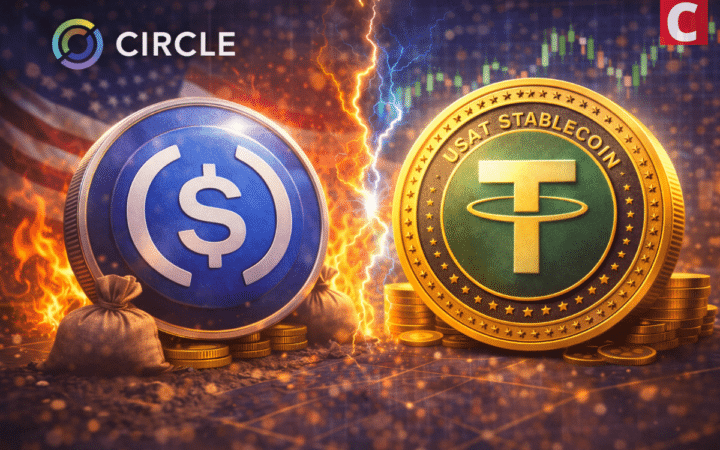
Tether’s USAT launch directly challenges Circle’s USDC, adding new competition in the U.S. stablecoin market.
Tether introduced USAT, a federally regulated dollar-backed stablecoin issued by Anchorage Digital Bank under the US GENIUS Act framework.
Tether’s USDT growth has slowed sharply, signaling caution for the crypto market as liquidity cools.
Iran’s central bank acquired at least $507 million in USDT to counter a currency crisis and circumvent sanctions, routing funds through exchanges and DeFi protocols.

Tether’s Jan. 9 UNODC initiative targets Africa scam flows and youth cyber training as the amount of USDT trading in the region increases.

Rumble launched a crypto wallet in partnership with Tether and Moonpay to let creators get crypto tips directly from users.
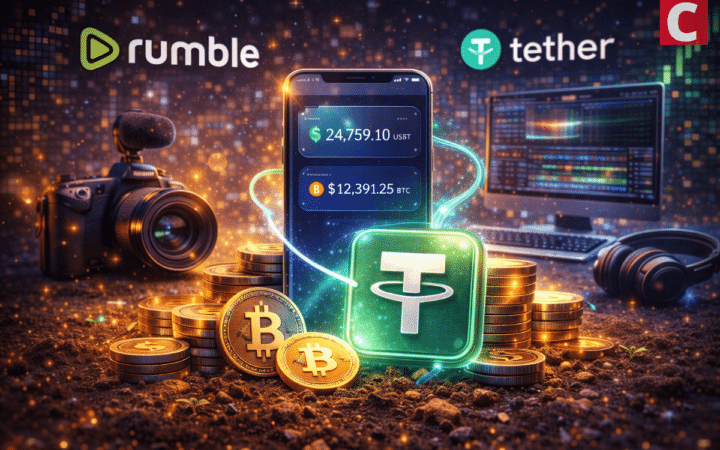
Rumble launched a crypto wallet in partnership with Tether and Moonpay to let creators get crypto tips directly from users.

Tether introduces Scudo, a new unit equal to 1/1000th troy ounce of gold, enabling easier fractional XAUT transactions as gold maintains record highs above $4,400.

Bitcoin just fell below the $88,000 mark and Tether took the opportunity to purchase an additional 8,889 BTC for its treasury.
Tether and its USDT $1.00 24h volatility: 0.0% Market cap: $187.25 B Vol. 24h: $68.98 B stablecoin, pegged to the US dollar, has become a central player in the global cryptocurrency market. The reputation of the token as a reliable store of value for users looking to protect themselves from volatility makes it one of the most popular choices for cryptocurrency trades. This feature has also made USDT one of the most important tokens for integration with the traditional sector since non-crypto users do not have to worry about price fluctuations.
USDT allows crypto and traditional users to conduct transactions, preserve wealth, and make cross-border payments with the assurance that the token will maintain its value. This is important for active traders and investors who need to frequently enter and exit the unstable crypto markets.
USDT is widely accepted across most blockchain platforms, making it a vital part of decentralized finance (DeFi) as it is used across decentralized functions, including liquidity pools, yield farming, and lending protocols. Holding a stable asset like USDT is important for most users to stabilize investment portfolios and hedge against risks.
USDT news shows that the asset has found relevance across several platforms and use cases. It is popularly used to pair with other assets on crypto exchanges and trading sites, in addition to being a primary transaction medium on most platforms where crypto is accepted. Essentially, USDT has become more than just a stablecoin.
Read the USDT guide to find more information about the popular dollar-backed stablecoin.
USDT is a stablecoin with its value designed to remain equal to $1. It is backed by real-world assets (RWAs), which gives it stability and reliability and makes it a popular and trusted choice among crypto traders and investors looking to limit their exposure to volatility.
USD refers to the United States Dollar, the official currency of the United States, issued by the US Department of the Treasury through its Bureau of Engraving and Printing. Although USDT is backed by actual dollars, it is not the same thing as USD. USDT is issued by Tether Limited and not a government agency.
USDT is mostly used as a stable store of value in the unstable crypto market. It is also commonly paired with other assets for trading on exchanges, in addition to its use as a tool for payments and remittances.
USDT can be used across crypto exchanges, trading platforms, and decentralized applications (dApps). Many businesses and online services also allow users to make payments using USDT.